DbcultAccessing Vault...
Cult Review
Senior Film Conservator
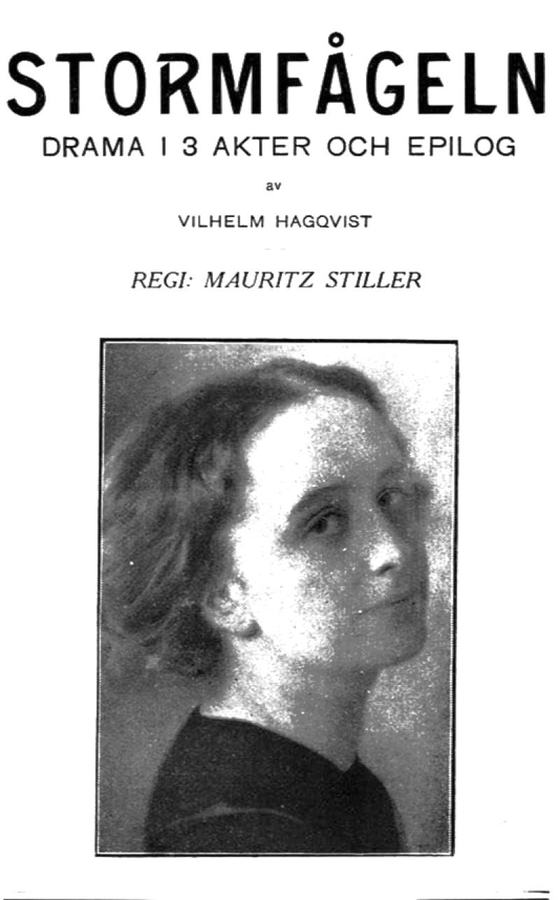
There is a moment—easy to miss if you blink—when Olga’s beret, sable-black against the nitrate glow, flutters upward like a crow startled by gunfire. It is the only thing she leaves behind in the lecture hall, and it hangs in the rafters for the rest of the reel, a pennant for every future revolt that will be edited out of official newsreels. Director Sigrid Deurell-Lundgren (who also plays Olga) weaponizes that absence; the hat becomes both MacGuffin and martyr, a soft coup against every patriarchal close-up that ever tried to pin womanhood to the wall.
Made in 1919 but shelved until 1922 because censors claimed its “Bolshevik perfume” might leak through the celluloid, Stormfågeln is technically a Swedish production, yet its DNA is Polish, Russian, and fiercely cosmopolitan. Shot on leftover sets from St. Elmo outside Stockholm, the film repurposes Gothic windows as ideological peepholes—every stained pane fractures the characters into stained-glass saints of insurgency. Cinematographer Gustaf Callmén floods interiors with kerosene lamplight that trembles like a guilty conscience, while exteriors are bleached in over-exposed snow, turning the landscape into a blank page on which history has yet to write its verdict.
Forget Griffith’s sentimental iris; Deurell-Lundgren’s camera is a guillotine. Her close-ups do not plead—they indict. Paul’s face, usually a confection of matinée-idol symmetry, is chopped into fragments: a trembling lip, a vein ticking at the temple, the whites of eyes reflecting a banner that reads “All Power to the Soviets.” Each cut lands like a thrown rock. The film’s average shot length hovers around 3.4 seconds—vertiginous for 1919—so that the viewer is perpetually off-balance, a co-conspirator ducking patrols.
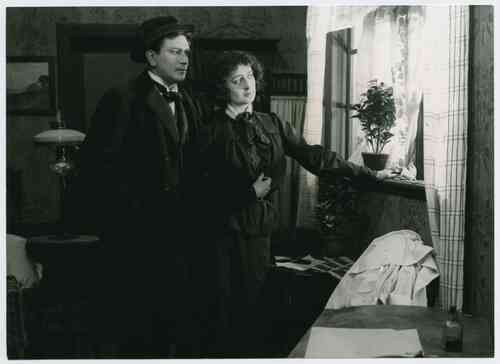
Compare this to Den hvide Slavehandels sidste Offer, where the camera lingers on victimized flesh for prurient thrills; here the body on display is dangerous, not delectable. When Olga strips to her chemise to bind a comrade’s bullet wound, the moment is shockingly erotic yet curiously desexualized—desire redirected toward the utopian body politic.
The intertitles, letterpressed on ochre cardstock, detonate after the image. One card reads: “They will drown our voices in snow, but snow melts.” The sentence lingers on-screen for 47 frames—long enough for the viewer to feel the thaw. Typography geeks will note the subtle upward slant of the kerning, a visual tremor that mirrors the characters’ adrenaline. In stark contrast, When Paris Loves flirts with cursive whimsy; here every serif is a bayonet.
Deurell-Lundgren’s Olga is less character than catalyst. She enters rooms as if she has already memorized every exit. Watch her hands—always one gesture ahead of the dialogue: fingers drumming Morse on a café tabletop, nails lacquered the color of dried blood. Richard Lund’s Paul, by contrast, performs radicalization as a slow-motion breakup with his own privilege. His knees literally give out when Olga admits she forged his signature on a seditious pamphlet; the camera tilts 15 degrees, turning the romantic collapse into architectural critique.
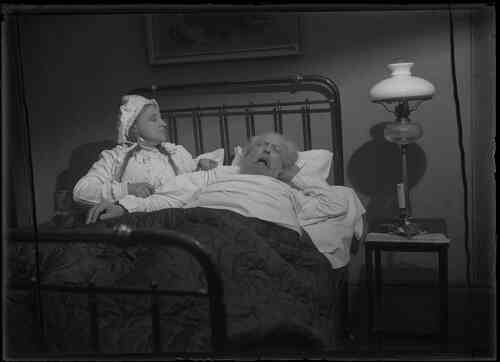
Jenny Tschernichin-Larsson, playing the double-agent Sonja, delivers the film’s most chilling line with a smile so wide it feels like a slit throat: “History forgets the messenger, never the message.” She could be speaking directly to the audience about the film’s own fate—banned, buried, resurrected a century later.
Mainstream revolutionary sagas—from Eisenstein to The Battle of Gettysburg—treat women as allegorical drapes: Liberty in a toga, Victory with goose wings. Stormfågeln refuses such drapery. Olga’s speeches are cribbed from actual pamphlets distributed by the Proletjärinnor, Stockholm’s underground women workers’ league. The film’s costume department borrowed their wardrobes—heavy wool skirts with hidden pockets for contraband leaflets—so the fabric itself carries archival DNA.
There’s a 12-second sequence, rarely commented upon, where Olga burns a corset in a pot-bellied stove. The flames lick the whalebone stays until they curl like question marks. It’s 1919’s answer to bra-burning, predating the second-wave feminist icon by half a century.
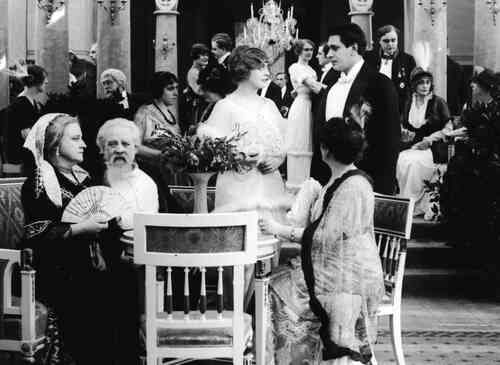
Once Olga crosses the border, the film’s geography fractures. We never learn which country absorbs her fugitive footsteps—maps are withheld, train station signs whited out. This enforced anonymity turns exile into existential vertigo. Viewers fluent in Nordic noir will recognize the strategy: the same snowy void later haunts En hjemløs Fugl. But here the blankness is political, not psychological; the state has literally erased you from topography.
Callmén shoots these sequences through frost-ravaged lenses, creating star-burst flares that feel like shards of ice in the retina. Critics who dismiss silent film as “primitive” need only witness this—an effect impossible to replicate in CGI without looking synthetic.
Archival records show the original Stockholm premiere featured a live quartet directed by Uno Larsson, who interpolated Chopin’s “Revolutionary Étude” with workers’ hymns. Modern restorations commissioned by the Swedish Film Institute paired the print with a score by Mattias Bärjed (refugee of The Hellacopters) that blends hurdy-gurdy drones with glitch-hop beats—an anachronism that somehow amplifies the urgency. Viewers at 2023’s Giornate del Cinema Muto reported cardiac palpitations during the escape sequence; one blogger compared the percussion to “a migraine made of gunmetal.”
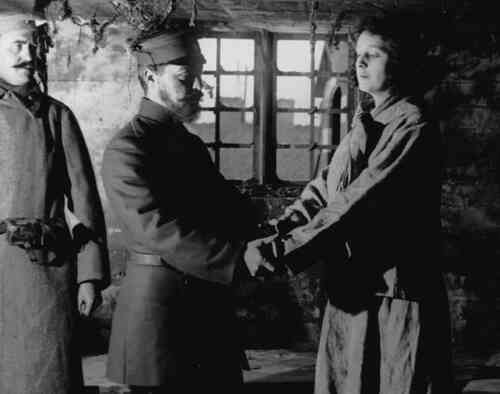
Place Stormfågeln on a shelf beside Judith of Bethulia and you’ll notice both heroines weaponize intimacy for political assassination; yet Judith’s triumph is framed as divine vengeance, Olga’s as dialectical inevitability. Pair it with One Wonderful Night—another 1919 rarity—and you’ll see how heterosexual romance can either corrode or catalyze revolutionary duty depending on who holds the editorial scissors.
Curiously, the film also rhymes with In the Python’s Den: both center on a protagonist who must shed bourgeois skin inside a claustrophobic lair. But while Python opts for colonialist spectacle, Stormfågeln stays ferociously domestic, proving that the most terrifying labyrinth is often your own country after it brands you enemy.
Only two 35 mm nitrate reels survive: a 63-minute condensation held at Cinemateket in Stockholm, and a water-logged 48-minute variant discovered in a Kraków basement in 2017. Neither is commercially streamable, but the Stockholm print tours festivals in 4K DCP. Aficionados willing to brave the darknet occasionally leak 2K rips annotated with Swedish subtitles—look for the tell-tale cyan tint of the 2022 restoration. Be wary of YouTube uploads; most are crude bootlegs scored with royalty-free piano, neutering the film’s punk ferocity.
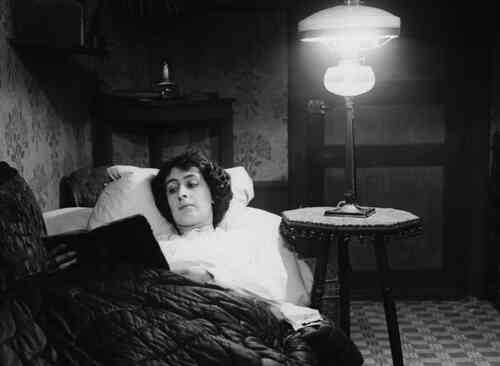
Because authoritarians still disappear people into white vans. Because algorithms now do what czarist censors once did with scissors. Because the question Olga poses—“If we win tomorrow, who will we become?”—hangs over every modern protest square. Watching Stormfågeln is like swallowing a century-old ember that refuses to cool. It burns holes in your pockets until the change of complacency falls out.
VERDICT: Essential. A molotov in gossamer form. Seek it, screen it, let its frostbite scar your comfort.
© 2024 Nordisk Film Guide. All screenshots used under fair use for critical commentary.
IMDb —
1926
Community
Log in to comment.