DbcultAccessing Vault...
Cult Review
Senior Film Conservator
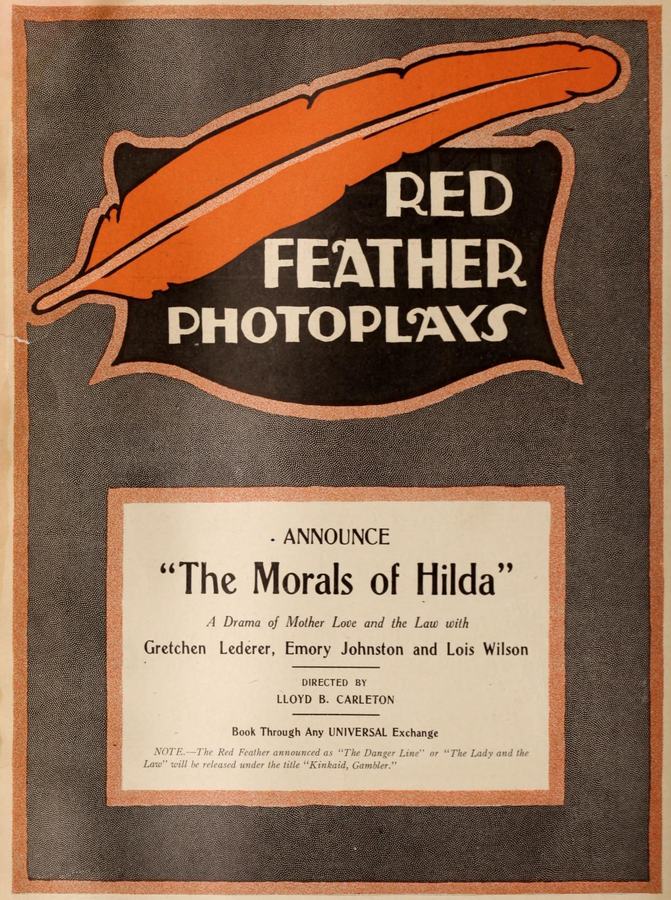
Stepping into the world of 'The Morals of Hilda' is akin to unearthing a forgotten time capsule, a cinematic artifact from 1918 that, despite its age, pulses with a surprisingly contemporary heart. This isn't just another silent film melodrama; it's a profound social commentary, a daring exploration of cultural dissonance, societal hypocrisy, and the enduring power of maternal love and sacrifice. Directed with a keen eye for human frailty and resilience, and penned by Henry Christeen Warnack and Anthony Coldeway, this film challenges conventional morality with an earnestness that still resonates today. It’s a stark reminder that the struggles against prejudice and for understanding are perennial, a narrative thread that could easily be woven into the fabric of modern discourse.
At its core, 'The Morals of Hilda' presents us with August and Hilda, a pair of recent immigrants whose innocent, deeply ingrained cultural practices clash violently with the rigid, often unforgiving, societal norms of their adopted American home. In their homeland, the concept of formal marriage, with its elaborate ceremonies and legal strictures, simply doesn't exist. Couples live together, love together, and build families without the need for state or religious sanction. It's a pragmatic, perhaps even enlightened, approach to human relationships, yet one that renders them utterly bewildered by the American obsession with weddings and marital legitimacy. This initial cultural chasm is not merely a plot device; it's the very crucible in which the film's subsequent tragedies are forged. The film brilliantly portrays their confusion, their attempts to navigate an alien moral landscape where their love, so pure and natural to them, is deemed scandalous and illicit. Gretchen Lederer, as Hilda, embodies this bewilderment with a heartbreaking vulnerability, her eyes reflecting a soul grappling with an incomprehensible world.
The escalating societal pressure, the whispers, the judgmental glances, culminate in a desperate act born of fear. August, played by Emory Johnson with a palpable sense of mounting anxiety, becomes convinced that his very existence with Hilda, sans marriage certificate, places him in legal jeopardy. The thought of being arrested, torn from his beloved Hilda and their infant son, is unbearable. In a moment of sheer panic and misguided self-preservation, he stows away on a ship, hoping to escape the perceived legal retribution. The irony is excruciating: he flees a perceived threat only to meet a very real and tragic end in a shipwreck at sea. This catastrophic event is the film's first major emotional gut punch, a brutal consequence of cultural misunderstanding and the unforgiving nature of societal judgment. It leaves Hilda utterly bereft, adrift in a foreign land, her world shattered by the loss of her partner and the crushing weight of a society that condemned their love.
Hilda's despair is profound, her will to live extinguished by grief and isolation. In a scene of raw emotional intensity, she attempts to end her own life, a moment that could easily veer into mawkish sentimentality but is handled with a delicate, almost understated, poignancy. It is at this critical juncture that the film introduces Esther Grail, a beacon of compassion in a world that has, thus far, shown Hilda little mercy. Rich, empathetic, and unburdened by the narrow-mindedness of her peers, Esther saves Hilda and, in an act of extraordinary kindness, adopts her infant son, Stephen. This pivotal moment introduces a glimmer of hope, a lifeline thrown to a drowning soul. Esther's character, though perhaps a touch idealized, serves as a vital counterpoint to the prevailing societal attitudes, demonstrating that true morality often lies in empathy and action rather than adherence to rigid dogma. Her decision not only saves a life but sets the stage for the film's overarching narrative of redemption and social reform.
Years later, the adopted Stephen grows into a man of principle and conviction. Esther, with admirable honesty, eventually reveals the truth of his birth, the circumstances of his parents' unconventional union, and his mother's tragic fate. This revelation doesn't shame Stephen; instead, it ignites within him a passionate crusade for justice. He becomes a fervent advocate for the rights of illegitimate children, challenging the very societal structures that condemned his parents and countless others. His journey from an adopted child to a vocal champion for the underprivileged is the film's most powerful arc, showcasing a man who transforms personal pain into a public mission. This aspect of the narrative feels remarkably progressive for its time, daring to question the fundamental fairness of societal labels and their devastating impact on innocent lives. It's a theme that resonates powerfully even today, reminding us of the enduring fight against stigma and discrimination. One might draw parallels here to the social conscience found in films like Sins of Her Parent, which similarly grappled with the severe consequences of societal judgment on individuals, though perhaps with a different focus on the specific 'sin'.
Stephen's unwavering dedication to his cause propels him into the political arena, culminating in his election as governor. His inaugural speech is poised to be a landmark moment, a powerful declaration of his commitment to social reform and the rectification of past injustices. The scene is charged with anticipation, a culmination of years of struggle and advocacy. However, the film is not content to merely offer a triumphant resolution. Just as Stephen begins to speak, a fanatic, driven by an opposing ideology or perhaps simply by madness, attempts to assassinate him. This sudden, violent turn underscores the perilous nature of challenging established norms and the fierce resistance often met by those who dare to champion the marginalized. It's a stark reminder that progress is rarely achieved without struggle, and sometimes, without ultimate sacrifice.
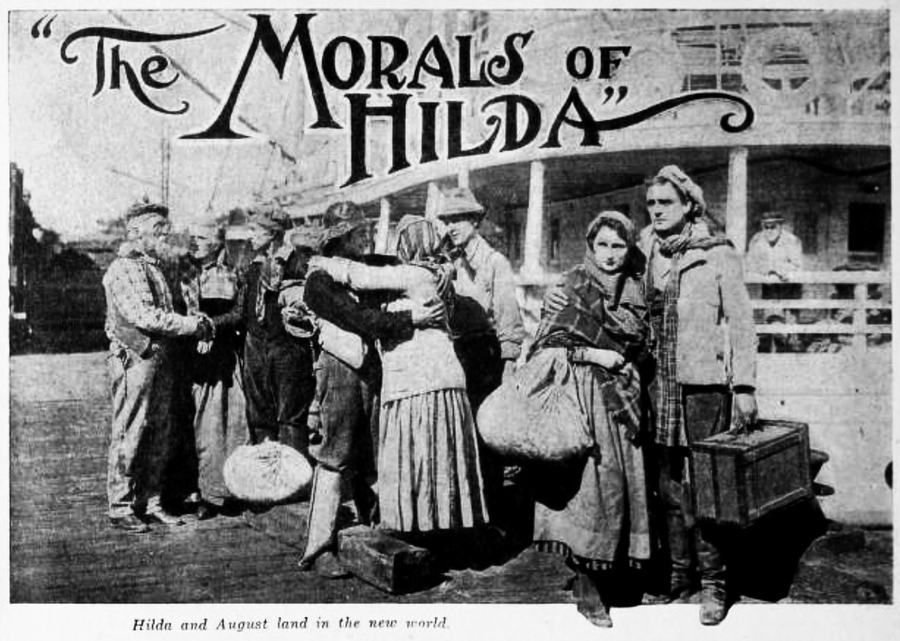
And then, the climax, a moment of profound, almost operatic, tragedy and redemption that solidifies 'The Morals of Hilda' as an unforgettable cinematic experience. Hilda, years older, her life having taken an entirely different, quieter path since Esther's intervention, makes her way to hear the new governor speak. She doesn't know Stephen is her son; she is simply drawn by the powerful message of a man speaking out for the very people she once was: the underprivileged, the misunderstood, the victims of societal judgment. As the fanatic lunges, Hilda, with an almost primal instinct, recognizes the danger. Without hesitation, without a moment's thought for her own safety, she throws herself in front of Stephen, taking the bullet meant for him. It is a sacrifice of immense emotional weight, a mother's ultimate act of protection, even for a son she barely knows, whose identity she may only dimly perceive in that moment of crisis. She dies in his place, completing a circle of tragedy and love that began with August's death at sea. The irony is heartbreaking: she dies saving the life of the son whose 'illegitimacy' had once driven her to despair, a son who now champions the very cause she embodied. It's a powerful statement on the enduring, often unseen, bonds of family and the profound impact of individual actions on the course of history.
The performances in 'The Morals of Hilda' are, for the most part, remarkably strong, especially considering the acting conventions of the silent era. Gretchen Lederer, as Hilda, carries the emotional weight of the film with a grace that transcends the often exaggerated gestures typical of the period. Her portrayal of a woman grappling with cultural alienation, profound grief, and ultimately, a selfless act of sacrifice, is deeply moving. Her expressive eyes and subtle body language convey a depth of feeling that speaks volumes without a single spoken word. Emory Johnson, though his role is shorter, imbues August with a quiet dignity and mounting desperation that makes his tragic demise all the more impactful. Frank Whitson and Lois Wilson, as Stephen and Esther Grail respectively, provide solid support, grounding the more melodramatic elements of the plot in believable human emotion. Richard Morris and Adele Farrington, though in smaller roles, contribute to the film's rich tapestry of characters, each performance adding to the overall texture of the narrative.
Visually, the film, while adhering to the technical constraints of its time, effectively uses close-ups and dramatic staging to heighten emotional impact. The cinematography, though not groundbreaking, serves the story well, creating a sense of intimacy in moments of personal despair and a broader scope during the public scenes of Stephen's political ascent. The direction is purposeful, guiding the audience through a complex narrative with clarity and emotional resonance. The pacing, a crucial element in silent film, maintains a steady rhythm, allowing the audience to absorb the unfolding drama without feeling rushed or, conversely, bored. One might consider how films like Camille (referring to the 1915 version starring Theda Bara, or even later interpretations) used similar dramatic flair and tragic sacrifice to explore societal judgment and love, but 'Hilda' adds a layer of specific cultural and legal critique.
The thematic richness of 'The Morals of Hilda' is perhaps its greatest strength. It’s a powerful indictment of xenophobia and the dangers of imposing one-size-fits-all moral codes on diverse populations. The film bravely champions the rights of the marginalized and questions the very definition of 'legitimacy' when it comes to human relationships and offspring. It suggests that true morality stems from compassion, understanding, and justice, rather than from arbitrary social conventions. The film's writers, Henry Christeen Warnack and Anthony Coldeway, crafted a narrative that, while dramatic, doesn't shy away from weighty social issues, making it a surprisingly progressive piece for its era. It’s a testament to their foresight that these themes remain pertinent, sparking conversations about immigration, cultural sensitivity, and social justice even today. The film challenges us to consider: what truly constitutes 'morality'? Is it a set of rules, or a way of living that prioritizes empathy and fairness?
In an era where films like One Hundred Years Ago or The Princess of India might have focused more on adventure or exotic romance, 'The Morals of Hilda' chose a path of stark social realism, albeit within a melodramatic framework. It represents a significant, if often overlooked, contribution to early cinema's capacity for social commentary. It’s a film that deserves to be rediscovered, studied, and appreciated not just as a historical curiosity, but as a compelling narrative that grapples with timeless human dilemmas. The emotional impact of Hilda's final act, her selfless leap, resonates with an almost mythic power, elevating the film beyond mere entertainment into the realm of profound human drama. It’s a powerful statement that true love, whether sanctioned by law or not, can manifest in the most extraordinary acts of sacrifice.
The film's ending, while tragic, also carries a profound sense of purpose. Hilda's death is not in vain; it solidifies Stephen's resolve and underscores the very principles he champions. It serves as a stark, unforgettable symbol of the cost of societal prejudice and the ultimate triumph of a mother's love. 'The Morals of Hilda' is more than just a story; it's a plea for empathy, a demand for justice, and a poignant exploration of what it means to be human in a world often too quick to judge. It's a film that, despite its silent medium, speaks volumes, echoing through the decades with a message that remains as vital and necessary today as it was over a century ago. If you have a chance to experience this cinematic gem, do so. It’s a powerful, moving experience that will stay with you long after the final fade to black.
Consider the legacy of such films. While we might celebrate the grand spectacles or the comedic masterpieces of the silent era, it is often these quieter, more socially conscious dramas that offer the most profound insights into the anxieties and aspirations of their time. 'The Morals of Hilda' stands as a testament to the fact that early cinema was not merely about escapism; it was also a powerful medium for challenging norms, provoking thought, and advocating for a more just and understanding world. It reminds us that stories of love, loss, and redemption, particularly when set against a backdrop of societal injustice, possess an enduring power that transcends the boundaries of time and technology. It's a film that asks us to look beyond the surface, beyond the labels, and to see the inherent dignity and worth in every individual, regardless of their circumstances of birth or their cultural origins. And that, my friends, is a moral worth remembering, a lesson still very much in need of being learned.
IMDb 6.5
1930
Community
Log in to comment.