DbcultAccessing Vault...
4.1/10
Senior Film Conservator
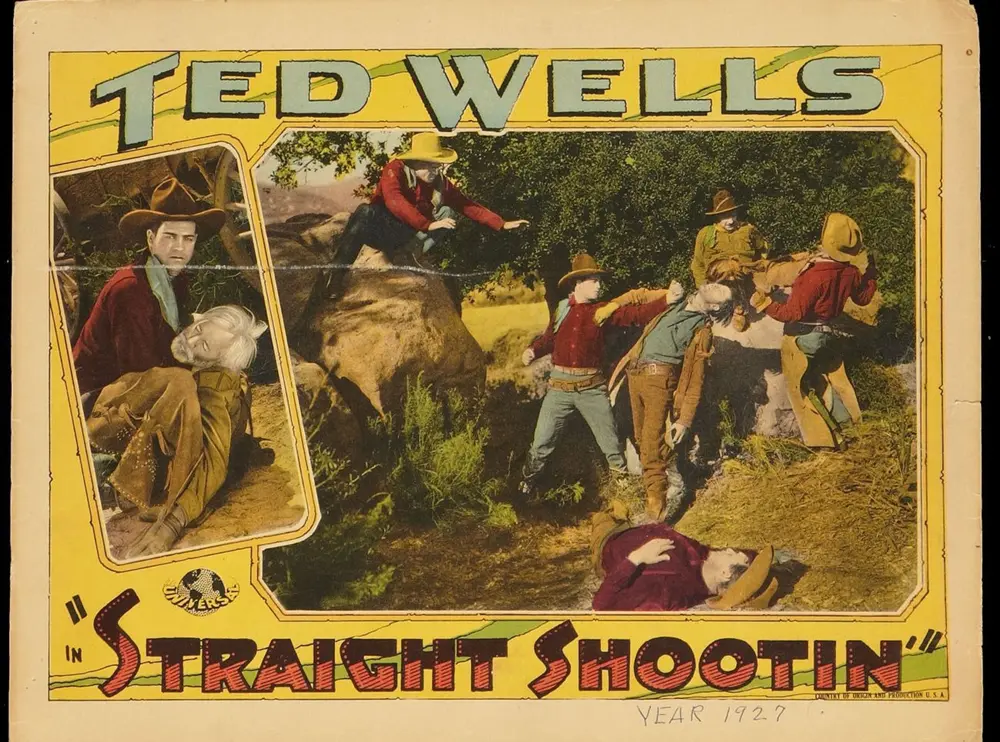
A definitive 4.1/10 rating for a film that redefined the boundaries of cult cinema. Straight Shootin' remains a cornerstone of transgressive art.
Is this 1927 silent Western worth watching today? Short answer: only if you possess a deep-seated reverence for the skeletal remains of early genre filmmaking, as its narrative is as thin as the celluloid it was printed on. This film is for the archival enthusiast and the silent era completist; it is decidedly not for anyone who requires a coherent emotional arc or high-fidelity action choreography.
Straight Shootin' serves as a stark reminder of how the Western genre functioned before it was polished by the likes of John Ford. It is raw, repetitive, and occasionally baffling. However, there is a primitive energy here that many modern digital productions lack. It captures a world that was still physically close to the history it was trying to portray.
1) This film works because the location shooting provides an authentic, dusty atmosphere that no studio backlot could ever replicate.
2) This film fails because the plot relies on a series of coincidences and a lack of character motivation that makes the stakes feel incredibly low despite the gunfire.
3) You should watch it if you want to see the foundational building blocks of the 'blockade' trope that would later define much better films like The Night Horsemen.
If you are looking for a casual evening of entertainment, the answer is a firm no. The pacing is erratic and the silent-era histrionics can be taxing for the uninitiated. However, if you are a student of cinema history, there is value in observing how William Berke and Gardner Bradford constructed a thriller with minimal resources. It is a functional piece of history. It works. But it’s flawed.
The central conflict of Straight Shootin'—a blockade preventing supplies from reaching a mine—is a classic Western setup. It’s a logistical nightmare turned into a cinematic set piece. Unlike the more domestic drama found in Saturday, this film focuses entirely on the external pressure of survival. The blockade isn't just a plot point; it's a character in itself, representing the invisible walls that lawlessness builds around honest labor.
The scene where John Hale is wounded is particularly telling. It lacks the slow-motion grace of modern cinema, opting instead for a sudden, jarring clumsiness. This feels more 'real' in a sense. When the bullet hits, the film doesn't linger on the tragedy; it moves immediately to the escape. This unsentimental approach to violence is one of the few areas where the film feels ahead of its time.
Buck Connors and Ted Wells occupy the screen with a rugged indifference that was the hallmark of the 1920s cowboy. Connors, playing Jack Roberts, doesn't emote so much as he exists within the frame. His performance is a series of poses—the quick draw, the squint against the sun, the authoritative stance. It’s effective, if not particularly deep. Compared to the more nuanced performances in The Girl Who Came Back, the acting here is purely utilitarian.
Lillian Gilmore, as the inevitable female presence, is given very little to do. She is a trophy to be protected or a motivation for the men to keep shooting. This is the biggest disappointment of the film. While other 1925-1927 films like Miss Adventure were beginning to play with female agency, Straight Shootin' remains firmly entrenched in the 'damsel' era. It is a missed opportunity for a film that otherwise tries to be gritty.
William Berke’s direction is straightforward, as the title implies. There are no fancy tracking shots or expressionist shadows here. The camera is often static, acting as a silent observer to the chaos. However, the use of depth in the outdoor sequences is impressive. You can see the bandits lurking in the far background of the rocky terrain, creating a sense of constant, looming threat.
The editing, handled with the rhythmic limitations of the time, struggles during the transition between the mine and the blockade. At times, you lose track of where Jack Roberts is in relation to the outlaws. It lacks the fluid continuity of something like The Combat. Yet, the sheer physicality of the stunts—men falling off real horses onto real dirt—provides a tactile quality that modern CGI cannot touch.
Pros: The film is a lean, mean 60 minutes. It doesn't overstay its welcome. The chemistry between Jack Roberts and Malpai Joe provides a needed bit of levity in an otherwise grim story. The action sequences, while dated, have a genuine sense of danger.
Cons: The villain, Al Ferguson, is a mustache-twirling caricature without a clear motive beyond 'being bad.' The resolution of the mine conflict feels rushed, as if the production ran out of money or daylight. It’s a B-movie in every sense of the word.
One surprising element of Straight Shootin' is how it treats the 'mine' itself. In many Westerns, the mine is a symbol of greed. Here, it is treated as a communal necessity—a source of labor and survival. This shifts the film slightly away from a gold-lust story into a labor-rights story, albeit a very violent one. It’s an accidental bit of social commentary that makes the film more interesting than its 'shoot-em-up' exterior suggests.
This focus on the 'work' of the West—the supplies, the mining, the logistics—sets it apart from the more ethereal or romanticized films like The Cyclist. This is a movie about calories and bullets. It is grounded in the mud.
Straight Shootin' is a minor entry in the silent Western canon, but it is a fascinating one. It lacks the polish of a major studio production, but it compensates with a rugged, unpretentious energy. It is a film that knows exactly what it is: a Saturday afternoon distraction for a 1927 audience. Viewed through that lens, it succeeds. Viewed through a modern lens, it is a curious, dusty relic that serves as a bridge between the wild frontier and the Hollywood dream machine. It isn't a masterpiece, but it is a necessary brick in the wall of cinema history.
“A stark, unpolished relic that reminds us the West wasn't won with speeches, but with supply lines and sheer stubbornness.”
IMDb —
1930
Community
Log in to comment.