DbcultAccessing Vault...
Cult Review
Senior Film Conservator
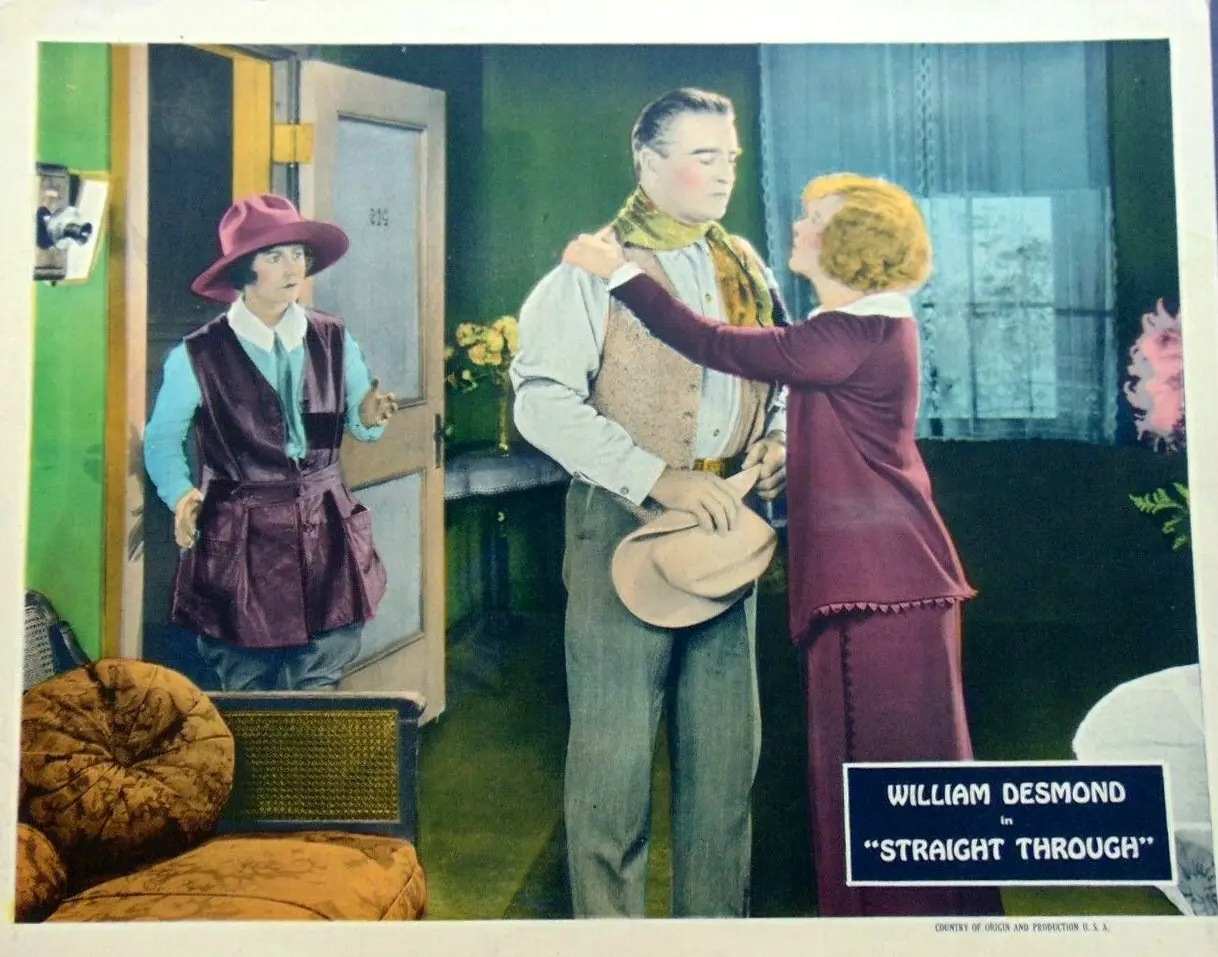
Is 'Straight Through' worth watching in an era saturated with high-definition, surround-sound blockbusters? Short answer: yes, but with significant caveats that demand a particular kind of cinematic appreciation. This silent Western gem, largely existing as a historical footnote for many, offers a fascinating window into early filmmaking, a raw, unadorned narrative that speaks volumes without uttering a single word. It’s a film for the dedicated cinephile, the historian, and anyone curious about the foundational artistry of the Western genre, but decidedly not for those seeking modern pacing, complex dialogue, or polished special effects.
This film works because it distills storytelling to its purest visual form, relying on the expressive power of its actors and the sweeping grandeur of its setting. This film fails because its accessibility is limited, and its narrative, by modern standards, might feel simplistic or melodramatic to the uninitiated. You should watch it if you possess a genuine interest in the evolution of cinema, appreciate the unique challenges and triumphs of silent era performances, and are willing to engage with a historical artifact on its own terms.
The very title, “Straight Through,” implies a narrative of unwavering determination, a journey or a moral stance that permits no deviation. In the context of a 1919 Western, this likely translates to a protagonist, perhaps embodied by the formidable Ruth Stonehouse, facing a clear objective or overcoming a formidable obstacle with singular focus. The genre itself is built on archetypes: the lone rider, the damsel in distress, the nefarious villain, the steadfast hero. “Straight Through” would have, by necessity, embraced these conventions, using them as shorthand for a visual language still very much in its infancy.
Imagine Stonehouse, renowned for her dramatic flair, portraying a character driven by an unshakeable sense of purpose. Her journey might involve traversing treacherous landscapes, confronting corrupt forces, or protecting the innocent. William Gillis and Marguerite Clayton, as key supporting players, would likely embody the narrative's central conflict or emotional core—perhaps Gillis as a rugged ally or formidable antagonist, and Clayton as a love interest or a character in need of rescue. Their interactions, conveyed through heightened gestures and expressive facial work, would have been the emotional bedrock of the film.
The Universal Ranch Riders, a staple of early Westerns, weren't just background extras; they were integral to establishing the authenticity and dynamic action of the frontier. Their presence suggests thrilling chase sequences, daring rescues, and perhaps even large-scale conflicts that would have lent a palpable sense of excitement to the proceedings. These elements combine to paint a picture of a film that, despite its silent nature, aimed for a visceral impact, a direct appeal to the audience's sense of adventure and justice.
What makes “Straight Through” fascinating, even in its obscurity, is its commitment to a clear narrative trajectory. There’s no room for ambiguity in a silent film of this era; every intertitle, every close-up, every broad stroke of acting must push the story “straight through” to its conclusion. This directness, often perceived as simplistic today, was a strength, forging an immediate connection with audiences through universal themes of courage, loyalty, and perseverance against overwhelming odds. It is a testament to the power of visual storytelling when stripped of all other sensory input.
Charles Logue, as director, would have faced the unique challenges and opportunities of the silent medium. Directing in 1919 was less about subtle nuances and more about clear, unambiguous visual communication. Logue, much like his contemporaries working on films such as The Master Key or The Avalanche, would have relied heavily on blocking actors within the frame to convey relationships and power dynamics. A wide shot establishing a character against a vast, indifferent landscape would immediately communicate vulnerability or solitude, a common trope in Westerns.
Cinematography in this period was a craft of ingenuity. Natural light was paramount, often lending a stark realism to outdoor scenes. The framing of shots, while perhaps less fluid than modern cinema, would have been meticulously planned to maximize visual impact. Imagine the sun-drenched plains, the dusty trails, and the rugged mountains—all captured with the era’s cameras, creating an almost painterly quality. The Universal Ranch Riders wouldn’t just be riding; they’d be framed against sunsets or through canyons, their movements choreographed to enhance the drama and scale of the Western setting.
The pacing of “Straight Through” would have been a delicate balance. Silent films often featured rapid-fire editing for action sequences, creating a sense of urgency and excitement. Conversely, moments of high drama or emotional intensity would be punctuated by longer takes and close-ups, allowing the actors’ expressions to resonate. The tone, typical of Westerns, would likely oscillate between heroic adventure, moments of impending danger, and perhaps even a touch of frontier romance. It’s a tonal palette that Logue would have carefully orchestrated, guiding the audience through a range of emotions using only sight and the accompanying musical score (which, alas, is often lost to time).
One could argue that the limitations of the silent era forced a purity of visual storytelling that modern cinema, with its myriad tools, sometimes loses. Logue's direction would have been a masterclass in economy, ensuring every visual element served the narrative “straight through” to its intended destination. The absence of spoken dialogue demanded a heightened visual literacy from both filmmaker and audience, fostering a unique, almost symbiotic relationship that is rarely replicated today. It's a testament to the era's innovative spirit, where constraints often birthed creativity.
Ruth Stonehouse, a prominent actress of the era, would have been the film’s emotional anchor. Her performances in other films of the period suggest an actress capable of conveying intense emotion through physical presence and powerful facial expressions. In “Straight Through,” her role would demand a blend of resilience, vulnerability, and unwavering determination. Picture her eyes, wide with fear or narrowed with resolve, communicating entire paragraphs without the need for intertitles. Her gestures, perhaps a clenched fist or a reassuring touch, would be deliberate, almost choreographed, to ensure the audience grasped every nuance of her character’s internal state.
William Gillis and Marguerite Clayton, as co-stars, would have complemented Stonehouse’s central performance. Gillis, likely cast in a more rugged or antagonistic role, would have used his physicality to project menace or strength. Silent villains often had exaggerated mannerisms, a sneer, a swagger, or a furtive glance that left no doubt about their intentions. Clayton, on the other hand, might have portrayed a character with a more delicate sensibility, using expressions of tenderness, fear, or defiance to round out the dramatic tension. The chemistry between these actors, achieved through careful staging and reaction shots, would have been crucial to the film's success.
The supporting cast, including the invaluable Universal Ranch Riders, contributed to the film’s authenticity and spectacle. These riders weren't just actors; they were often skilled horsemen, bringing a genuine grit to the action sequences. Their coordinated movements, whether in a dusty chase or a tense standoff, would have underscored the raw energy of the Old West. This commitment to practical, on-location action was a hallmark of early Westerns, setting a standard for realism that continues to influence the genre even today. It’s hard to replicate that kind of authentic, unvarnished action with green screens, and “Straight Through” would have delivered it in spades.
The art of silent acting is often misunderstood today. It wasn't merely overacting; it was a highly disciplined form of communication, requiring actors to project emotions and intentions across a theatrical space without dialogue. Stonehouse, Gillis, and Clayton would have been masters of this craft, their bodies and faces serving as the primary instruments of storytelling. Their performances, while perhaps seeming broad to modern eyes, were designed to be read clearly and instantly by audiences accustomed to this unique form of theatricality. It's an acting style that deserves respect for its specific demands and the skill it required.
For the average casual viewer accustomed to the sensory overload of contemporary cinema, “Straight Through” might prove a challenging watch. There's no dialogue, no intricate sound design, and the pacing can feel deliberate compared to today's rapid cuts. However, for those with an appreciation for cinematic history, the answer is a resounding yes. It offers a rare glimpse into the formative years of moviemaking. It showcases the foundational elements of the Western genre before they became overly stylized. It allows us to observe the craft of silent acting, a unique performance art that has largely disappeared. You will gain a deeper understanding of how film evolved. It is a historical document as much as an entertainment piece.
Silent Westerns, of which “Straight Through” is a representative example, laid the crucial groundwork for one of cinema’s most enduring and influential genres. These early films established the iconic imagery, narrative structures, and moral codes that would define the Western for decades. The vast, open landscapes, the struggle between civilization and wilderness, the clear-cut heroes and villains—all were cemented in these silent productions. Without films like “Straight Through,” the rich tapestry of cinematic Westerns, from John Ford to Clint Eastwood, would simply not exist in the same form.
One unconventional observation I've made is that the very *absence* of sound in these films forces a more profound engagement with visual storytelling. Viewers are compelled to actively interpret every gesture, every expression, and every frame, becoming more active participants in the narrative construction. This makes silent films, in a way, purer forms of visual art, stripped of the crutches of dialogue and sound effects. “Straight Through” would have exemplified this, demanding an audience's full attention to its visual poetry and the raw emotion conveyed by its performers. It’s a challenge, yes, but a rewarding one that hones your cinematic eye.
The cultural impact of these early Westerns cannot be overstated. They helped shape America’s self-image, romanticizing a period of expansion and frontier justice. Even if “Straight Through” itself is not widely known today, its existence contributes to the larger mosaic of silent film history, a period of incredible innovation and artistic daring. It’s a testament to the ambition of early filmmakers like Charles Logue and the Universal studio system, who were building an entire art form from the ground up, one reel at a time. This film, like many of its era, is a vital piece of that foundational puzzle. It is important. It matters.
Provides invaluable historical insight into early American cinema and the birth of the Western genre.
Showcases the unique artistry of silent acting, particularly Ruth Stonehouse's presumed compelling presence.
Offers a pure form of visual storytelling, demanding active engagement from the viewer.
The use of The Universal Ranch Riders adds a layer of authentic, gritty action and spectacle.
A testament to the foundational efforts of directors like Charles Logue in shaping cinematic language.
Accessibility is a major issue, as many silent films are difficult to find or are poorly preserved.
The pacing and narrative style can feel slow or simplistic for audiences accustomed to modern film.
Lacks the immersive sound design and dialogue that many contemporary viewers expect.
The melodramatic conventions of the era might not resonate with all modern sensibilities.
Requires a significant shift in viewing expectations and a willingness to appreciate a different kind of cinematic experience.
“Straight Through” is a film that, despite its age and potential obscurity, holds a significant place in the annals of cinematic history. It's not a film for everyone, nor should it be approached with the same expectations one brings to a contemporary release. It works. But it’s flawed. Its true value lies in its ability to transport us back to a nascent art form, to appreciate the raw talent of its performers, and to understand the very roots of a genre that continues to thrive today. For those willing to look past the surface and engage with its silent language, it offers a rich and rewarding experience. If you appreciate the foundational efforts of cinema, perhaps exploring You Can't Believe Everything or The Avalanche might offer further context. “Straight Through” is a vital piece of the cinematic puzzle, a testament to the enduring power of visual storytelling, and a worthwhile endeavor for the discerning viewer who dares to venture off the well-worn path of modern blockbusters.
IMDb —
1920
Community
Log in to comment.