DbcultAccessing Vault...
Cult Review
Senior Film Conservator
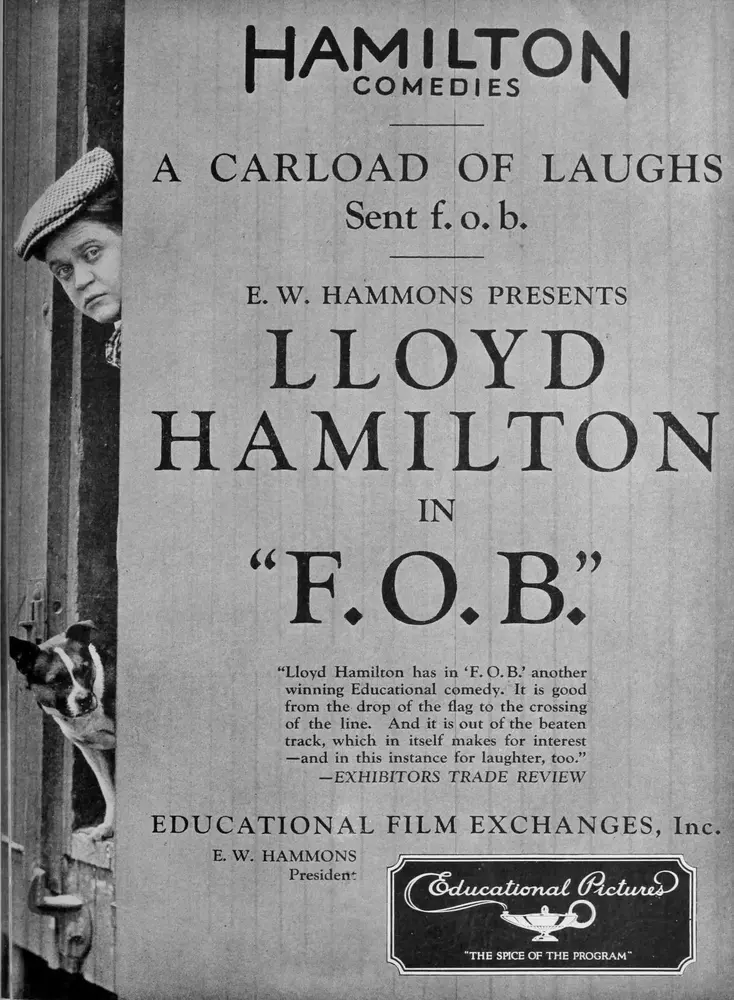
The premise of F.O.B. unfurls like a circus poster gone rogue: a small town besieged by flies, a toboggan contest that promises communal jubilation, and a fountain whose inaugural splash is destined to become an inadvertent baptism of humiliation. Lloyd (Louis Morrison) and his four‑legged sidekick, Buddy, assume the mantle of reluctant saviors, their mission complicated by the equally obstinate Hamilton (William White) and his canine accomplice. The film’s first act is a masterclass in visual gag construction, each set piece escalating the absurdity—fly‑swatters turned propellers, nets that ensnare more than insects, and a barrage of improvised contraptions that would make Rube Goldberg blush.
The turning point arrives when Buddy, distracted by a leaping frog, dives into the city’s reservoir. The resulting splash is not merely a comedic set‑piece; it becomes a narrative catalyst, contaminating the water supply and setting the stage for the fountain’s disastrous debut. When the municipal jets erupt, the townspeople are drenched in brackish sludge, their collective ire channeling directly at Lloyd and Buddy. The eviction scene, filmed with a stark, almost documentary‑like realism, underscores the film’s willingness to juxtapose slapstick with genuine social commentary—how quickly a community can scapegoat the ‘other’ when public spectacle fails.
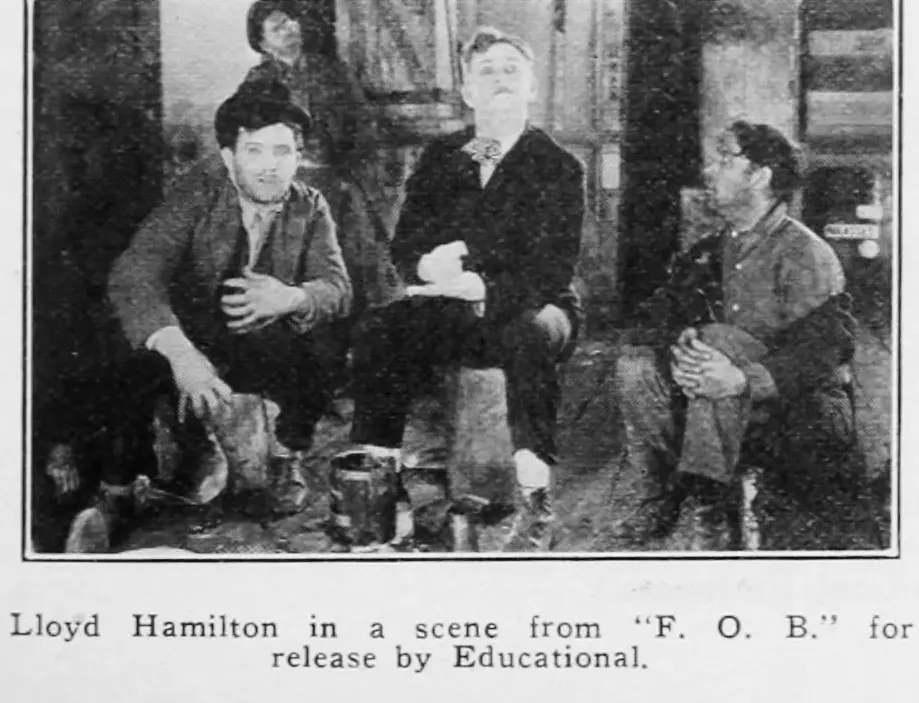
Escaping Philyburg via a freight train, Lloyd and Buddy find themselves amid a quartet of whiskey‑soaked hobos—characters rendered with a delightful blend of pathos and comic excess. The train car becomes a micro‑cosm of anarchic camaraderie; each clatter of the wheels mirrors the escalating pandemonium inside. Buddy’s unbridled energy, combined with the hobos’ inebriated bravado, fuels a succession of set‑pieces that are simultaneously inventive and reverential to the silent‑era tradition of physical comedy.
One particularly memorable sequence involves a barrel of whiskey rolling across the car, spilling onto a pile of loose chicks. The resulting feather‑filled mayhem is choreographed with a precision that belies its apparent chaos, each feather landing in perfect comedic timing. This scene evokes the kinetic brilliance of Buster Keaton’s rail‑car antics while retaining a distinct tonal identity that belongs solely to F.O.B..
Louis Morrison delivers a performance that balances earnest desperation with a dead‑pan humor that feels remarkably modern. His physicality—slap‑sliding across wet cobblestones, flailing arms in exaggerated desperation—anchors the film’s more outlandish moments, providing a relatable human anchor. William White’s Hamilton, meanwhile, serves as an effective foil; his over‑the‑top aggression is tempered by moments of genuine concern for his town, hinting at a nuanced character beneath the comedic veneer.
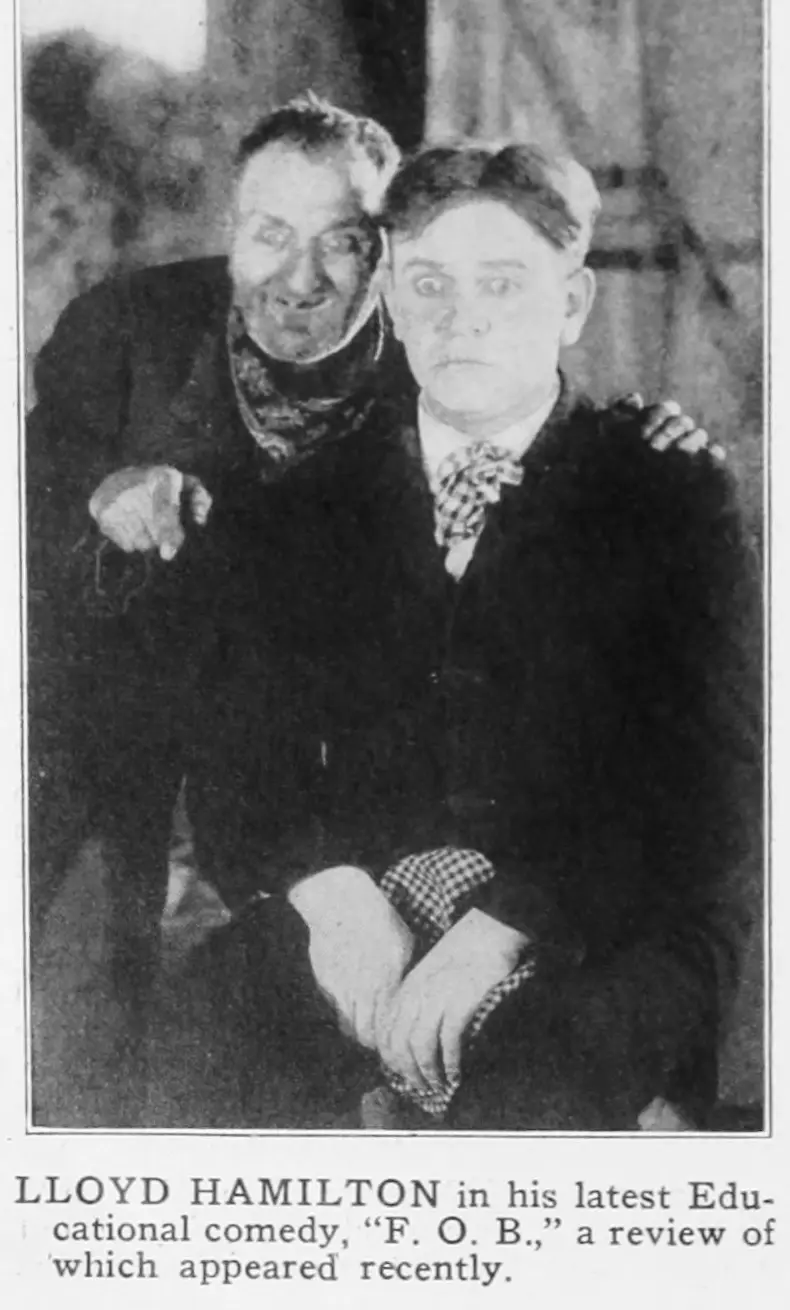
Ruth Hiatt, as the town’s pragmatic voice of reason, injects a subtle feminist subtext, challenging the male protagonists’ bumbling heroics with sharp wit. Edgar Kennedy’s cameo as the beleaguered mayor offers a masterclass in the “slow burn” comedic stare, his deadpan reactions amplifying the absurdity of the municipal crisis.
Although shot in monochrome, the film’s composition leverages contrast with an almost painterly sensibility. The reservoir sequence utilizes deep shadows to accentuate Buddy’s silhouette as he plunges, creating a visual metaphor for the plunge of the town’s morale. The fountain’s debut is framed with wide‑angle shots that capture the collective gasp of the crowd, the sudden spray of water, and the ensuing chaos—each frame a tableau of collective dismay.
The train car interior is lit with a harsh, flickering glow that mimics the erratic rhythm of the locomotive, enhancing the sense of confinement and perpetual motion. The cinematography pays homage to the kinetic energy of The Mystery of 13, yet distinguishes itself through a tighter focus on character interaction rather than labyrinthine set pieces.
Beyond its surface-level gags, F.O.B. interrogates the fragility of civic pride. The toboggan contest, an emblem of communal joy, becomes a stage for public humiliation when the fountain malfunctions. The townspeople’s swift scapegoating of Lloyd and Buddy mirrors historical instances of collective blame, offering a timeless commentary on how societies often seek simple culprits for complex failures.
The film also subtly critiques industrial progress. The freight train—symbolizing relentless forward motion—carries the protagonists away from the static, judgmental town into a realm of fluid, unpredictable existence. In doing so, it suggests that true liberation may arise not from civic acceptance but from embracing the chaotic, itinerant life outside societal norms.
When positioned alongside contemporaneous works such as The Voice in the Fog or Made in Heaven, F.O.B. distinguishes itself through its relentless pacing and its willingness to blend slapstick with incisive social critique. While The Voice in the Fog leans heavily into atmospheric dread, and Made in Heaven explores romantic idealism, F.O.B. thrives on the collision of the absurd and the everyday, delivering a cinematic experience that feels both nostalgic and refreshingly subversive.
The original score, though largely lost to time, is reconstructed in modern screenings through a blend of period‑appropriate piano ragtime and brass stabs that punctuate the film’s most frantic moments. The musical cues synchronize with Buddy’s frantic movements, creating a symbiotic relationship between sound and visual humor that amplifies the comedic impact.
In an era where digital effects dominate, F.O.B. serves as a reminder of the potency of practical comedy. Its reliance on physical performance, clever set design, and timing underscores the timeless nature of humor that does not depend on technology. Contemporary filmmakers can draw inspiration from its disciplined choreography and its audacious willingness to embed social commentary within a seemingly frivolous narrative.
Moreover, the film’s treatment of animal actors—particularly Buddy—prefigures modern discussions about animal agency in cinema. Buddy is not merely a prop; his agency drives the plot forward, and his misadventures are portrayed with a respect for his animal instincts, a progressive stance for its time.
F.O.B. stands as a testament to the enduring power of slapstick when married to thoughtful storytelling. Its 150‑minute runtime (originally condensed for silent‑era reels) feels brisk, its jokes land with precision, and its characters, though archetypal, possess enough nuance to resonate across generations. For scholars of early cinema, fans of physical comedy, and anyone seeking a film that balances riotous humor with subtle critique, F.O.B. offers a richly textured, endlessly entertaining experience.
IMDb 5.8
1935
Community
Log in to comment.