DbcultAccessing Vault...
5.8/10
Senior Film Conservator
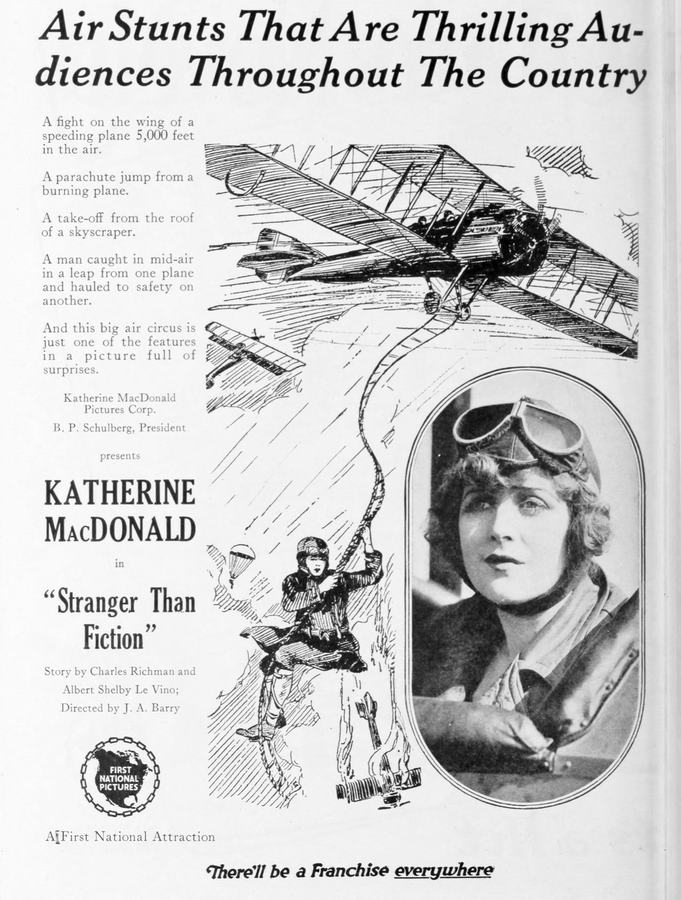
A definitive 5.8/10 rating for a film that redefined the boundaries of cult cinema. Stranger Than Fiction remains a cornerstone of transgressive art.
Step into a bygone era of cinematic innovation, where the flicker of the projector light held boundless potential, and narratives dared to transcend mere storytelling. Among the myriad silent films that once graced the silver screen, few possess the audacious meta-narrative ambition and sheer thematic daring of Stranger Than Fiction. This isn't merely a silent film; it’s a self-aware commentary on the very act of filmmaking, wrapped in an exhilarating package of adventure, intrigue, and a surprisingly progressive protagonist.
The film opens with a deceptively conventional setup: society maven Diane Drexel, portrayed with spirited conviction by Katherine MacDonald, hosts an exclusive screening for her coterie of friends. Initially, they are treated to a rather standard presentation, a theatrical adaptation of Carmen in which they themselves participated. But then, with a mischievous glint in her eye, Diane instructs the projectionist to unveil her own creation, a feature she boldly titles Stranger Than Fiction. This ingenious framing device immediately elevates the picture beyond its contemporaries, positioning it as a reflexive examination of cinematic artifice and audience expectation. It’s a bold move for any era, let alone the early 1920s, demonstrating a nascent understanding of film’s power to comment on itself, a sophistication often attributed to much later periods in film history. This meta-textual layer is what truly sets it apart, inviting viewers to ponder the nature of storytelling even as they are swept away by the unfolding drama.
The film-within-a-film then ignites with a dramatic turn. As the lights are raised in the on-screen parlor, the guests discover they've been victims of a brazen robbery, perpetrated by the notorious "Black Heart" gang, whose distinctive mark serves as an audacious calling card. This act of cinematic larceny serves as the catalyst for Diane’s on-screen declaration: she will not marry her ostensibly indolent fiancé until he has successfully tracked down these elusive thieves. This isn't the passive, demure heroine often seen in films of the period, whose agency is dictated by external forces or romantic entanglements. Instead, Diane Drexel seizes control of her destiny, transforming a personal slight into a grand quest. Her refusal to simply acquiesce to societal expectations or a pre-arranged marriage, instead demanding action and accountability, marks her as a remarkably modern figure for her time. One might even draw a parallel to the independent spirit seen in films like The Small Town Girl, though Diane's defiance here feels far more proactive and less resigned to circumstance.
Her subsequent descent into the labyrinthine slums of the city is a narrative stroke of genius, starkly contrasting her privileged world with the gritty underbelly of urban existence. Here, she encounters "The Shadow," an enigmatic figure who becomes her guide and confidant. Through him, she uncovers the perilous situation facing Dick and, with his assistance, orchestrates her infiltration into the very heart of the "Black Heart" gang. This transition from drawing-room drama to urban noir adventure is executed with surprising fluidity, showcasing the writers Albert S. Le Vino, Charles Richman, and Ralph Spence's adeptness at genre-blending. The foray into the slums also serves as a subtle, yet potent, piece of social commentary, highlighting the stark disparities that existed within society, a theme occasionally touched upon in other films like A Fool and His Money, but rarely with such direct narrative implication for the protagonist.
What follows is a relentless torrent of action and suspense, a testament to the kinetic possibilities of silent cinema. Diane's journey within the gang is punctuated by a series of thrilling escapes, each more perilous than the last, building a palpable sense of tension. The film's climax, an astonishing airplane stunt, forces the nefarious "Black Heart" to his dramatic demise. For a film produced in the early 1920s, the ambition and execution of such sequences are genuinely remarkable. One can only imagine the gasp of audiences witnessing these death-defying feats without the aid of modern special effects. The sheer audacity of staging such a sequence, relying on practical effects and daring stunt work, underscores the era's commitment to spectacle. While other films like Little Miss Jazz might have offered lighthearted diversions, Stranger Than Fiction plunged headfirst into high-stakes adventure, refusing to shy away from dramatic intensity.
The performances across the board contribute significantly to the film’s vibrant energy. Katherine MacDonald as Diane is captivating, imbuing her character with both vulnerability and an iron will. Her expressive face and dynamic physicality are perfectly suited to the demands of silent acting, conveying a complex range of emotions without a single spoken word. Wesley Barry, a child star of the era, brings a certain youthful vigor to his role, while veterans like Harry O'Connor, Evelyn Burns, Wade Boteler, Tom McGuire, and Dave Winter fill out the ensemble with convincing portrayals, grounding the fantastical elements in believable human reactions. Even minor characters contribute to the immersive atmosphere, each gesture and expression meticulously crafted to communicate character and intent. This attention to detail in performance ensures that the audience remains invested in the narrative, no matter how outlandish the circumstances become. It’s a masterclass in silent film acting, where every movement and facial nuance carries significant weight, a stark contrast to the often broader comedic stylings found in some contemporaneous works like An Even Break.
The writing team of Albert S. Le Vino, Charles Richman, and Ralph Spence deserves considerable commendation for crafting a narrative that is not only thrilling but also remarkably intricate for its period. The layers of storytelling, the seamless shift in tone from drawing-room comedy to gritty crime drama, and the consistent character development of Diane all point to a sophisticated understanding of dramatic structure. They masterfully navigate the challenges of silent film exposition, ensuring that the plot remains clear and engaging despite the absence of spoken dialogue. This kind of innovative narrative construction was not always the norm; many films of the era, while charming, often followed more straightforward arcs. One could compare its narrative complexity, perhaps, to the ambition seen in certain dramatic works like The Fall of the Romanoffs, though with a decidedly more adventurous and self-referential bent.
Crucially, the film's climax transcends mere resolution. As the lights flash on in the diegetic screening room, Diane informs her guests that this high-octane spectacle, this daring blend of social commentary, adventure, and proto-feminist agency, represents her definitive vision for how motion pictures ought to be made. This final, meta-cinematic flourish is nothing short of brilliant. It transforms Stranger Than Fiction from a mere adventure film into a powerful statement about the art form itself. It's a declaration of artistic intent, a challenge to conventional filmmaking, and a celebration of cinema's power to transport, thrill, and provoke thought. This kind of self-awareness was incredibly rare, making the film a fascinating precursor to later, more celebrated meta-narratives. It suggests a director (or in this case, a character acting as a director surrogate) who is keenly aware of the audience's role and the medium's capabilities, pushing boundaries in a way that few others did. The film isn't just telling a story; it's telling us *how* to tell stories, and what stories are worth telling.
The film resonates even today due to its courageous spirit and its willingness to experiment. While the specific plot points might feel like a product of their time, the underlying themes of female empowerment, social critique, and the power of storytelling remain timeless. It stands as a testament to the ingenuity and artistic ambition of the silent era, demonstrating that innovation was not solely the domain of a select few auteurs, but a vibrant undercurrent in the broader cinematic landscape. It challenges us to reconsider the perceived simplicity of early cinema, revealing layers of complexity and self-reflexivity that are often overlooked. Comparisons to more conventional narratives of the period, such as The Better Wife or A Weaver of Dreams, highlight its unique position as a film that dared to be different, to comment on its own existence even as it entertained. It's a cinematic curiosity that, once discovered, demands repeated viewing and critical re-evaluation.
Ultimately, Stranger Than Fiction is more than just a forgotten gem; it is a vital piece of film history that showcases the boundless creativity of its creators. It's a reminder that even in the nascent stages of an art form, visionaries were pushing boundaries, experimenting with narrative structures, and challenging audience expectations. For anyone interested in the evolution of cinema, the role of women in early film, or simply a rip-roaring adventure with a clever twist, this film offers a rich and rewarding experience. Its bold statement on the nature of film itself, delivered through the compelling character of Diane Drexel, ensures its place as a fascinating, if underappreciated, work. It’s a vibrant, living artifact that continues to speak volumes about the magic of the moving image, proving that sometimes, reality truly is stranger than fiction, especially when filtered through the imaginative lens of cinema. Its narrative audacity places it leagues beyond many of its contemporaries, making it a compelling subject for modern cinematic scholarship, urging us to look beyond the surface and appreciate the profound statements it makes about film as an art form and a powerful medium for social commentary. It’s a film that demands to be seen, discussed, and celebrated, a true testament to the enduring power of silent cinema to surprise and engage. While films like Face Value or The Conscience of John David might offer straightforward dramatic fare, Stranger Than Fiction offers a delicious layer of self-awareness that truly sets it apart from the pack.
IMDb —
1921
Community
Log in to comment.