DbcultAccessing Vault...
7/10
Senior Film Conservator
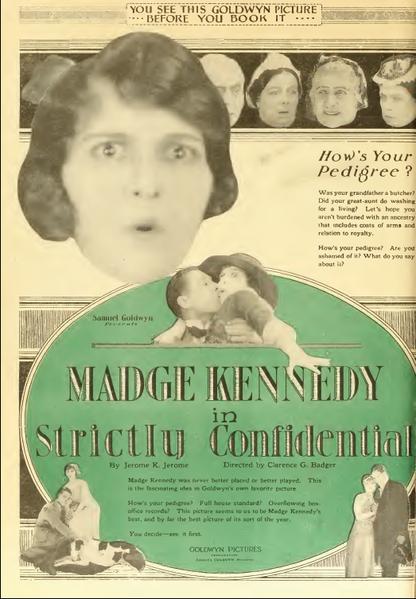
A definitive 7/10 rating for a film that redefined the boundaries of cult cinema. Strictly Confidential remains a cornerstone of transgressive art.
Stepping back into the cinematic landscape of 1919, one encounters a fascinating array of narratives, from the grand epics to the intimate character studies. Yet, few possess the singular charm and audacious premise of Strictly Confidential. This film, a delightful confection of Edwardian societal satire, plunges its audience into a scenario so inherently preposterous yet so exquisitely human, it remains a testament to the enduring power of well-crafted comedic writing. At its heart lies a simple, classic setup: the collision of two vastly different worlds, ignited by an improbable romance, only to culminate in a domestic revelation that upends every conceivable notion of propriety and family structure.
The narrative, born from the witty minds of Jerome K. Jerome and Rex Taylor, begins with a familiar trope: the dashing English nobleman, accustomed to a life of privilege and predictable social circles, succumbs to the irresistible allure of a chorus girl. This initial romance, while perhaps a touch cliché, serves as the perfect springboard for the ensuing chaos. The film, in its early moments, paints a vivid picture of this unlikely courtship, highlighting the palpable excitement and perhaps a touch of naiveté from both parties. The nobleman, played with an endearing earnestness by John Bowers, sees beyond the footlights, smitten by the vivacity and genuine spirit of his beloved. His bride, likely portrayed by the effervescent Madge Kennedy, embodies the upward mobility of the era, a woman of talent and charm seizing an unexpected opportunity for a life far removed from the stage.
Their marriage, a triumph of passion over pedigree, is celebrated, and the new Lady of the house is brought to her husband’s ancestral castle. This is where the film truly begins to unfurl its comedic genius. The introduction to the sprawling estate and its meticulously organized staff is initially presented as a grand welcome, a formal integration into her new, elevated status. However, the smiles and polite bows soon give way to an escalating sense of bewilderment for the new bride. One by one, as she meets the twenty-three members of the domestic staff, from the stern-faced butler (perhaps Robert Bolder) to the various maids, cooks, and groundskeepers, a horrifying, yet utterly hilarious, truth dawns upon her: every single one of them is her relative. It’s a domestic labyrinth of kinship, an intricate family tree rooted firmly in the servant’s quarters, with her at its bewildering apex.
The film masterfully builds this revelation. It’s not a sudden, dramatic announcement, but a slow, creeping realization, punctuated by double-takes, hushed whispers, and the growing panic in the bride’s eyes. This gradual unfolding allows the audience to fully appreciate the escalating absurdity and the sheer comedic potential of the situation. Imagine the household, a bastion of aristocratic order, suddenly revealed as a bustling family reunion, albeit one where strict hierarchical roles must still be maintained. The film explores the profound social implications of this discovery. How does one command a cook who is also one’s aunt? How does one maintain decorum with a chambermaid who is a first cousin? The very foundations of the upstairs-downstairs dynamic are shattered, or at least bent into hilariously contorted shapes.
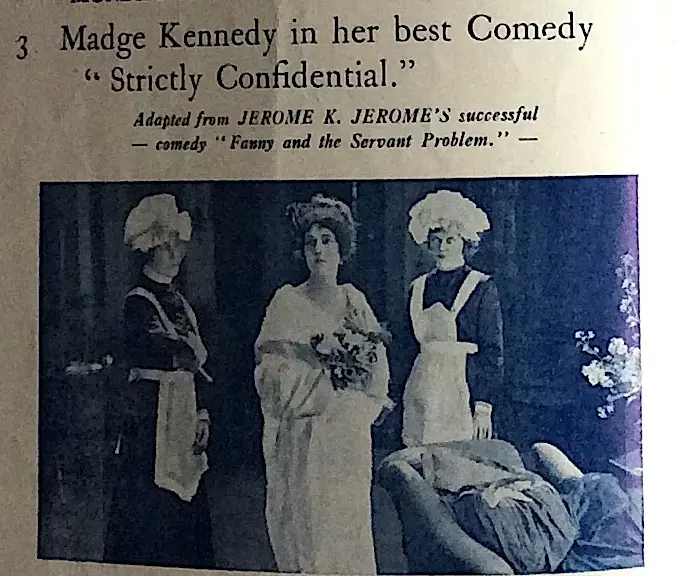
The performances, particularly by Madge Kennedy as the bewildered bride, must have been central to the film’s success. Her journey from starry-eyed newlywed to a woman grappling with an unprecedented domestic conundrum is undoubtedly the emotional anchor. One can envision her internal struggle: the desire to maintain her newfound status conflicting with the familial bonds that suddenly envelop her. The supporting cast, including Lydia Yeamans Titus, Gertrude Norman, Eugenie Forde, Roger McKinnon, Herbert Standing, and Helen Muir, collectively portraying this sprawling, interconnected staff, would have been tasked with balancing their professional duties with their personal ties to the Lady of the house. This creates a rich tapestry of potential comedic interactions, subtle glances, and unspoken understandings that transcend the typical servant-master dynamic.
Beyond the overt humor, Strictly Confidential offers a surprisingly trenchant, albeit lighthearted, commentary on the rigid class structures of Edwardian England. The film brilliantly exposes the artificiality of these divisions when confronted with the undeniable bonds of blood. The nobleman, initially oblivious to this intricate familial web, is forced to confront the reality that his ancestral home is not merely maintained by a staff, but by an extended family unit, one that now includes his own wife. This puts him in an equally awkward, if less personally shocking, position, challenging his preconceived notions of service and loyalty. The film subtly suggests that beneath the polished veneer of aristocratic life, the human connections, however inconvenient, will always find a way to assert themselves.
The screenplay, adapted from Jerome K. Jerome's work, undoubtedly retains his signature wit and keen observation of human foibles. Like in Pride, where social standing dictates so much, Strictly Confidential amplifies this through a domestic lens, showing how class distinctions can become comically untenable when familial ties are introduced. The genius lies in not making the servants villains or purely comedic caricatures, but rather individuals caught in an equally peculiar situation, trying to navigate their duties while harboring a profound, if unspoken, connection to their new mistress. The film explores the delicate dance of maintaining professional decorum while navigating deeply personal relationships, a feat that must have been a joy to watch unfold.
In the silent era, the effectiveness of a comedy relied heavily on visual storytelling, exaggerated expressions, and precise physical comedy. Strictly Confidential would have leveraged these elements to their fullest. The director, though not explicitly named in the provided information, would have had to choreograph the interactions between the bride and her countless relatives with exquisite timing. The subtle shifts in facial expressions, the knowing glances between family members, the bride's growing exasperation – all would have been conveyed without a single spoken word, relying instead on the universal language of human emotion and physical jest. This requires a profound understanding of pacing and composition, ensuring that each comedic beat lands effectively. The journey of self-discovery, though comedic here, echoes the more dramatic arcs found in films such as The Stepping Stone, albeit with a vastly different tone and ultimate resolution.
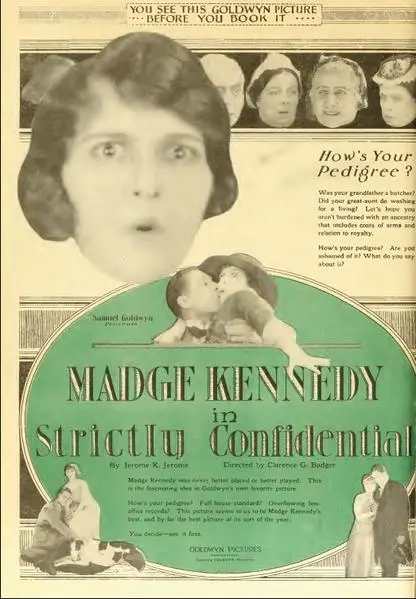
The production design, too, would have played a crucial role. The grandeur of the nobleman's castle, contrasted with the bustling, often hidden, world of the servant's quarters, would visually underscore the class divide that the plot so humorously undermines. The costumes, reflecting both the elegance of the aristocracy and the practical attire of the working class, would further enhance the visual narrative. One can imagine the meticulous detail in depicting the various roles within the household, each character instantly recognizable by their uniform, only for that visual distinction to be humorously subverted by the revelation of their shared lineage. This film, like The Adventures of Kitty Cobb, understands the power of a strong female lead navigating challenging social landscapes, albeit with a more farcical approach.
What makes Strictly Confidential resonate even today is its universal theme of navigating complex family dynamics, albeit under the most extreme and comical circumstances. Every family has its quirks, its unspoken rules, and its occasional moments of shared exasperation. This film takes those universal truths and amplifies them to an almost surreal degree, making the familiar feel utterly foreign and hilariously overwhelming. The new bride's plight becomes instantly relatable, as anyone who has ever felt overwhelmed by a large family gathering can empathize with her situation, albeit without the added layer of employer-employee dynamics.
The film’s resolution, though not explicitly detailed in the plot summary, would likely involve the nobleman coming to terms with his unique domestic situation, and the bride finding a way to gracefully manage her familial staff. The humor would stem not from the eradication of the problem, but from the innovative and often absurd ways the characters adapt to it. It’s a comedy of manners turned on its head, a gentle subversion of expectations that leaves the audience with a smile and perhaps a renewed appreciation for their own, less complicated, family trees. Compared to the more earnest struggle against adversity seen in films like Never Say Quit, Strictly Confidential offers a lighter, yet equally insightful, exploration of personal resilience in the face of the unexpected.
Ultimately, Strictly Confidential stands as a charming example of early 20th-century comedic filmmaking. It marries a clever premise with rich character potential, offering both robust laughter and subtle social commentary. It reminds us that sometimes, the greatest secrets are hidden in plain sight, and that family, in all its bewildering glory, often finds a way to permeate every aspect of our lives, whether we expect it or not. The film's enduring appeal lies in its ability to take a truly outlandish scenario and ground it in relatable human emotions, creating a timeless piece of cinematic merriment. It's a delightful peek into a bygone era, where the strictures of society were ripe for playful deconstruction, and where a chorus girl could marry into nobility, only to discover she'd married into her entire extended family. A truly unique and memorable cinematic experience.
IMDb 5.3
1935
Community
Log in to comment.