DbcultAccessing Vault...
Cult Review
Senior Film Conservator
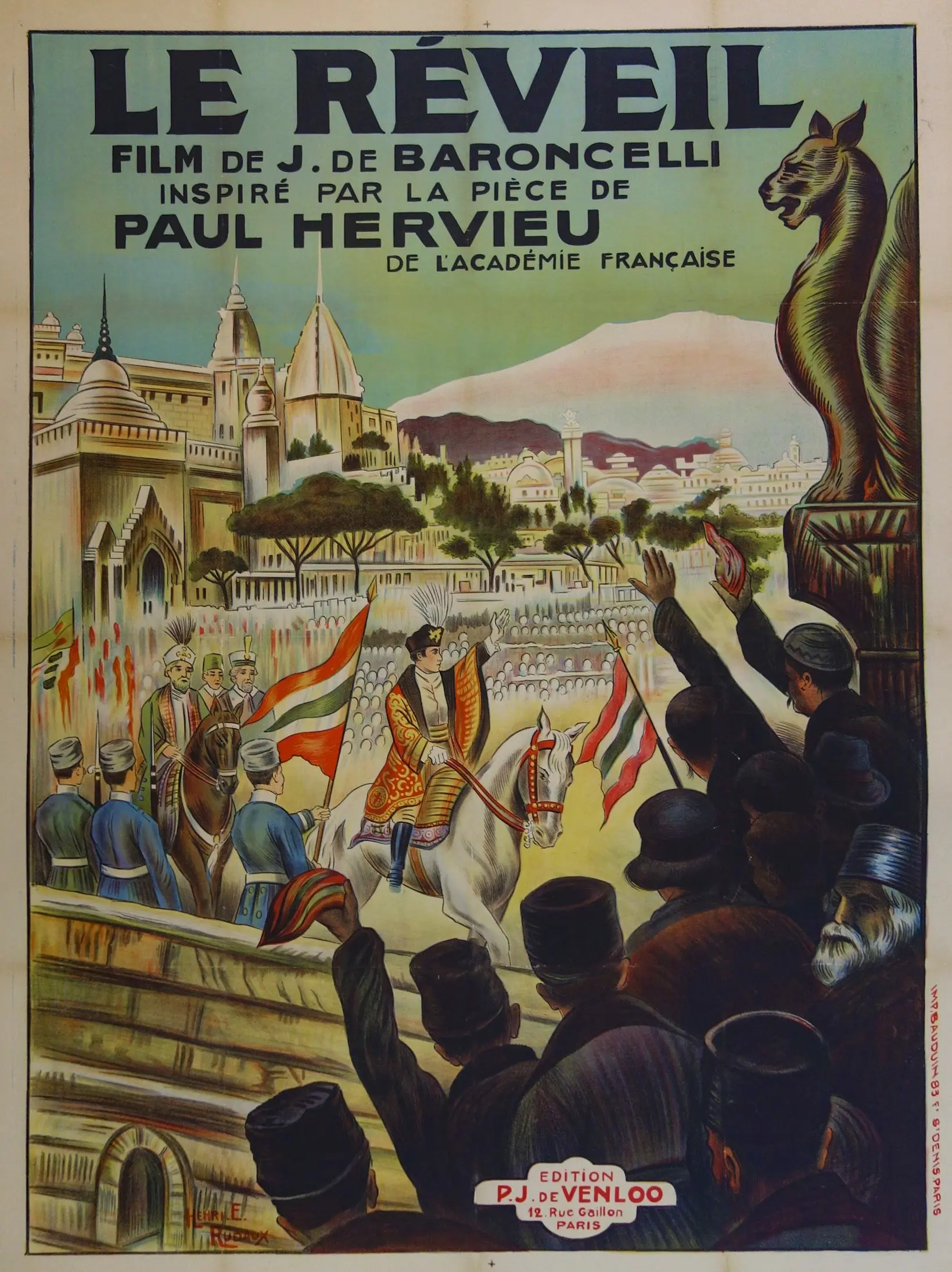
The year 1925 remains a watershed moment for French cinema, a period where the medium was shedding its theatrical chrysalis to embrace a more nuanced, visual language. Le réveil, directed with a keen eye for the psychological undercurrents of the elite, stands as a testament to this evolution. While contemporary audiences might initially mistake its premise for a standard romantic tragedy, the film operates on a much more complex frequency, dissecting the very anatomy of the 'awakening' that its title promises. It is a work that demands a certain intellectual stamina, rewarding the viewer with a rich tapestry of emotional resonance and technical prowess that few films of the era could match.
At the heart of this cinematic endeavor is the tension between the individual and the institution. Unlike the more whimsical explorations of fate found in The Willow Tree, Le réveil grounds its conflict in the unyielding soil of European tradition. The film does not merely depict a love affair; it interrogates the cost of that love when measured against the weight of a crown. The casting of Jean Bradin as Prince Jean provides a vulnerability that is essential for the film’s efficacy. Bradin’s performance is a masterclass in silent expression, capturing the frantic energy of a man who believes he has finally found a life worth living outside the confines of his birthright.
One cannot discuss Le réveil without acknowledging the monumental contribution of Charles Vanel. As Prince Grégoire, Vanel embodies the patriarchal archetype with a terrifying stillness. His character is the antithesis of the romantic impulse—he is the guardian of the status quo, the cold voice of reason that views human emotion as a variable to be managed or eliminated. Vanel’s performance here prefigures the gravity he would bring to his later, more famous roles, yet there is a specific, sharp-edged quality to his work in this 1925 production. He doesn't need dialogue to convey the weight of centuries of tradition; his gaze alone is enough to stifle the rebellion of his son.
The dynamic between father and son is the engine that drives the film’s second half. When Grégoire stages the 'death' of the prince, the film shifts from a melodrama into something far more existential. It becomes a test of character—a brutal experiment in which Jean is forced to confront the transience of his desires. This sequence is shot with a starkness that contrasts sharply with the earlier, more opulent scenes. The shadows are longer, the frames more claustrophobic, mirroring the psychological trap being set for the young prince. In many ways, this manipulation of reality feels more modern than its contemporaries, echoing the narrative twists found in films like The Riddle Rider, though with a much heavier focus on moral consequence.
While the film is ostensibly focused on the male lineage, Isobel Elsom as Thérèse de Mégée provides the emotional core that prevents the film from becoming a dry exercise in political philosophy. Elsom brings a sophisticated melancholy to the role, portraying a woman who is fully aware of the impossibility of her situation. Her performance avoids the histrionics often associated with silent-era heroines. Instead, she offers a quiet, dignified suffering that makes her eventual sacrifice all the more heartbreaking. The chemistry between Elsom and Bradin is palpable, creating a sense of genuine stakes that makes the father’s intervention feel truly villainous, even if it is framed as a 'necessity' for the state.
Comparing her role to the female leads in The Winchester Woman or The Belle of Kenosha, one sees a distinct difference in how European cinema of the time handled the 'fallen woman' or the 'temptress' trope. Thérèse is not a villain; she is a victim of a system that has no room for personal happiness. The film treats her with a level of empathy that is quite progressive, never judging her for her infidelity but rather mourning the circumstances that led her there.
The visual composition of Le réveil is deeply influenced by the theatrical origins of Paul Hervieu’s source material, yet it consistently finds ways to break free from the proscenium arch. The use of depth of field to place characters in positions of power or submission is particularly effective. For instance, scenes in the royal chambers often feature Prince Grégoire in the foreground, looming over the smaller, more distant figures of Jean and Thérèse, visually asserting his dominance before a single word of conflict is spoken. This technique creates a sense of architectural oppression, a feeling that the very buildings the characters inhabit are conspiring to keep them in their assigned places.
Furthermore, the pacing of the film is deliberate, eschewing the frantic action of American imports like A Pair of Hellions in favor of a slow-burn psychological build-up. Every look is given time to breathe; every silence is heavy with unspoken grief. This is a film that understands the power of the pause. It shares a certain thematic DNA with Atonement in its exploration of how a single decision—or a single lie—can alter the trajectory of multiple lives forever. The 'awakening' here is not a joyous one; it is the realization that one’s life is not their own.
Contextually, Le réveil arrived at a time when the concept of monarchy was being radically redefined across Europe. The film captures the anxiety of a class that knows its time is limited, yet clings to its rituals with a desperate fervor. The Prince’s duty is not just to his family, but to the idea of order itself. In this sense, the film acts as a companion piece to works like S.M il Danaro or I Will Repay, which also deal with the intersection of wealth, power, and personal morality. However, Le réveil feels more intimate, focusing on the domestic battlefield rather than the grand political stage.
The inclusion of cast members like Marguerite de Morlaye and Max Maxudian adds layers of authenticity to the aristocratic milieu. These are actors who understood the gestures and the etiquette of the period, providing a lived-in quality to the film’s world. The production design, too, is lavish without being distracting, using the opulence of the sets to highlight the emptiness of the characters' lives. It is a beautiful cage, but a cage nonetheless.
As we move into the final act, the film’s editing becomes increasingly tight, reflecting the tightening noose around the protagonists. The sequence involving the 'awakening' itself is a tour de force of silent storytelling. The way the light hits Jean’s face as he realizes the magnitude of his father’s deception is one of the most haunting images in 1920s cinema. It is a moment of total disillusionment. He is no longer the romantic dreamer; he is a man who has seen the machinery of power and knows he cannot escape it. This is a much darker resolution than the somewhat more redemptive arcs found in All Dolled Up or the lighthearted escapades of Two Little Imps.
The film’s score (depending on the restoration or live accompaniment) often plays a vital role in heightening this sense of dread. The use of minor keys and recurring motifs for the father and the son creates an auditory landscape that is as structured as the film’s visual world. Even without sound, the rhythm of the intertitles and the physical movements of the actors suggest a certain musicality—a dance of death that is as elegant as it is tragic.
In the final analysis, Le réveil is a vital piece of cinematic history that deserves more than a mere footnote in the annals of French film. It is a sophisticated, deeply felt exploration of the human condition that remains relevant nearly a century later. It speaks to the universal struggle between our private desires and our public obligations, a theme that resonates just as strongly today as it did in 1925. Whether compared to the gritty realism of Blutschande or the historical drama of Gyurkovicsarna, Le réveil carves out its own unique space through its psychological depth and visual artistry.
For those seeking a film that offers more than surface-level entertainment, Le réveil is an essential watch. It is a somber, beautiful, and ultimately devastating look at what it means to truly wake up to the world as it is, rather than how we wish it to be. It is a masterclass in the power of the silent image, a film that lingers in the mind long after the final frame has faded to black, reminding us that the most painful awakenings are often the ones that lead us back to where we started.

IMDb —
1935
Community
Log in to comment.