DbcultAccessing Vault...
6/10
Senior Film Conservator
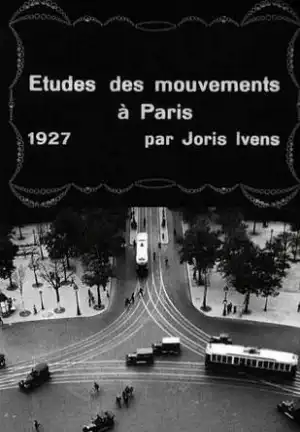
A definitive 6/10 rating for a film that redefined the boundaries of cult cinema. Studies in Movement remains a cornerstone of transgressive art.
Okay, let's be real. Studies in Movement isn't for your average Friday night popcorn crowd. If you're looking for a plot, characters, or even a hint of a story, you'll probably hate this. But if you’re a film student, an art history buff, or just someone curious about where abstract cinema even *started*, then yeah, it’s absolutely worth seeking out. It's a quick, peculiar little piece.
This Joris Ivens short from way back in 1927 is exactly what it says on the tin: studies in movement. No more, no less. It’s pretty much just a bunch of abstract shapes and light patterns doing things on screen.
What struck me first was the way light plays across these objects, or sometimes just pure abstract forms. You get these sharp lines, then suddenly a blur, then something almost geometric. It’s quite _hypnotic_ if you let it wash over you. There's a particular shot where a diagonal line just *cuts* across the screen, then another, creating this rhythmic pulse. It’s not a story, but there's definitely a beat to it.
I remember thinking, 'Is this just a bunch of gears?' at one point. It’s hard to tell what’s being filmed sometimes, which I think is kind of the point. It’s not about recognizing the object, but seeing its motion, its interaction with light and shadow. The whole thing feels very much like a visual exercise, a filmmaker messing around with the camera in a really thoughtful way.
There's this segment, a quick one, where it looks like just a bunch of circles overlapping and spinning. It’s *so simple*, yet the way the light catches the edges makes them pop. You can almost feel Ivens trying to figure out what a camera could *do* beyond just documenting real life. It’s like he was asking, "What if the camera could paint?"
It’s a silent film, obviously, and that silence really forces you to focus on the visuals. There’s no music telling you how to feel, just the pure visual information. Sometimes it feels like watching a very old, very slow screensaver from another dimension.
I wouldn’t call it "entertaining" in the modern sense. It’s more… *intriguing*. It’s a historical artifact that still manages to challenge how you look at images. The whole film feels like a series of questions about visual perception. What do we see? How does it move? What does movement *feel* like without context?
One specific moment sticks with me: a repeated motif where dark, almost shadowy shapes seem to *slide* past each other. It’s very brief, but it creates this odd sense of depth, even though everything is flat. It’s a small detail, but it makes you lean in a little. You want to understand the trick.
This isn't a movie you "enjoy" with friends. It’s a solitary experience, really. It demands your patience, and rewards it with a window into an almost forgotten way of seeing film. A very particular kind of film, mind you.
Don't expect a thrilling ride, but do expect to have your ideas about what a "movie" can be gently nudged. 🎬
IMDb —
1924
Community
Log in to comment.