DbcultAccessing Vault...
5.5/10
Senior Film Conservator
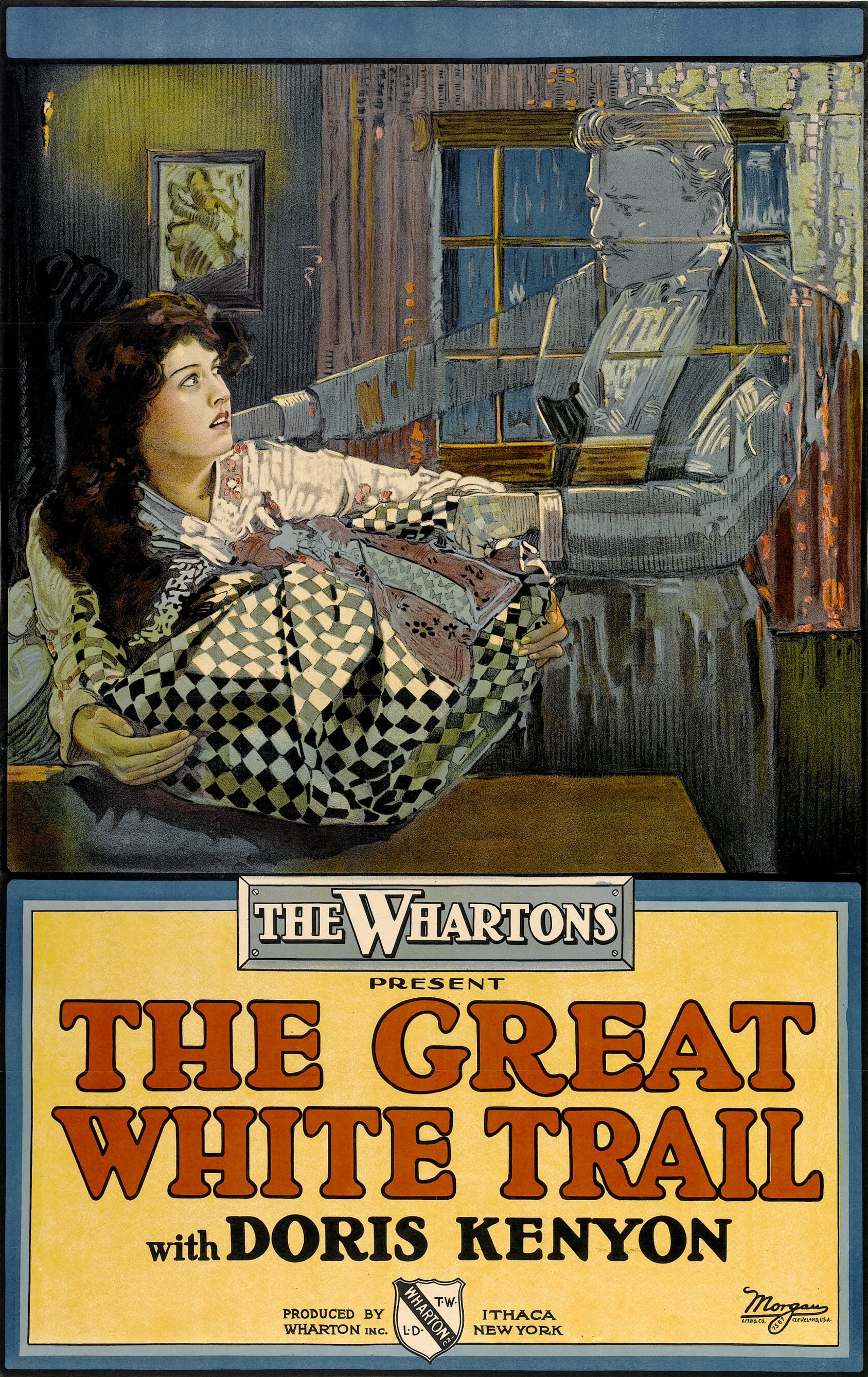
A definitive 5.5/10 rating for a film that redefined the boundaries of cult cinema. The Great White Trail remains a cornerstone of transgressive art.
Released in February 1923, Leopold Wharton’s bruised valentine to marital paranoia arrives like a frostbitten letter slid under the door of American silent cinema. The plot—ostensibly a dime-novel melodrama of mistaken paternity—mutates under Wharton’s gaze into something far more lacerating: a morality play where the glacier itself becomes both witness and executioner. Contemporary critics, drunk on jazz-age exuberance, dismissed it as “creaky snow-bound hokum.” A century later, the film feels prescient, its DNA twining through later guilt-laced noirs from Frozen Fury to Hypocrisy. The surviving 35 mm print—scarred like a sled-runner yet miraculously complete—screens this month on 4K DCP, allowing new audiences to thaw its secrets.
There is, of course, no official canon of polar noir, yet the sub-genre’s tenets crystallize here: a chiaroscuro of snow instead of asphalt, the howl of sled dogs substituting for saxophones, and redemption always just beyond the next pressure ridge. Where Trapped by the Camera fetishizes claustrophobic interiors, The Great White Trail weaponizes boundless exteriors—white so bright it blackens the soul. Louise Hotaling, saddled with the thankless role of “hysterical mother,” instead sculpts a performance of geological anguish: every tremor in her cheekbones registers like tectonic shift. Watch her eyes in the abandonment sequence—two match-flares guttering against a night that refuses to forgive.
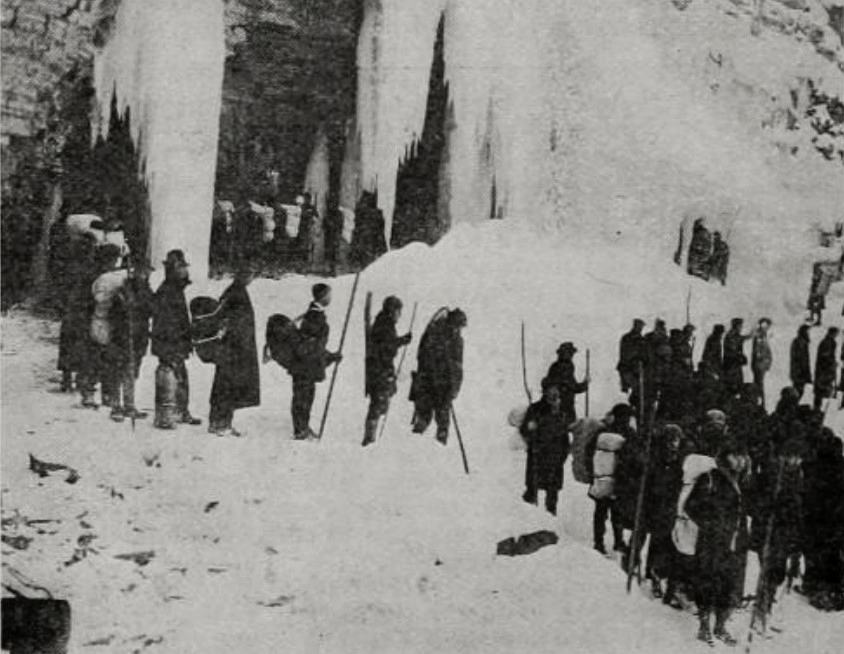
Cinematographer F.W. Stewart (moonlighting from his usual actor’s chair) shoots the Alaskan exteriors through a yellow filter that renders daylight jaundiced, as though the sun itself suffers from moral scurvy. Interiors glow with whale-oil amber, faces carved by kerosene shadows. In one signature dolly shot, the camera glides past a row of frost-lashed parkas hanging like executed men, finally resting on Hotaling’s silhouette as she signs her fake name into a mining-camp ledger—her handwriting shakier than the hand-held frame. It’s a flourish Hitchcock would echo four years later in The Lodger, proving that anxiety can travel by dogsled as well as by fog.
Because the film is mute, every creak of ice, every crack of a rifle becomes purely imaginary, and therefore more intimate. During the midnight screening I attended, the only audible noises were the HVAC’s asthmatic wheeze and the occasional gasp when Stewart cuts from a close-up of the abandoned pram to an extreme long shot of a frozen river—an ellipsis of abandonment so brutal the mind fills the gap with phantom cries. That is the film’s true score: the audience’s own surging blood.
Thomas Holding, as the husband whose jealousy detonates the narrative, has the profile of a Roman coin and the emotional range of a tax auditor—yet that rigidity works. His character’s arc is from certainty to self-immolation, and Holding’s locked jaw becomes a map of masculine collapse. Compare his final close-up—eyes reflecting aurora, pupils dilated with futility—to the penultimate shot of Held for Ransom, where the kidnapper’s face dissolves into celluloid fog. Both films understand that the most terrifying monster is the one who realizes he has become his own victim.
Doris Kenyon, playing the saloon chanteuse who offers Hotaling’s fugitive a crust of bread and a whisper of solidarity, steals every frame with a cigarette perched between two fingers like a spent match of empathy. Her song—intercut with title cards reading “I had a baby once… the river took him”—lasts forty seconds yet expands the film’s maternal ache to cosmic scale.
Gardner Hunting’s scenario, adapted from a Saturday Evening Post potboiler, trims every ounce of fat until the story resembles a stripped sleigh. Note the absence of comic relief, the scarcity of intertitles, the refusal to anthropomorphize sled dogs—this is a universe where even fauna obey Darwin. Yet the screenplay’s boldest gambit is structural: the midpoint abandonment of the infant occurs off-screen, relayed only via a discarded shawl discovered by a minor character. That vacuum becomes the film’s moral black hole, dragging every subsequent action into its gravity.
“I fled not from you, but from the mirror you held to my shame.” — title card, reel 5
Dialogue this terse could feel modernist in lesser hands; here it reverberates like a church bell across tundra.
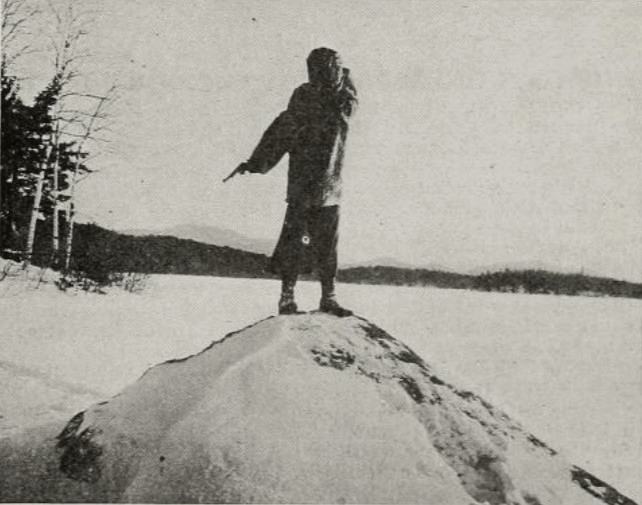
Scholars often pigeonhole silent melodrama as retrograde, yet Trail complicates that读narrative. Yes, the woman suffers, but the film’s visual syntax consistently undermines patriarchal authority. Note the recurrence of doorframes trapping Holding within his own house like a portrait of impotence, or the final tableau where Hotaling walks away from camera into a blizzard—her silhouette swallowed, yes, but also freed from the male gaze. Wharton refuses to stage a tearful reunion; instead he grants her the frontier, vast and lethal, yet sovereign.
The lone surviving print turned up in 2017 inside a Dawson City swimming-pool projection booth, frozen beneath permafrost—an archival punch-line too perfect for fiction. The Canadian Film Institute’s restoration team used cool-water rinses to re-hydrate the shrunken emulsion, then laser-scanned at 8K to capture every crystalline scratch. The resulting DCP retains those scars as history’s own Braille; to erase them would be to airbrush a survivor’s wrinkles.
Initial digital passes corrected the yellow cast to neutral white, rendering snow clinically pure. Test audiences felt alienated—too antiseptic. The final grade re-introduced sulfuric yellows and bruised cyans, restoring the ethical rot beneath the frost. It’s a reminder that so-called “accuracy” can betray emotional truth.
Cinephiles will notice DNA strands linking this frost-bitten fable to plenty of descendants. The overhead shot of dogsleds threading a frozen river anticipates the hedge-maze chase in The Shining; the jagged iris-out on Hotaling’s screaming mouth prefigures the bone-match cut in 2001. Meanwhile, the moral ambiguity of an abandoned child resurfaces in Kindling (1923) and mutates into outright horror in Sins of Great Cities. Yet no successor marries guilt to geography with this film’s implacable logic: the farther north you flee, the deeper you bury yourself in your own psychic permafrost.
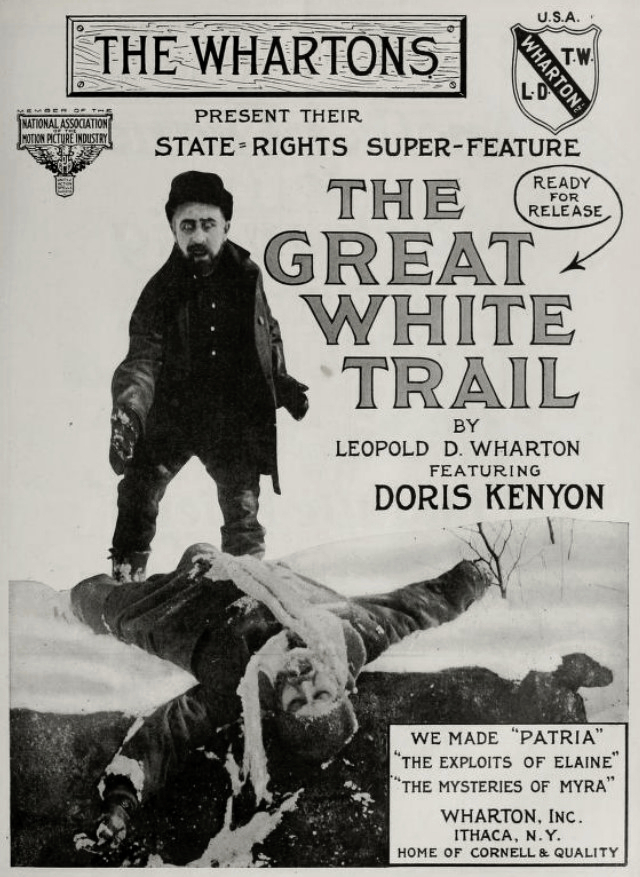
Original Variety dismissed it as “a woman’s weepie in earmuffs.” The New York Times opined that “the Alaskan backdrop is merely winter wallpaper.” Yet the film grossed an impressive $462,000 on a $73,000 budget, thanks to regional roadshows where Eskimo pie coupons doubled as tickets. Today, Letterboxd lists fewer than 120 views—criminal neglect for a picture that invents half the vocabulary of snow-bound suspense. My local arthouse screened it alongside Charity as a double-bill of maternal despair; the juxtaposition revealed how both films weaponize silence, though only Trail dares to leave its infant off-screen, amplifying absence into a scream.
As of this writing, the film streams on Criterion Channel under the “Frozen Silence” retrospective, and a 4K Blu-ray drops this December with commentary by film historian Dr. Mara Ashford. Watch it on the largest screen possible—snow demands pixel real estate. Better yet, wait for a blizzard, open a window, and let the room temperature plummet until your breath fogs the TV. Only then will you approximate the sensory immersion Stewart intended.
Great films often arrive wearing the wrong clothing; this one masquerades as dime-store melodrama while smuggling in a treatise on culpability that would make Dostoevsky shiver. Its politics feel eerily current—toxic masculinity, maternal autonomy, the privilege of walking away and the karma of being followed. The final image—Hotaling’s scarf fluttering atop a glacier like a surrender flag—will haunt you longer than any CGI specter, precisely because it is so materially fragile. In a cinematic era obsessed with superheroes, The Great White Trail reminds us that the most titanic battles occur inside ordinary hearts, and that the coldest frontiers are not measured in latitude but in regret.
Runtime: 71 min | Silent with English intertitles | Not rated (would be PG-13 for thematic intensity)
IMDb —
1916
Community
Log in to comment.