DbcultAccessing Vault...
7.5/10
Senior Film Conservator
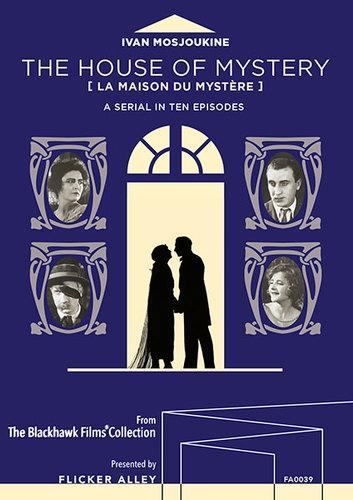
A definitive 7.5/10 rating for a film that redefined the boundaries of cult cinema. La maison du mystère remains a cornerstone of transgressive art.
To witness La maison du mystère is to step into a bygone era of cinematic experimentation where the boundaries between commercial serials and avant-garde art were porous and frequently ignored. Produced by the legendary Albatros studio—a haven for Russian émigrés fleeing the Bolshevik Revolution—this 1923 masterwork directed by Alexandre Volkoff transcends the melodramatic trappings of its source material. The film’s opening, a wedding scene captured in exquisite silhouette, serves as a visual manifesto. By stripping away the actors' features, Volkoff forces the audience to engage with the essential geometry of the scene, creating a sense of universality that anchors the subsequent eighteen years of narrative turmoil. Unlike the more straightforward morality plays of the era, such as What's Bred... Comes Out in the Flesh, this film utilizes shadow not merely as a stylistic gimmick, but as a thematic harbinger of the darkness that will soon envelop the protagonist.
At the heart of this epic stands Ivan Mozzhukhin, arguably the most versatile and magnetic screen presence of the silent age. As Julien Villandrit, Mozzhukhin undergoes a metamorphosis that is both physical and psychological. He begins as a man of vigor and optimism, only to be hollowed out by the cruelty of a false accusation and the subsequent years of incarceration. Mozzhukhin’s performance is a masterclass in the 'Kuleshov effect' in reverse; he provides the audience with a canvas of such profound emotional depth that we project our own fears and hopes onto his stoic visage. His ability to convey the crushing weight of time is far more nuanced than the histrionics often found in contemporary works like A Fool's Paradise. In La maison du mystère, the face of the actor becomes a landscape across which the history of the early 20th century is written.
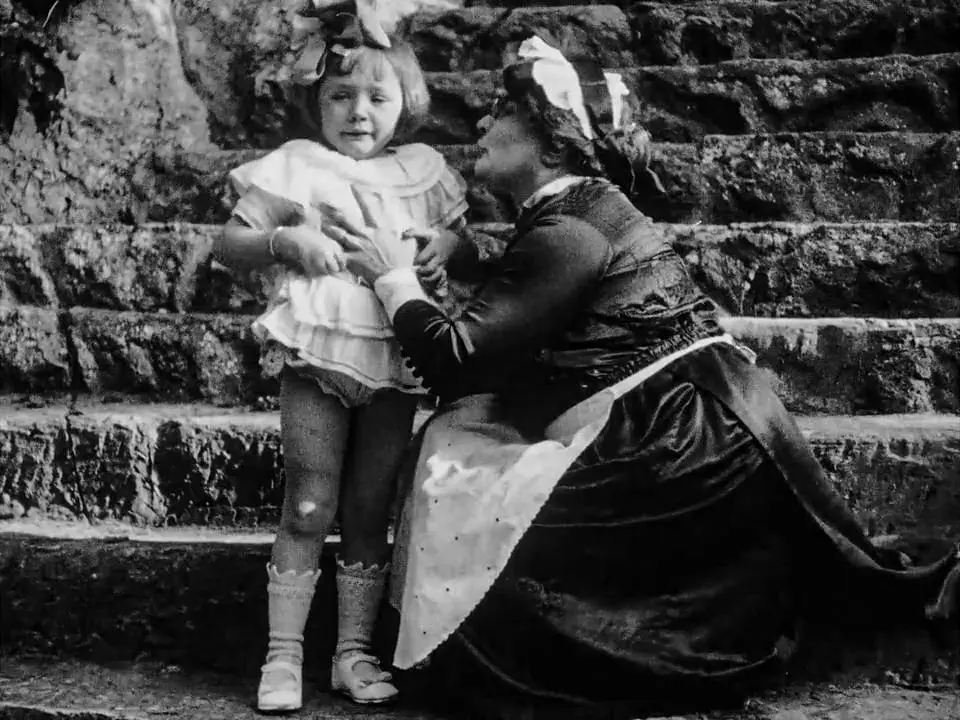
Opposing him is the formidable Charles Vanel, playing the villainous Henri Corradin. Vanel, who would later become a titan of French cinema in the sound era, delivers a performance of chilling restraint. His Corradin is not a mustache-twirling caricature but a man driven by a visceral, corrosive jealousy. The dynamic between Mozzhukhin and Vanel provides the film with a gravitational center, ensuring that even as the plot weaves through complex blackmail schemes and multiple identities, the human stakes remain palpable. This character depth elevates the film beyond the simplistic adversarial tropes seen in Beating Back or The End of the Game.
The structural audacity of the film lies in its temporal scope. Spanning from the late 19th century to the early 1920s, the narrative allows for a profound meditation on the erosion of identity. When Julien finally returns to reclaim his life, he is a ghost haunting his own legacy. The production design meticulously reflects this passage of time, shifting from the ornate, claustrophobic interiors of the Victorian era to the starker, more modern sensibilities of the post-war period. This sense of historical progression gives the film a weight that is often absent in shorter, more episodic films like Molly Go Get 'Em. While Allies' Official War Review, No. 1 documented the literal changes of the era, Volkoff’s work captures the psychological shifts of a society in flux.

| Cinematic Element | Impact on Narrative |
|---|---|
| Chiaroscuro Lighting | Enhances the sense of mystery and moral ambiguity surrounding the central murder. |
| Location Shooting | The use of the French countryside and Parisian streets adds a layer of verisimilitude. |
| Episodic Pacing | Allows for deep character development that a standard feature film could not sustain. |
Volkoff’s direction is characterized by an restless curiosity. He utilizes double exposures, rapid rhythmic editing, and subjective camera angles to immerse the viewer in Julien’s fractured psyche. There is a sequence involving a chase through a dense forest that rivals the atmospheric tension of Die Nacht der Königin Isabeau, yet it feels distinctly more grounded in the French Impressionist school. The film’s cinematographer, Fedote Bourgassoff, captures the interplay of light on water and the stark shadows of the industrial landscape with a painterly eye, reminiscent of the visual richness found in Tigancusa de la iatac.
One cannot discuss La maison du mystère without acknowledging its contribution to the language of the thriller. The way information is withheld from the viewer—and the protagonist—creates a persistent sense of dread. This isn't the lighthearted mystery of West Is Worst or the patriotic fervor of The Spirit of '23. Instead, it is a precursor to the film noir, where the environment itself seems to conspire against the innocent. The "house of mystery" of the title becomes a metaphor for the human mind, filled with locked rooms and forgotten secrets. This thematic depth is also present in Le roman d'un caissier, but Volkoff operates on a much grander, more operatic scale.

While the film is technically sophisticated, its heart remains firmly rooted in the grand tradition of the feuilleton. The plot is a dizzying array of coincidences, narrow escapes, and shocking revelations. However, Volkoff and his writers (including Mozzhukhin himself) treat these elements with such sincerity that they never feel cheap. The romance between Julien and his wife, Régine, is the emotional anchor that prevents the film from drifting into mere technical exercise. Their eventual reunion is not a moment of simple catharsis but one tinged with the bittersweet realization of all that has been lost. It is a far more complex resolution than the romantic conclusions of Oltre l'amore or the moralistic endings of His Brother's Keeper.
"In the silence of the screen, Mozzhukhin speaks volumes of the human capacity for endurance."
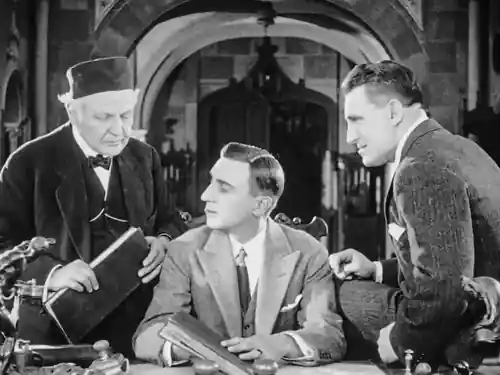
In the context of 1923, a year that saw films like The Impostor and An Alien Enemy exploring themes of identity and betrayal, La maison du mystère stands out for its sheer ambition. It is a work that demands the viewer's full attention across its multi-hour runtime, rewarding them with a narrative richness that few films of any era can match. The restoration of this serial has allowed modern audiences to appreciate the Albatros studio's unique blend of Russian soul and French style—a combination that produced some of the most enduring images of the silent period.
Ultimately, La maison du mystère is a testament to the power of visual storytelling. It reminds us that before the advent of synchronized sound, cinema had already developed a complex and evocative vocabulary capable of expressing the most intricate human emotions. Volkoff’s use of the silhouette in the opening remains one of the most iconic images of the 1920s, a haunting reminder of the fragile line between light and darkness, truth and deception. For the dedicated cinephile, this film is not merely a historical curiosity but a living, breathing work of art that continues to challenge and inspire. It is a sprawling, magnificent labyrinth that invites us to lose ourselves in its mysteries, only to find something profound about the human condition within its shadows.
Final Rating: A Masterpiece of Silent Serialism
Essential viewing for fans of Ivan Mozzhukhin and the Albatros aesthetic.

IMDb —
1924
Community
Log in to comment.