DbcultAccessing Vault...
5.5/10
Senior Film Conservator

A definitive 5.5/10 rating for a film that redefined the boundaries of cult cinema. Suicide Fleet remains a cornerstone of transgressive art.
If you have a soft spot for early 1930s movies where everyone talks like they have a train to catch in five minutes, then yes. It is a weirdly fun time.
It’s perfect for anyone who likes pre-Code naval shenanigans or seeing a very young Ginger Rogers before she became a household name. If you want a serious, historically accurate war drama, you are going to absolutely hate this.
The movie starts at Coney Island, which is easily the best part. It feels lived-in and dusty in a way that modern sets never quite capture.
Ginger Rogers plays Sally, who works on the midway. She has this spark even here, long before the big musicals.

Then we have our three heroes: Bill, Skeets, and Hap. They are all chasing Sally, and their flirting style is basically just being as loud and annoying as possible.
William Boyd plays Bill with a very stiff, leading-man energy. You might recognize him from Alias Jimmy Valentine, but he feels a bit out of place next to the other two.
James Gleason and Robert Armstrong are the real stars here. They spend the first twenty minutes just shoving each other and making faces.
It has that same chaotic, fast-talking energy you find in Boneyard Blues. Just guys being dudes in the loudest way imaginable.
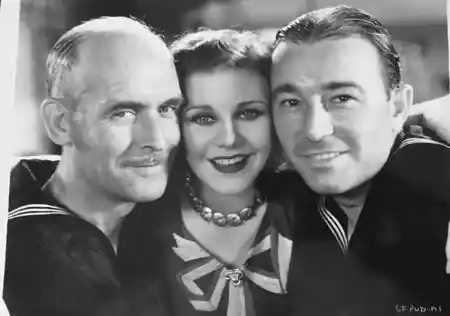
The plot kicks in when they all join the Navy to impress Sally. It’s a very 1930s motivation—joining a world war because you're horny and bored.
The middle of the movie drags a bit once they get on the boats. There are a lot of scenes of men in white hats looking at the horizon.
They end up on a Q-ship, which is a merchant vessel with hidden guns. It’s basically a bait ship meant to get attacked by U-boats so they can shoot back.
The "mystery ship" stuff is actually pretty cool. I liked the way the sides of the ship just collapse to reveal the cannons.

There’s one scene where they have to act like panicked merchant sailors to trick a submarine. They overact so much it’s actually funny.
One guy is running around with a fake parrot cage. It’s a very specific choice that serves no purpose other than being weird.
The naval footage is surprisingly decent for 1931. It looks like they used a mix of real Navy stock footage and some very large miniatures in a tank.
The night scenes have that silvery, high-contrast look. It makes the ocean look like liquid mercury, which is beautiful even if it’s clearly a studio set.

There is a moment where a German commander looks through a periscope and the movie does this odd circular mask effect. It lingers a bit too long, making the commander look like he’s staring into your soul.
The tonal shift is the strangest part. It goes from a goofy carnival comedy to people actually dying in about ten seconds.
It’s not quite as heavy as something like Where Poppies Bloom, but it tries to be. The transition is clunky, like the director suddenly remembered the title had the word 'Suicide' in it.
Ginger Rogers is the only reason some people will watch this today. She doesn't have much to do in the second half besides wait for the boys to come back.
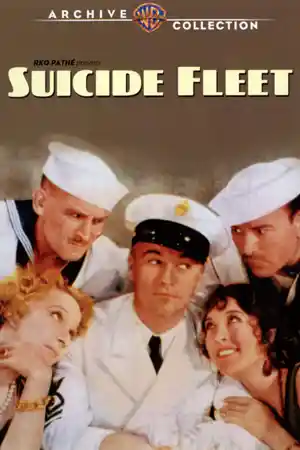
But when she is on screen, she owns it. She has a way of looking at William Boyd like he’s the most boring person on earth, which, honestly, he kind of is in this one.
It’s not an epic like The Sign of the Cross. It’s a small, slightly messy movie about three guys who need to grow up.
The ending feels very rushed. They get home, there’s a quick parade, and then the credits roll before you can even process who 'won' the girl.
I don't mind the messiness, though. It feels like a real snapshot of how movies were made when sound was still a bit of a novelty.
Overall, it’s a decent watch if you find it on a rainy Sunday. Just don't expect it to change your life or anything.
It’s a bit like a Coney Island hot dog. A little greasy, probably not great for you, but satisfying in the moment.
IMDb 7.4
1936
Community
Log in to comment.