DbcultAccessing Vault...
Cult Review
Senior Film Conservator
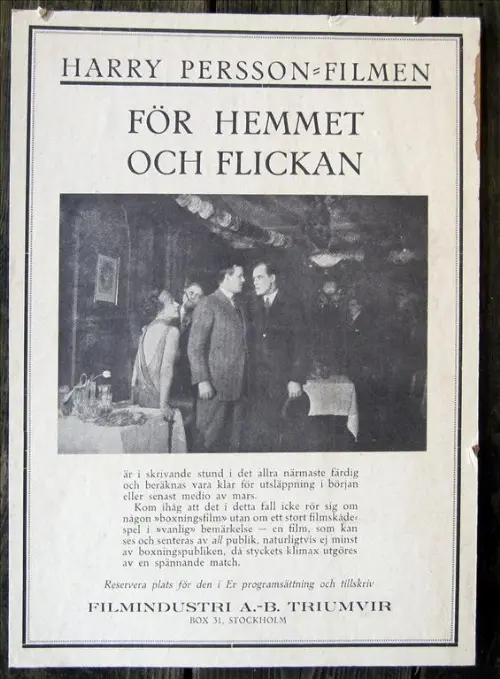
The 1920s in Swedish cinema often feel like a spectral dance between the towering heights of the Sjöström era and the burgeoning populism of the 'Pilsnerfilm' years. Within this transitional epoch lies För hemmet och flickan (1925), a film that manages to bridge the gap between high-art maritime tragedy and the grounded, often sentimental realism of local drama. Directed and written by Weyler Hildebrand, this work is more than a mere period piece; it is a visceral excavation of the human spirit under the weight of elemental cruelty.
"The sea does not just take the man; it attempts to swallow the legacy he leaves behind on the shore."
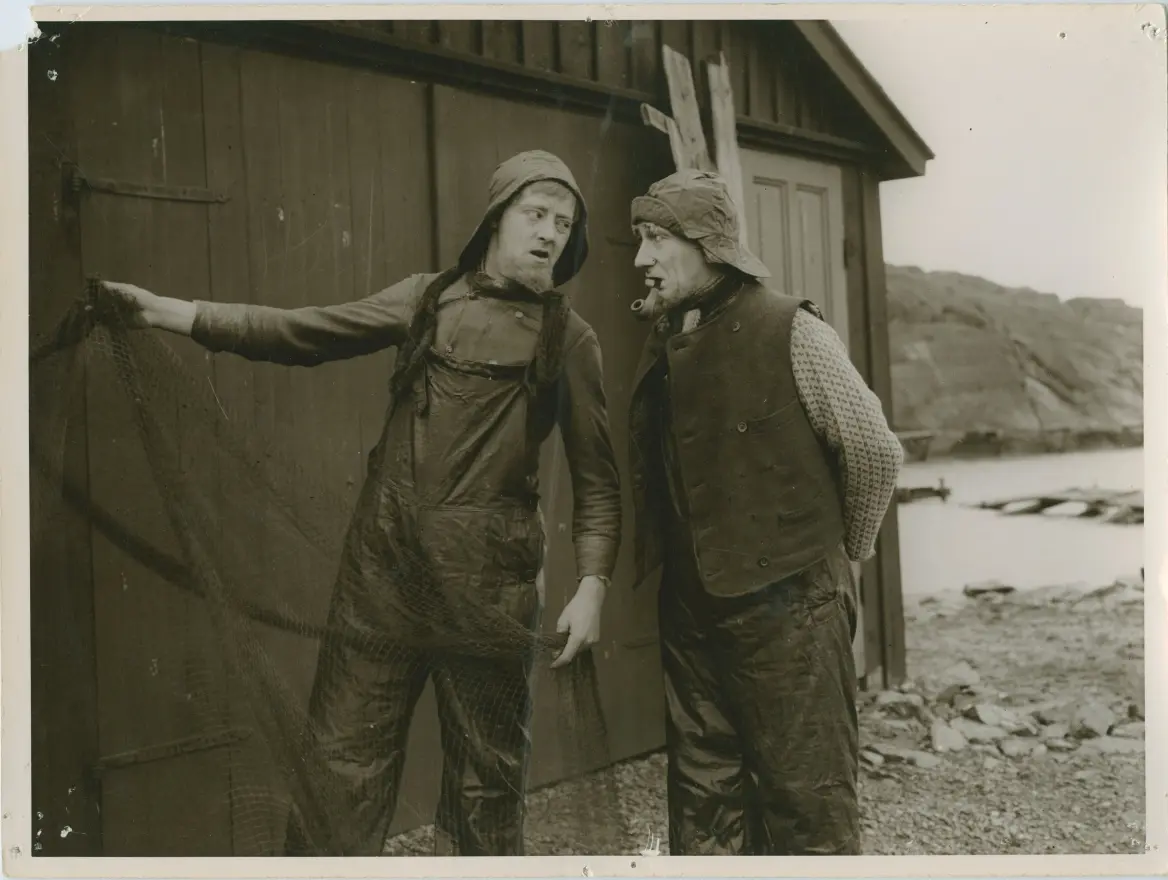
The film opens with a sequence that rivals the atmospheric tension of The Battle of Jutland, though on a much more intimate, devastating scale. When the old fisherman Boman is claimed by the sea, the cinematography captures the chaotic indifference of the waves with a clarity that feels almost modern. Unlike the curated artifice of Bag Filmens Kulisser, where the mechanics of filmmaking are laid bare, Hildebrand immerses the viewer in a reality that feels unmediated and raw. The drowning of Boman isn't just a plot device; it is a structural collapse of a family unit.
Jenny Tschernichin-Larsson delivers a performance of remarkable gravitational pull as the widow. In an era where silent film acting could often veer into the hyperbolic, her portrayal of grief is strikingly internal. She carries the burden of the cabin and her daughter Gerd with a stoicism that mirrors the granite cliffs of the archipelago. There is a sense of domestic labor as a form of prayer, a theme that resonates with the struggles depicted in American Maid, yet here the stakes are sharpened by the isolation of the Swedish coast.
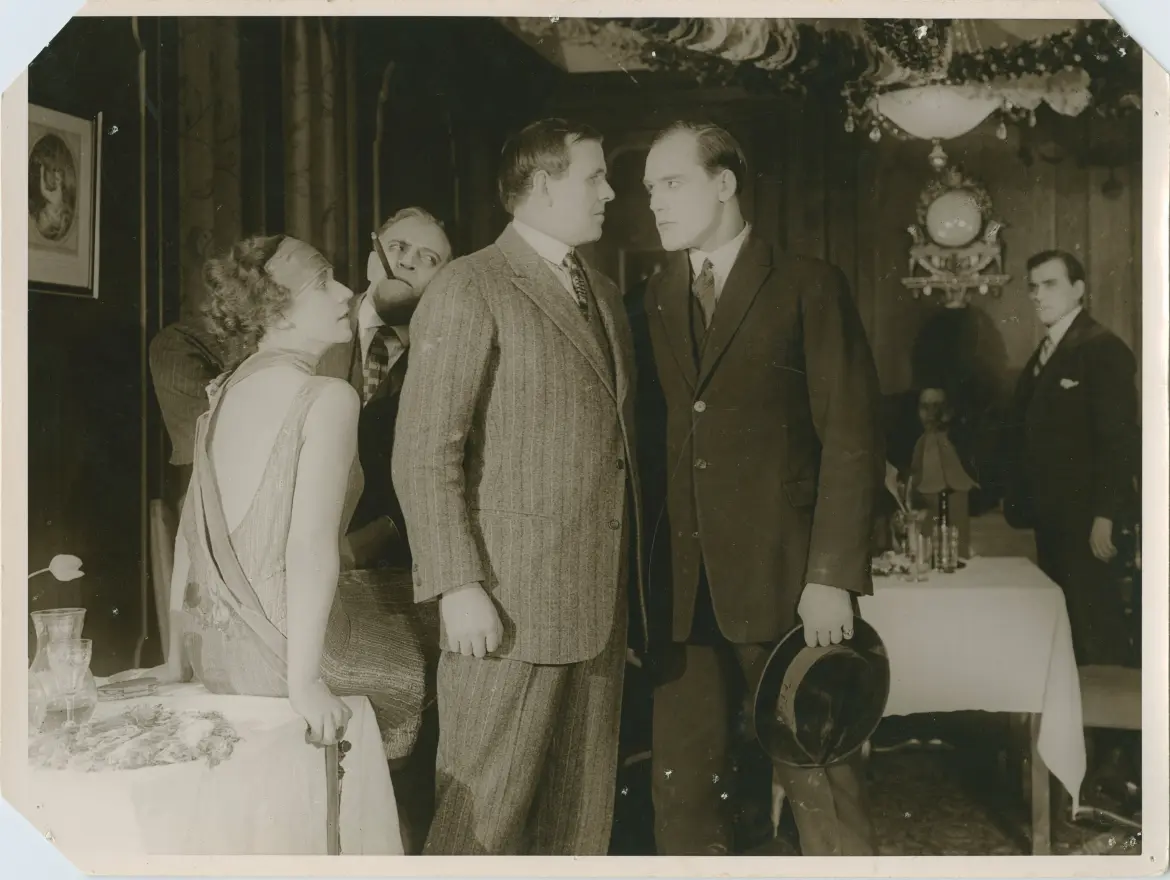
The casting of Harry Persson, the legendary heavyweight boxer, adds a fascinating layer of physicality to the film. Persson’s presence provides a rugged contrast to the more traditional dramatic archetypes of the time. His inclusion feels like a precursor to the celebrity-driven casting we might see in The Lucky Devil, yet he fits seamlessly into this world of manual toil and salt-sprayed grit. His character offers a glimmer of hope, a potential bridge out of the penury that threatens to consume the Boman household.
When analyzing the trajectory of the widow and Gerd, one cannot help but draw parallels to La Destinée de Jean Morénas. Both films grapple with the concept of a predetermined path, where the protagonist is caught in the gears of a destiny they did not choose. However, Hildebrand’s work is less about the cruelty of fate and more about the endurance of the human heart. Where Till We Meet Again might lean into the romanticism of longing, För hemmet och flickan remains stubbornly, beautifully grounded in the mud and the mist.
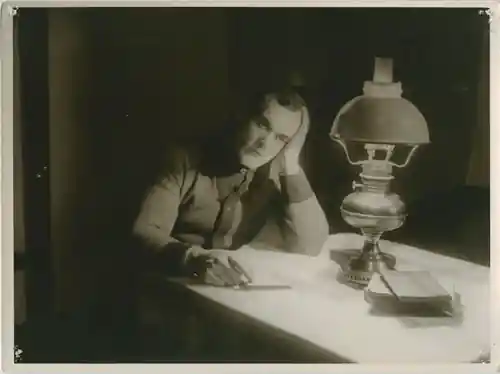
The film also touches upon the social hierarchies of the time. The financial desperation that leads the characters toward the brink of ruin is reminiscent of the moral and economic dilemmas in A Prince in a Pawnshop. There is no easy out for these women; they are bound by their gender and their class, a reality that is explored with even more explicit social commentary in No Woman Knows. The cabin, once a sanctuary, becomes a cage as the debts mount, and the sea, once their provider, becomes a silent witness to their slow-motion catastrophe.
Technically, the film is a marvel of its time. The use of natural light—the pale, thin sun of the North—creates a high-contrast world of deep blacks and ethereal greys. This isn't the lush, exotic landscape of The Carpet from Bagdad; this is a landscape that demands respect and fear. The editing by Hildebrand himself ensures that the pacing never falters, maintaining a tension that keeps the viewer anchored to the Boman family's plight. Even in moments of levity, often provided by the incomparable Fridolf Rhudin, there is an underlying awareness of the fragility of their situation.
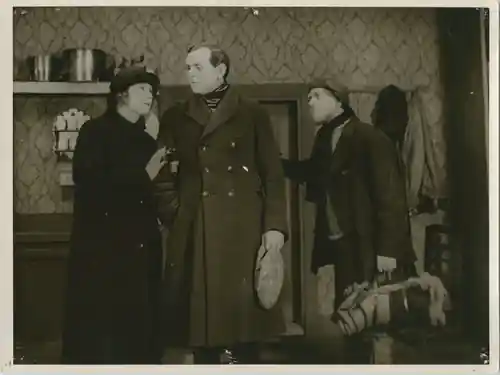
Rhudin, who would go on to become one of Sweden's most beloved comic actors, shows early flashes of the brilliance that made him a star. His ability to inject warmth into such a stark narrative is vital. It prevents the film from descending into pure nihilism, much like how A Very Good Young Man uses character charm to navigate its social hurdles. Yet, Rhudin’s character here is not merely comic relief; he is part of the community’s connective tissue, a reminder that even in the face of death, life continues in its messy, sometimes humorous, persistence.
There is a sequence midway through the film where the widow contemplates the horizon, her face a map of decades of salt and sorrow. This image evokes the same sense of wandering and searching found in The Gypsy Trail, but while the latter seeks freedom, the widow seeks only stability. The film masterfully explores the 'home' as a concept worth fighting for—a theme that feels universal yet uniquely Swedish in its execution. The struggle to keep the cabin is not just about shelter; it is about maintaining a foothold in a world that is constantly trying to wash you away.
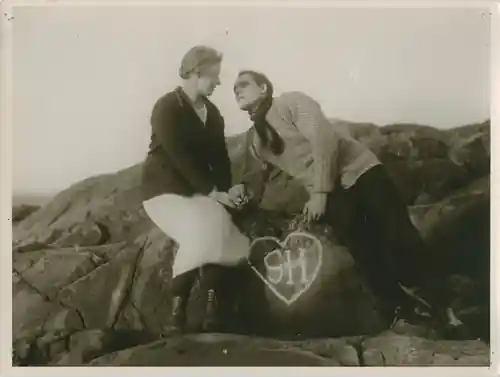
Comparisons to Tempest Cody Turns the Tables are apt when considering the resilience of the female lead. Gerd, played with a burgeoning strength by Elsa Widborg, represents the next generation’s refusal to be crushed by circumstance. She is the 'flickan' (the girl) of the title, and her journey from a grieving daughter to a woman of agency is the film's true emotional arc. She doesn't just survive the storm; she learns how to navigate the world it leaves in its wake.
In the broader context of 1925, a year that saw the release of experimental works and high-octane adventures, För hemmet och flickan stands out for its quiet, unyielding integrity. It lacks the technological gadgetry of a modern thriller like Sneakers, yet the tension it builds through human emotion and environmental threat is far more visceral. It avoids the overt moralizing of An Amateur Devil, opting instead for a nuanced exploration of ethics in the face of starvation.
Hildebrand has crafted a film that feels like a folk song—simple in its melody but profound in its resonance. The themes of Pagan Passions might seem worlds away from this Lutheran coastal life, yet both films tap into the primal relationship between humans and their environment. As the final credits roll, one is left with the haunting image of the Swedish coast: beautiful, terrifying, and indifferent. För hemmet och flickan is a testament to the power of silent cinema to capture the unutterable depths of the human condition. It is a vital chapter in the history of Nordic film, a work that demands to be seen by anyone who values the intersection of art, history, and the indomitable will to endure.
Reviewer's Note: This film represents a crucial bridge in Weyler Hildebrand's career, showcasing his ability to handle heavy drama before his later pivot toward more populist comedic fare. The preservation of this print is a gift to cinematic historians everywhere.
IMDb 7.3
1933
Community
Log in to comment.