DbcultAccessing Vault...
6.2/10
Senior Film Conservator
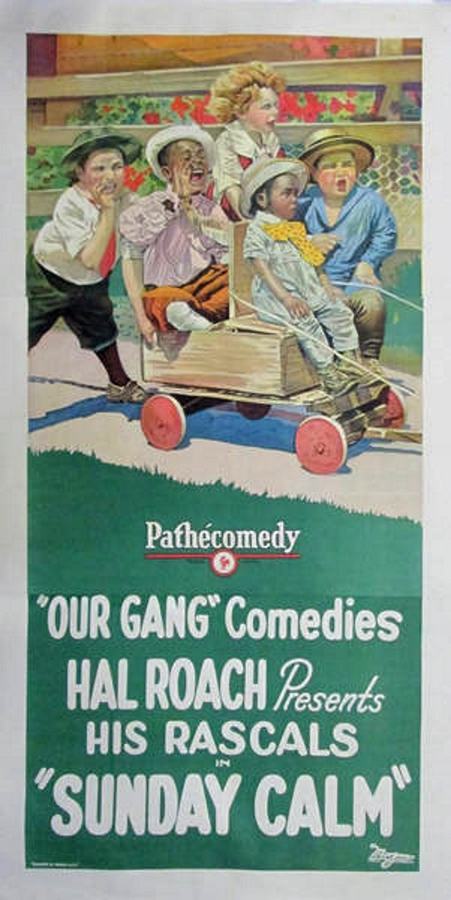
A definitive 6.2/10 rating for a film that redefined the boundaries of cult cinema. Sunday Calm remains a cornerstone of transgressive art.
Sunday Calm (1929): A Picnic of Rebellion and the Illusions of Control
In the pantheon of early Hollywood comedies, Sunday Calm occupies a peculiar niche: it is neither a slapstick farce nor a moralistic parable, but a study in the delicate alchemy of childhood agency. Directed with a mischievous eye by Hal Roach (later a titan of the Three Stooges universe) and co-written by H.M. Walker, the film captures a fleeting moment when the world tilts sideways for a group of children, their picnic wagon liberated from the grip of clueless adults. The result is a narrative that dances between whimsy and existential inquiry, framed by the visual poetry of silent-era cinematography.
The film opens with a scene of domestic theater—the families, a motley cast of bickering housewives and distracted fathers, prepare their wicker baskets and checkered blankets. Helen Gilmore, as the put-upon matriarch, shoulders the burden of logistics while Jack Davis’s character fiddles with a broken corkscrew. The audience, primed for a traditional picnic sequence, is instead ambushed by chaos. The wagon, a symbol of familial order, breaks free, carrying the children into the wilderness of their own making. This moment, both literal and metaphorical, is the film’s thesis: the adults, for all their planning, are shown to be fragile custodians of routine, while the children—untethered from expectations—become improvisational visionaries.
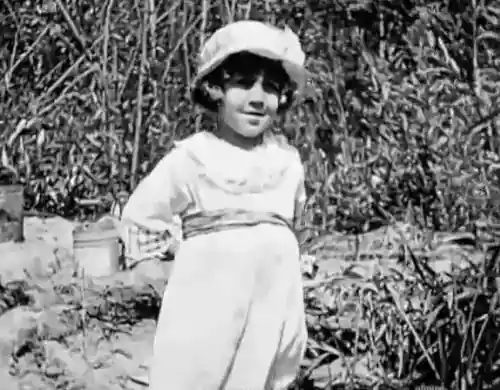
What follows is a masterclass in unadorned storytelling. The children, now the de facto protagonists, proceed to construct a picnic on their terms. Leona Levin’s character, a budding gastronome, insists on substituting the adults’ meager sandwiches with wildflowers and ants. Richard Daniels, embodying a proto-teenage grumpiness, sulkily attempts to roast marshmallows over a campfire made from sticks and sheer will. The film’s genius lies in its restraint—it does not force these interactions into a narrative arc but allows them to breathe, as if the camera itself is a curious participant in the children’s world.
The technical execution is equally noteworthy. The absence of intertitles in key scenes (a bold choice for the era) forces the audience to focus on the children’s physicality—the way Mickey Daniels’ eyes dart with a mix of fear and exhilaration as he balances on a tree stump, or how Jackie Condon’s subtle grimace conveys the weight of being a reluctant leader. The editing, rapid yet precise, mirrors the children’s fragmented attention span, cutting between close-ups of food, the wagon’s creaking wheels, and the distant, muffled squabbles of the adults like a Greek chorus.
Comparisons to Heap Big Chief are inevitable, as both films feature child-led uprisings against adult authority. Yet where Heap Big Chief leans into crude humor and racial caricatures, Sunday Calm achieves a more nuanced balance, blending slapstick with a quiet reverence for the autonomy of its young characters. Similarly, the film’s thematic kinship with Ambrose in Turkey lies in its use of displacement—both protagonists are thrust into unfamiliar environments, yet Sunday Calm resists the exoticism of its counterpart, instead finding the extraordinary in the mundane.
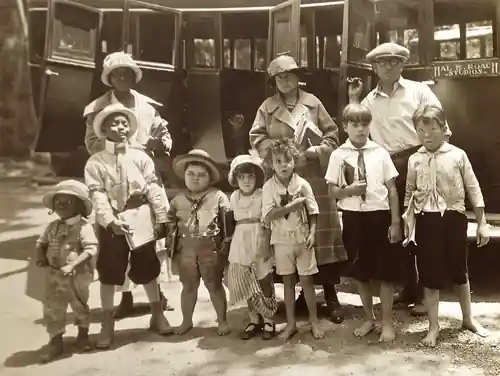
The film’s color palette, though monochrome, is a silent character in itself. The sepia tones of the picnic baskets contrast sharply with the harsh whites of the children’s faces, their pallor underscoring their vulnerability. When the wagon rolls away, the sudden shift to a darker, more textured backdrop—a dirt road littered with leaves—visually codifies the transition from safety to rebellion. This visual language, subtle yet deliberate, enhances the film’s thematic undercurrents of freedom and consequence.
A central tension in the film is the question of whether the children will be rescued or allowed to continue their experiment in self-governance. The adults, comically inept in their attempts to track the wagon, serve less as antagonists than as absurdist foils. Their dialogue, rendered in exaggerated facial expressions (a hallmark of silent film acting), amplifies their incompetence; a scene where Ernest Morrison searches for his monocle in a bush while shouting directions to a non-existent map is both hilarious and a scathing critique of bourgeois self-importance.
The children’s picnic, meanwhile, is not a utopia. Disagreements flare over food distribution, and the looming threat of the wagon’s return to the adults casts a shadow over their triumph. Yet these moments are not resolved in the traditional sense—there is no tidy moralizing, no paternalistic narration. Instead, the film ends with the kids packing up their makeshift feast, their faces a mosaic of exhaustion and triumph. The final shot, a long take of the wagon rolling back toward the adults, is ambiguous: is this a return to order, or a victory for the children’s version of autonomy?
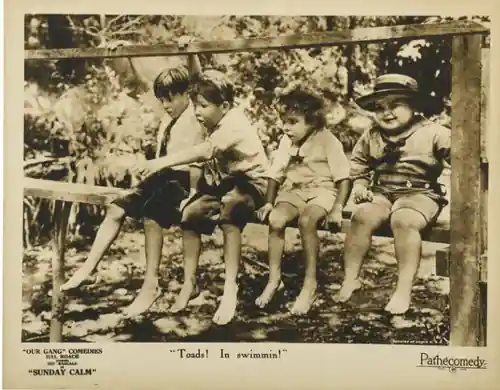
In the broader context of Hal Roach’s career, Sunday Calm marks an early foray into the kind of character-driven comedy that would later define his work. Unlike the more structured antics of Rimrock Jones, this film feels rawer, more improvisational, as if the children themselves are co-authors of the narrative. The influence is palpable in later comedies, where the interplay between chaos and control becomes a narrative backbone.
For modern audiences, Sunday Calm offers a fascinating window into 1920s attitudes toward childhood. The children are neither saints nor savages; they are pragmatic, capable of both cruelty (a child tossing a pebble at a stray dog) and generosity (sharing their last apple). This complexity stands in stark contrast to the sanitized portrayals of children in later decades, where innocence is often weaponized as a narrative device. Here, the children’s actions are grounded in realism, their rebellion a reflection of the same human impulses that drive the adults—curiosity, hunger, the desire to be seen.
The film’s legacy is perhaps best measured against its contemporaries. While For the Queen’s Honor opts for grand historical stakes, Sunday Calm finds epic scale in the ordinary. Its influence can be glimpsed in the works of Yasujirō Ozu, whose meditations on domestic spaces share a similar attention to the poetry of everyday life. Even the children’s picnic, with its emphasis on small, intimate moments, echoes the aesthetic of Ozu’s early films.
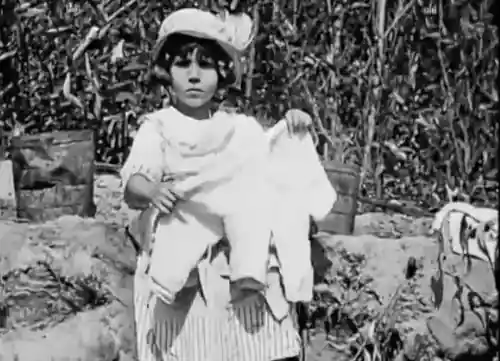
Technically, the film is a marvel. The sound design—what little there is—uses ambient noise (rustling leaves, distant bird calls) to create an immersive soundscape. The absence of a score in key scenes (a radical choice at the time) heightens the tension, forcing the audience to listen to the silence between the children’s laughter. This restraint is a testament to the filmmakers’ confidence in their material, trusting the audience to find meaning in the gaps.
In an era where the line between child and adult is often rigidly drawn, Sunday Calm challenges us to reconsider the narratives we impose on both. The film’s greatest achievement is not its humor or its technical prowess, but its ability to suspend disbelief in the authority of the adult world. For 70 minutes, the children are the architects of their own reality, and the audience is granted the rare privilege of witnessing a world reimagined through their eyes.
To watch Sunday Calm is to witness a masterclass in the art of cinematic minimalism. There are no explosions, no grand speeches, no redemptive arcs. Just a group of children, a rogue wagon, and the fragile illusion of control. It is a film that demands patience, rewarding the viewer with a quiet revelation: that rebellion, in its purest form, is not a shout but a whisper, and that the most profound revolutions often begin with a picnic.
IMDb —
1920
Community
Log in to comment.