DbcultAccessing Vault...
Cult Review
Senior Film Conservator
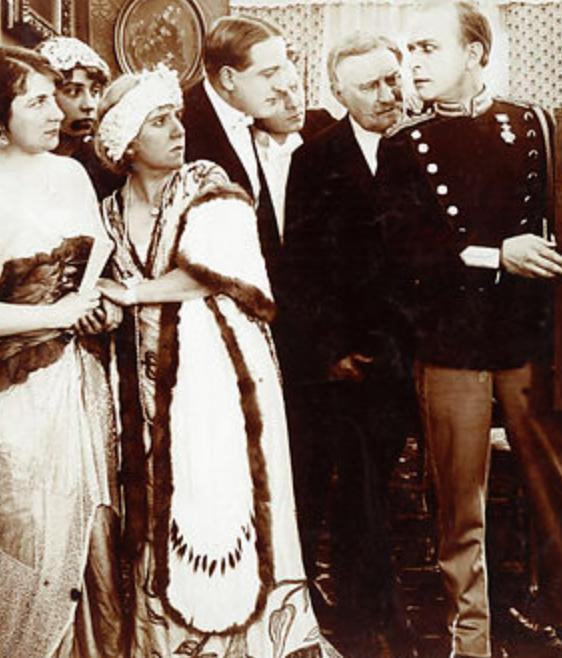
In the pantheon of early twentieth-century cinema, few figures cast a shadow as long or as jagged as Dr. Nicholson. As we revisit Den farlige Haand (The Dangerous Hand), we are not merely watching a relic of 1915; we are witnessing the architectural blueprints of the modern thriller. The Danish film industry, then a global powerhouse under the aegis of Nordisk Film, possessed an uncanny ability to blend sophisticated psychological tension with the raw, visceral thrills of the detective serial. This entry, penned by the prolific Carl Hinding, serves as a testament to the era's obsession with the 'super-criminal'—a figure of high intellect and low morality who challenged the very fabric of social stability.
Gustav Helios, stepping back into the shoes of Nicholson, provides a performance that is remarkably modern. Unlike the histrionic gesticulations common to many silent performers of the era, Helios employs a calculated stillness. His Nicholson is a man of the mind, a strategist whose every movement is a move on a global chessboard. When compared to the more overt theatricality found in contemporaneous works like The Lady of Lyons; or, Love and Pride, the subtlety of the performances in this Danish production highlights a distinct divergence in European acting styles during the Great War years.
The plot centers on the return of the blue diamond—a motif that immediately evokes the literary weight of Wilkie Collins. While The Moonstone established the gemstone as a catalyst for colonial guilt and domestic unraveling, Den farlige Haand treats the diamond as a pure instrument of power. It is the fuel for Nicholson’s machinations, a physical manifestation of the wealth and status he seeks to subvert. The presence of his assistants, Dick and Toto, adds a layer of pulp dynamism to the proceedings. They are the hands that execute the doctor's will, providing the physical counterpoint to his cerebral dominance.
The cinematography, though restricted by the technology of the time, utilizes the frame with surprising depth. There is a sense of claustrophobia in the interior scenes, a feeling that Nicholson’s influence permeates even the most secure vaults. This use of space to convey psychological pressure is something we also see explored in The Mysteries of Souls, yet here it is harnessed for the sake of a high-stakes heist rather than purely metaphysical inquiry. The film doesn't just ask where the diamond is; it asks what the diamond represents in a world increasingly defined by material obsession.
The ensemble cast, including Viggo Wiehe and Olivia Klingspor, provides a robust framework for the central conflict. Wiehe, in particular, anchors the film with a gravitas that balances the more sensational elements of the plot. There is a palpable sense of stakes; the characters do not feel like mere archetypes but like individuals caught in the gravitational pull of Nicholson’s ambition. This realism was a hallmark of the Danish style, often eschewing the fairy-tale logic of early American shorts for a grittier, more socially conscious approach, even within the confines of a genre film.
Consider the thematic weight of morality in the film. Much like the ethical dilemmas posed in Was She Justified?, Den farlige Haand toys with the audience's fascination with the transgressive. We are drawn to Nicholson not because we agree with his methods, but because his competence is undeniable. He represents a dark mirror to the burgeoning industrial age—the fear that progress and intelligence could be decoupled from empathy. This same dread is echoed in the darker passages of Satana, where the villain is not just a man, but a force of nature.
Technically, the film is a masterclass in visual storytelling without the crutch of excessive intertitles. The 'dangerous hand' of the title is more than just a literal reference; it is a recurring visual motif that signifies the reach of the criminal underworld. The lighting, though primitive, manages to create a chiaroscuro effect in the nighttime sequences that predates the German Expressionist movement. It captures the 'Nordic gloom' that would later define the works of Bergman, yet here it is applied to a fast-paced thriller.
When we look at other films of the period, such as the social drama Damaged Goods, we see a focus on the didactic. Den farlige Haand, however, is purely cinematic. It prioritizes movement, the tension of the chase, and the visual reveal. The sequence involving the theft of the diamond is choreographed with a precision that rivals the works of Louis Feuillade. It is a dance of shadows where the prize is light—the blue diamond itself.
It is fascinating to place this film alongside The Little Gypsy or Northern Lights. While the latter films often rely on pastoral settings or romanticized notions of the 'other,' Den farlige Haand is firmly rooted in the urban anxiety of the 1910s. The city is a place of secrets, where a doctor can be a thief and a loyal assistant can be a deadly weapon. This urban cynicism is a precursor to the film noir, a genre that would take these silent tropes and infuse them with post-WWII disillusionment.
Furthermore, the film's structure—part of a larger narrative cycle—anticipates the modern franchise. The audience's familiarity with Nicholson, Dick, and Toto creates a shorthand that allows Hinding to jump straight into the action. There is no need for lengthy introductions; the legend precedes the man. This serialized storytelling was also being explored in Germany with films like Der Fund im Neubau - 2. Teil: Bekenntnisse eines Mörders, showing a cross-pollination of European crime fiction that would eventually influence the global market.
As we reach the climax of Den farlige Haand, the resolution feels both inevitable and surprising. The film avoids the simplistic moralizing found in Home, Sweet Home, opting instead for a conclusion that leaves the door ajar for future villainy. Nicholson is not a character who can be easily contained by the law; he is an idea, a ghost in the machine of civilization.
In the broader context of 1915 cinema, which saw everything from the historical sweep of King Charles II: England's Merry Monarch to the internal domestic strife of Ibsen adaptations like Ghosts, Den farlige Haand stands out for its sheer entertainment value and its sophisticated grasp of genre mechanics. It doesn't aim to preach; it aims to thrill, and in doing so, it captures a specific kind of truth about the human fascination with the forbidden.
Ultimately, the film is a triumph of the Nordisk style. It is sleek, efficient, and haunting. Whether Nicholson is truly 'out to get' the diamond or whether the diamond is merely a pretext for his intellectual exercise remains a point of debate for the viewer. What is certain is that the 'Dangerous Hand' has left an indelible mark on the history of the crime film. It reminds us that even in the silent era, the most terrifying threats were those that were whispered through the lens, articulated through a glance, and executed with the cold, calculated precision of a master surgeon turned thief.
For those looking to understand the roots of the thriller, this film is essential viewing. It bridges the gap between the stage melodramas of the 19th century and the cinematic spectacles of the 20th. It is a bridge built of shadows, diamonds, and the enduring, dangerous genius of Dr. Nicholson.
IMDb —
1925
Community
Log in to comment.