DbcultAccessing Vault...
5/10
Senior Film Conservator
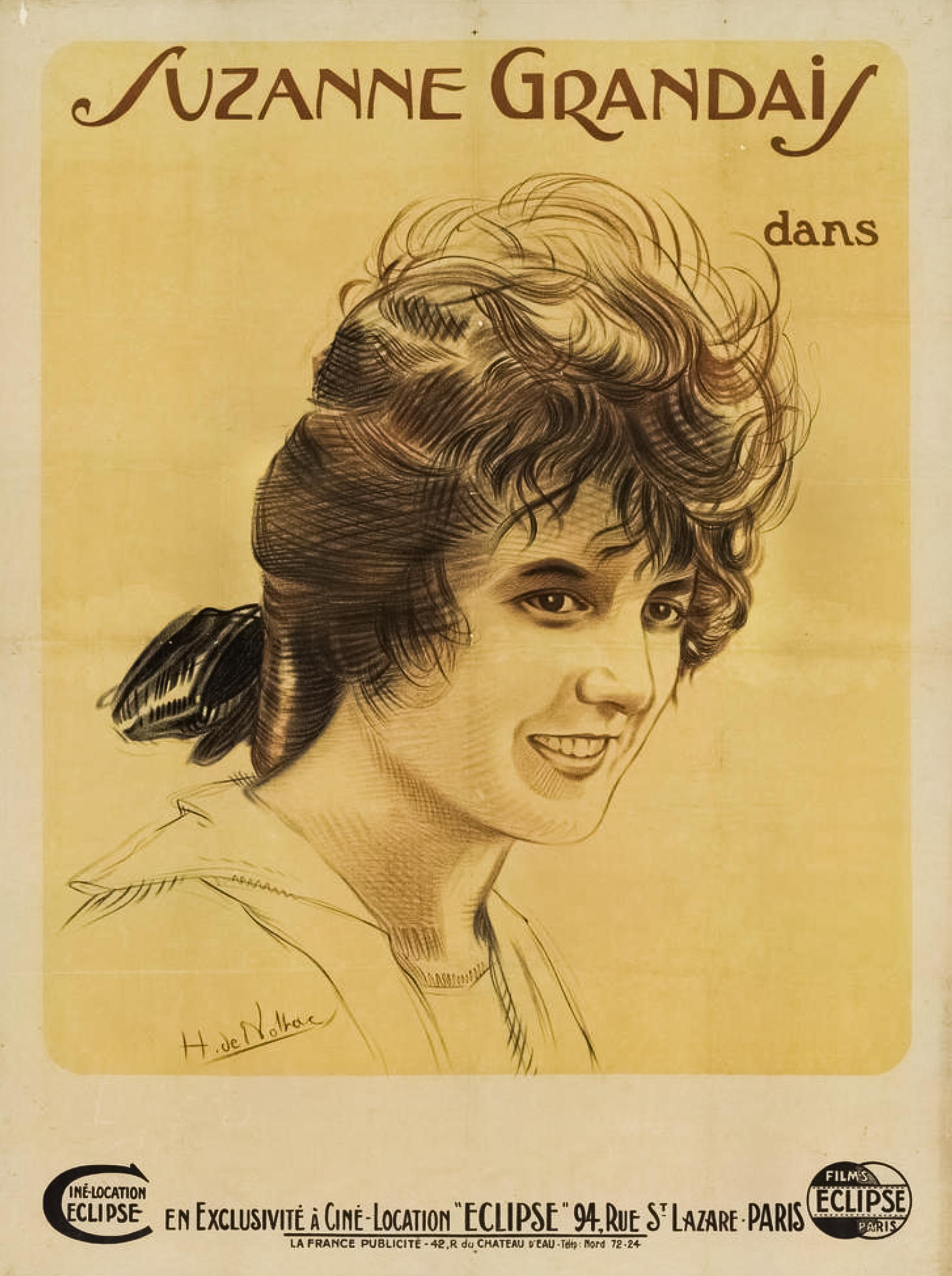
A definitive 5/10 rating for a film that redefined the boundaries of cult cinema. Suzanne, professeur de flirt remains a cornerstone of transgressive art.
Stepping back into the flickering shadows of early cinema, one often finds themselves confronting not just a different era of storytelling, but an entirely distinct language. 'Suzanne, professeur de flirt,' a delightful 1916 production starring the luminous Suzanne Grandais and the charismatic Édouard Mathé, written by René Hervil and Louis Mercanton, offers a fascinating glimpse into French silent film's unique charm, wit, and social commentary. This isn't just a movie; it's a meticulously crafted social satire wrapped in the gossamer threads of romance, a testament to the sophistication present in an art form often dismissed as primitive.
At its heart, 'Suzanne, professeur de flirt' is an audacious exploration of human connection, or rather, the calculated performance of it. Suzanne Grandais, in a role that feels tailor-made for her vivacious screen presence, embodies a woman who has not only mastered the delicate art of flirtation but has codified it into a teachable discipline. Her character isn't merely a coquette; she is an astute observer of human nature, a social engineer who understands the subtle cues, the carefully placed glances, and the impeccably timed bon mots that can sway hearts and minds. This premise alone sets the film apart, elevating it beyond a simple romantic comedy into something more profound – a meta-commentary on the theatricality inherent in social interaction itself. The film posits that love, or at least the initiation of it, is a performance, and Suzanne is its most brilliant choreographer.
The genius of Hervil and Mercanton's script lies in its ability to take such a seemingly frivolous subject and imbue it with genuine insight. They don't just present a series of comedic scenarios; they delve into the psychology of attraction, the anxieties of courtship, and the societal pressures that dictate how one must present oneself to be deemed desirable. Suzanne's 'lessons' are not just about superficial charm; they are about confidence, self-awareness, and the strategic deployment of one's best attributes. In a way, her academy is a proto-self-help institution, addressing timeless human insecurities with a blend of practicality and panache. The film subtly critiques the societal constructs that make such a profession necessary while simultaneously celebrating the ingenuity of a woman who thrives within them.
Suzanne Grandais, a star whose light burned brightly but tragically briefly, delivers a performance that is nothing short of captivating. Her Suzanne is not just beautiful; she's intelligent, witty, and possesses an understated strength that shines through every gesture. She conveys a complex inner life with remarkable subtlety, her eyes often betraying a hint of melancholy or mischievousness beneath her composed exterior. One can easily draw parallels to actresses like Mary Pickford in Little Eve Edgarton, who also navigated roles requiring a blend of innocence and cunning, or even the more dramatic intensity found in Asta Nielsen's work in The Witch, albeit in a vastly different genre. Grandais’s ability to command the screen without uttering a single word is a masterclass in silent acting. Her physicality is precise, her expressions nuanced, allowing the audience to intuit her thoughts and feelings without the need for intertitles to spell everything out. She embodies the title role with such conviction that one almost believes in the efficacy of her 'lessons.'
The chemistry between Grandais and Édouard Mathé is another highlight. Mathé, as her most challenging student, initially presents a stiff, almost comically awkward figure. His transformation under Suzanne's tutelage is gradual and believable, evolving from bumbling sincerity to a more polished, yet still genuine, charm. Their interactions crackle with an unspoken tension, a delightful dance of wit and burgeoning affection. Mathé's performance complements Grandais's perfectly, providing a grounded foil to her more ethereal presence. His earnestness prevents the film from becoming overly cynical about the mechanics of love, reminding us that even the most calculated flirtations can lead to authentic emotions.
'Suzanne, professeur de flirt' is more than just a character study; it's a vivid snapshot of French filmmaking during a pivotal period. While American cinema was often focused on grand spectacles or moralistic tales, French productions frequently delved into more nuanced social dramas and sophisticated comedies. The film's aesthetic, characterized by elegant sets and costumes, reflects the prevailing tastes of its era, showcasing a certain Parisian chic that was distinct from its Hollywood counterparts. The cinematography, though rudimentary by modern standards, is effective, utilizing close-ups to capture the subtle facial expressions so crucial to silent acting and wider shots to establish the opulent settings of Suzanne's world.
Comparing it to other films of the time reveals its unique position. While a film like The Rights of Man: A Story of War's Red Blotch wrestled with the grim realities of conflict, 'Suzanne' offered an escape into a world of sophisticated diversion, a much-needed antidote during tumultuous times. Similarly, where films like The Ploughshare might have explored rustic life and its hardships, 'Suzanne' revelled in urbanity and the complexities of high society. It stands in contrast to the overt melodramas of the period, such as Hazel Kirke, by offering a story that, while romantic, is underpinned by a sharp, observational wit rather than overt emotional manipulation.
The direction by René Hervil and Louis Mercanton, though not overtly flashy, is precise and ensures the narrative flows smoothly. They understand the power of visual storytelling, relying on the actors' performances and clear staging to convey plot points and emotional beats. The pacing is deliberate, allowing moments of comedic awkwardness to land effectively and the more tender interactions to resonate. One can see influences that would later inform the elegant comedies of manners, demonstrating a clear lineage in cinematic history. Their collaboration created a work that is both entertaining and surprisingly thoughtful, a hallmark of well-crafted silent cinema.
Perhaps the most enduring theme of 'Suzanne, professeur de flirt' is the perennial tension between authenticity and artifice. Suzanne, as the architect of manufactured charm, finds herself in a precarious position. She teaches others to perform affection, yet her own heart remains guarded, perhaps even cynical. The film subtly questions whether true connection can ever blossom from such calculated beginnings. Is Mathé's eventual success a result of Suzanne's lessons, or does it stem from a genuine connection that transcends the taught techniques? This is where the film truly shines, inviting the audience to ponder the nature of attraction and the delicate line between presentation and truth. It's a question that resonates even today, in an age where online personas and curated images often precede genuine interaction.
The film also touches upon themes of female agency and independence. Suzanne is a self-made woman, operating her business with confidence and skill in a society that often limited women's roles. She is a professional, respected in her unique field, and her intellect is as much a part of her allure as her beauty. This portrayal of a strong, resourceful woman is commendable for its time, echoing the spirit of characters in films like What Will People Say? which also explored societal expectations placed upon women. However, Suzanne's independence comes with its own set of emotional costs, a loneliness that she keeps carefully hidden behind her professional facade.
While 'Suzanne, professeur de flirt' may not be as widely known as some of its contemporary blockbusters, its artistic merit and thematic depth make it a valuable piece of cinematic history. It's a film that proves the sophistication of silent storytelling, demonstrating how much emotion, humor, and social commentary could be conveyed without dialogue. Its enduring appeal lies in its timeless themes: the quest for love, the performance of self, and the often-humorous complexities of human interaction. Watching it today, one is struck by how relevant its observations remain, proving that the human heart, and its desire to connect, changes very little over the decades.
For enthusiasts of early cinema, or anyone curious about the roots of romantic comedy, 'Suzanne, professeur de flirt' is an essential viewing. It’s a reminder that true artistry transcends technological limitations, relying instead on compelling performances, insightful writing, and skillful direction. It doesn't rely on grand gestures or overt melodrama, unlike some of its more sensational counterparts such as The Sphinx or The Captive God. Instead, it finds its power in subtlety, in the knowing glances and unspoken understandings between its characters, and in the quiet evolution of a heart that once believed itself impervious to the very lessons it taught.
The film serves as a beautiful showcase for Suzanne Grandais, a talent who tragically left us too soon, but whose work, when rediscovered, continues to enchant. Her portrayal of Suzanne is nuanced, a captivating blend of wit and vulnerability that elevates the film beyond mere entertainment. It's a testament to the power of a compelling character, brought to life by an exceptional actor, to carry an entire narrative. The film's gentle humor and insightful observations on the human condition make it a joy to watch, a charming artifact from a bygone era that still speaks volumes about the timeless art of attraction. It’s a silent film that truly sings, leaving a lasting impression long after the final frame has faded.
In an age where much of silent cinema is viewed through a lens of historical curiosity, 'Suzanne, professeur de flirt' stands out as a work that can be appreciated purely for its artistic merits. It’s not just important for what it represents historically, but for its intrinsic quality as a piece of engaging storytelling. The film's sophisticated humor, its compelling characters, and its insightful commentary on human relationships ensure its place as a minor masterpiece, one that deserves to be seen and celebrated by new generations of film lovers. It reminds us that the art of flirtation, like the art of cinema itself, is a delicate dance, a performance that, when executed with genuine feeling, can achieve something truly magical. It’s a film that teaches us not just about how to flirt, but about how to truly connect, a lesson that remains eternally relevant. Its quiet elegance and sharp wit distinguish it from more boisterous fare like Lights of New York, proving that sometimes, the most profound statements are made with the softest touch.
The world created by Hervil and Mercanton is one of exquisite manners and hidden passions, where a carefully chosen word or a perfectly timed glance can alter destinies. Suzanne's character, in particular, navigates this world with a fascinating blend of detachment and underlying empathy. She observes her students' struggles with a professional eye, yet her own experiences inevitably color her understanding. This internal conflict adds layers of depth to what could have been a purely comedic role, making Suzanne a truly memorable figure in early cinema. Her story is not just about teaching flirtation; it's about her own journey of self-discovery, prompted by the very lessons she imparts. The ultimate realization that genuine connection often defies all taught rules is a poignant and powerful message, making 'Suzanne, professeur de flirt' a film that resonates far beyond its charming premise. It's a delightful exploration of the human heart, wrapped in the elegant packaging of early French cinema.

IMDb —
1917
Community
Log in to comment.