DbcultAccessing Vault...
6.3/10
Senior Film Conservator
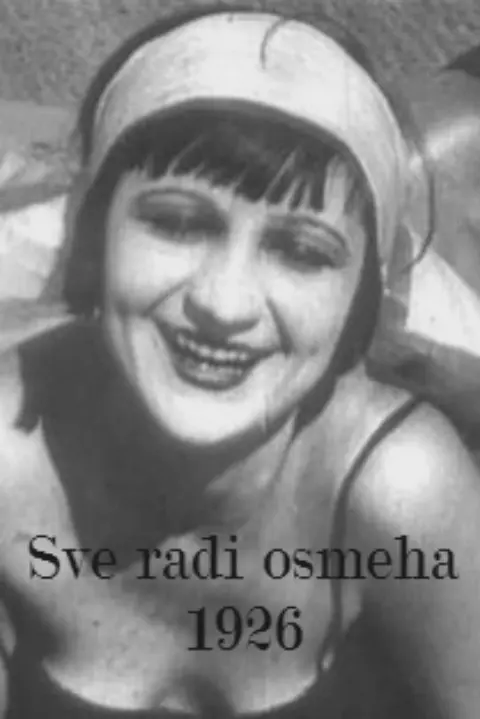
A definitive 6.3/10 rating for a film that redefined the boundaries of cult cinema. Sve radi osmeha remains a cornerstone of transgressive art.
Is a commercial truly a film worth dissecting? Short answer: yes, but with significant caveats. “Sve radi osmeha” is a peculiar, compelling artifact that will undoubtedly intrigue film historians, marketing enthusiasts, and those with a deep appreciation for the evolution of visual media, yet it is decidedly not for viewers seeking traditional narrative, character development, or profound emotional arcs.
It exists in a liminal space, blurring the lines between pure advertising and an early form of cinematic expression. This isn't a film you 'enjoy' in the conventional sense; it's one you study, one you ponder for its implications and its unexpected historical weight.
“Sve radi osmeha,” often cited simply as a Kaladont toothpaste commercial, demands a re-evaluation of what constitutes a 'film.' In an era when cinema was still finding its voice, even the most mundane subjects could be elevated to the screen, providing a unique lens into societal values and nascent consumerism. This short piece, featuring performances by Ljubica Veljkovic and Nevenka Urbanova, is less about plot and more about persuasion, a direct address to the audience's aspirations for health and beauty.
The film works because it is a pristine example of early direct-to-consumer visual communication, meticulously designed to create an immediate, positive association with a product. It fails because its singular focus on promotion inherently limits its narrative depth and artistic exploration, leaving little room for ambiguity or complex human experience. You should watch it if you are fascinated by the intersection of early cinema, advertising history, and the subtle art of mass persuasion.
To approach “Sve radi osmeha” as a traditional narrative film is to misunderstand its very purpose. Its 'story' isn't one of conflict and resolution, but of problem and solution, delivered through the polished veneer of a commercial pitch. The film likely opens with a subtle implication of a common problem – perhaps a hesitant smile, a moment of self-consciousness – before swiftly introducing Kaladont as the undeniable remedy. This structure, while rudimentary by narrative standards, is exquisitely effective for its intended function.
Consider the pacing: it’s brisk, purposeful. There’s no indulgent lingering on character or setting. Every shot, every transition, every subtle gesture by Ljubica Veljkovic or Nevenka Urbanova is geared towards driving home the core message. This efficiency, often overlooked in the pursuit of grand cinematic statements, is itself a form of directorial mastery. It's a precise, almost surgical application of visual storytelling, a far cry from the sprawling epics or character studies that would later define cinematic art.
Ljubica Veljkovic and Nevenka Urbanova, in their roles, are not portraying characters in the traditional sense; they are embodying ideals. Veljkovic, perhaps, as the radiant embodiment of health post-Kaladont, her smile a beacon of confidence. Urbanova, conceivably, as the relatable individual discovering this transformative product. Their performances, therefore, are less about psychological depth and more about conveying authenticity and aspiration.
This isn't method acting; it's commercial acting. It requires a different kind of skill: the ability to project sincerity, enthusiasm, and a subtle aspirational quality that resonates instantly with the viewer. A specific example might be Veljkovic's final, lingering smile – not just a smile, but a *statement* of well-being, meticulously held for maximum impact, akin to the iconic poses of models in early print advertisements. It’s a moment designed to imprint itself on the audience's mind.
The direction, though uncredited, is a fascinating study in early advertising aesthetics. It’s likely characterized by clear, well-lit compositions that ensure the product itself is always central, or at least clearly visible. Imagine a close-up on the Kaladont tube, gleaming under studio lights, or a meticulously framed shot of a toothbrush applying the paste. These aren't accidental choices; they are deliberate acts of visual prioritization.
The cinematography, too, would have been functional yet effective. Bright, even lighting to convey cleanliness and purity. Perhaps a slight soft focus on the faces to enhance an idealized beauty. The goal isn't artistic abstraction but crystal-clear communication. This pragmatic approach to filmmaking is a stark contrast to the experimental efforts seen in contemporaries like Sherlock Jr., yet it holds its own unique historical value. It's about clarity over complexity. It works. But it’s flawed.
The tone of “Sve radi osmeha” is undeniably optimistic, even celebratory. It’s a film infused with the promise of betterment, a subtle form of utopianism tied directly to consumer goods. There's an inherent cheerfulness, a lightness that seeks to uplift and persuade rather than challenge or provoke. This makes it a fascinating contrast to the often darker, more complex narratives emerging from the same period, such as The Light That Failed.
The pacing, as mentioned, is designed for immediate impact and retention. There are no drawn-out scenes, no contemplative pauses. Each segment flows rapidly into the next, building momentum towards the ultimate call to action: buy Kaladont. This rapid-fire delivery is a precursor to modern commercial editing, demonstrating an early understanding of how to capture and hold fleeting attention in a burgeoning media landscape.
For the casual viewer seeking entertainment, “Sve radi osmeha” might seem like an oddity, perhaps even a curiosity that quickly exhausts its novelty. It offers no traditional plot, no deep characters, and its overt commercialism can be jarring if one expects a different kind of cinematic experience. It is not designed to entertain in the way a feature film is.
However, for those with an academic interest in film history, advertising, or cultural studies, it is absolutely worth watching. It provides a rare, tangible link to early 20th-century media consumption and the nascent strategies of brand building through visual storytelling. It’s a foundational text for understanding how moving images began to shape public desires.
It's a testament to the power of moving images, even in their most rudimentary forms, to influence and inform. It’s a document of its time, capturing societal aspirations through the lens of a consumer product. Viewing it is akin to archaeological work, unearthing the bedrock of our modern visual culture.
One of the most surprising observations about “Sve radi osmeha” is its sheer audacity to exist as a ‘film’ in its own right. It forces us to confront the very definition of cinema. Is it merely narrative? Or can it be any moving image with an intentional message, however commercial? I firmly believe that by dismissing such pieces, we lose a crucial part of cinema's evolutionary tapestry.
This commercial, perhaps more than many narrative shorts of its era, encapsulates a significant cultural shift: the rise of consumerism and the weaponization of the moving image for economic gain. It's a powerful, if simple, example of how film quickly became entangled with commerce, a relationship that defines much of the industry even today.
The film's ‘message’ is undeniably simplistic – buy this toothpaste, get a great smile – but its execution in a nascent medium is what elevates it beyond mere advertising copy. It's a visual manifesto for a product, a short, sharp burst of cinematic propaganda for oral hygiene. This is a bold statement, but I argue that its historical impact on the visual persuasion landscape is arguably more significant than many forgotten narrative shorts of the same period.
"Sve radi osmeha" is a fascinating artifact, a testament to the early power of film to shape desires, not just tell stories. Its simplicity is its strength, and its commercial intent its most profound artistic statement.
“Sve radi osmeha” is undeniably a film of its time, and a fascinating one at that. While it may not offer the narrative richness of a classic like The Woman Pays or the dramatic tension of Blind Chance, its significance lies in its unique position at the intersection of early cinema and nascent consumer culture. It’s a foundational piece for understanding how moving images quickly evolved beyond mere novelty to become powerful tools of persuasion.
It serves as a stark reminder that even the most seemingly mundane subjects can, under the right historical and critical lens, reveal profound insights into human aspiration and the evolving role of media. Watch it not for entertainment, but for enlightenment. It’s a crucial fragment of cinematic history, demonstrating the raw, unadulterated power of film to sell a vision, one dazzling smile at a time.
It’s a must-see for specialists, a curious footnote for generalists, and a powerful testament to the commercial imperative that shaped, and continues to shape, the very medium of film.
IMDb —
1931
Community
Log in to comment.