DbcultAccessing Vault...
5.3/10
Senior Film Conservator
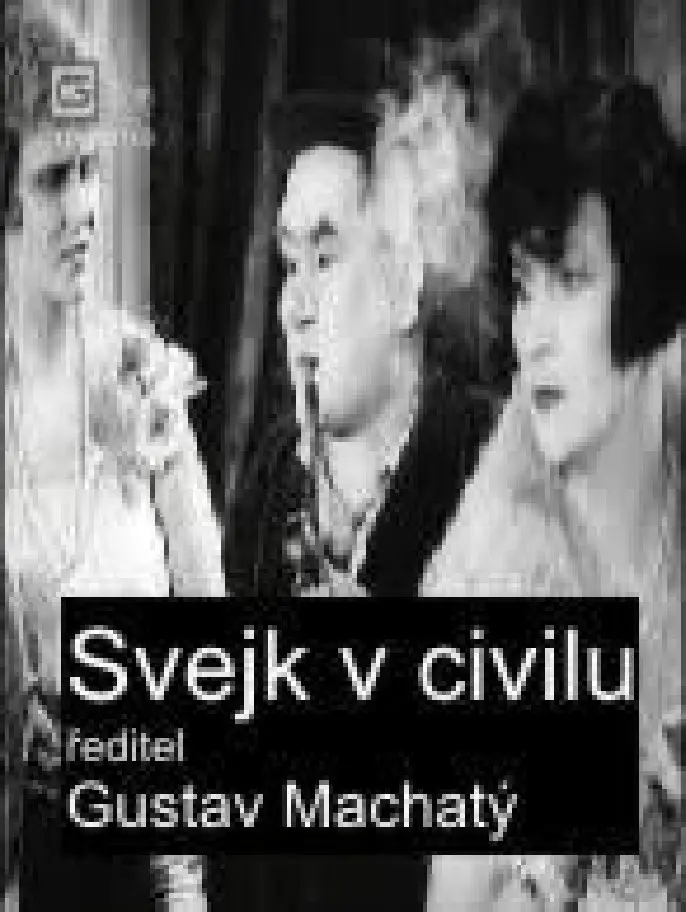
A definitive 5.3/10 rating for a film that redefined the boundaries of cult cinema. Svejk v civilu remains a cornerstone of transgressive art.
Is Svejk v civilu a film that holds up to the test of time, or is it merely a historical curiosity? Short answer: yes, but with significant caveats. This early cinematic outing featuring the beloved Good Soldier is a fascinating, if sometimes frustrating, piece of filmmaking that demands a particular kind of patience and appreciation.
It is a film crafted for those with a deep affection for the satirical spirit of Jaroslav Hašek's original work, or for cinephiles eager to explore the foundational comedies of the silent era. Conversely, if your cinematic palate leans towards modern narrative structures, rapid pacing, or overtly sentimental storytelling, Svejk v civilu will likely prove a challenging, perhaps even bewildering, experience.
The character of Josef Svejk, born from the acerbic wit of Jaroslav Hašek, is a towering figure in Czech literature. His transition to the silver screen, particularly in a 'civilian' context, presented a unique challenge: how to translate his inimitable brand of bureaucratic subversion and good-natured idiocy without the backdrop of military absurdities. Svejk v civilu attempts this translation with a blend of earnestness and theatricality that defines much of early European cinema.
The film, directed with a clear affection for its source material, strives to capture the essence of Svejk's post-war wanderings. It's a world where the grand, senseless machinations of wartime bureaucracy are replaced by the petty, equally senseless dictates of local officialdom. Svejk, portrayed with a remarkable physical comedy by Jirí Hron, becomes the unwitting mirror reflecting society's inherent flaws.
This film works because it understands the core appeal of Svejk: his ability to expose the ludicrousness of authority through unshakeable, literal-minded obedience. It fails because its pacing, typical of its era, can feel glacial to contemporary audiences, and its episodic structure often lacks a cohesive dramatic arc. You should watch it if you cherish early cinematic satire and the enduring power of a character who weaponizes politeness.
Jirí Hron's portrayal of Svejk is, without question, the film's beating heart and its most compelling argument for contemporary relevance. He doesn't merely play Svejk; he becomes him. Hron captures the character's unique gait, his perpetually bewildered yet earnest facial expressions, and that peculiar twinkle in his eye that suggests both profound simplicity and a hidden, almost spiritual, cunning.
Consider the scene where Svejk attempts to register for unemployment. Hron's Svejk meticulously fills out forms, asking increasingly pedantic questions about each box, not out of malice, but out of a genuine desire to be 'correct.' His slow, deliberate movements and his unblinking stare at the exasperated clerk (played with delightful frustration by Josef Rovenský) create a comedic tension that transcends language barriers. It’s a masterclass in silent-era physical comedy, reminiscent of Buster Keaton’s stoicism meeting a more overtly expressive Chaplin.
The supporting cast, including Robert Ford and Renati Renee, contribute ably to the film's ensemble, often serving as foils to Svejk's particular brand of chaos. Their reactions, ranging from bewilderment to outright anger, underscore the absurdity of Svejk's interactions. Dina Gralla, in particular, brings a surprising warmth to her limited screen time, offering a brief respite from the bureaucratic entanglements.
The directorial choices, credited to Jacques Bachrach, Eduard Šimáček, and Vítezslav Nezval, reflect a clear understanding of Hašek's satirical intent. The tone is consistently one of gentle mockery, never veering into outright cynicism, but always highlighting the inherent foolishness of human systems. It's a difficult balance to strike, especially in a period film, but they largely succeed.
There's a recurring visual motif of Svejk being dwarfed by imposing architecture or surrounded by stern, uniformed figures, even in civilian contexts. This subtly reinforces his 'everyman' status against the backdrop of an indifferent, often oppressive, society. One particularly effective sequence involves Svejk attempting to navigate a crowded public market, his polite inquiries and attempts to follow rules causing utter pandemonium among vendors and shoppers. It’s a microcosm of his larger impact on the world.
However, the direction occasionally falters in sustaining momentum. There are stretches where scenes feel prolonged, relying too heavily on the inherent charm of Svejk without advancing the narrative. This is a common pitfall of early episodic cinema, but it does test the patience of a modern viewer. The film could have benefited from tighter editing in certain sequences, an observation that feels almost sacrilegious when discussing historical works, but remains true.
What makes Svejk v civilu resonate, even with its dated mechanics, is its unwavering commitment to character. This isn't a film about grand pronouncements or sweeping narratives. It's about a man, a simple man, navigating a world that constantly tries to make sense of his nonsense, and failing spectacularly. His resilience, his optimism, and his capacity to inadvertently dismantle authority figures are timeless themes.
The film’s strength lies in its ability to translate Hašek’s literary voice into a visual medium, even if imperfectly. The dialogue, or rather, the intertitles, are sparse, allowing Hron's physicality to carry the narrative weight. This reliance on visual storytelling is a testament to the power of early cinema and a reminder that compelling character work can transcend technological limitations.
One might argue that the film, by stripping Svejk of his military uniform, actually sharpens the satirical edge. In uniform, his absurd obedience could be seen as a critique of military hierarchy. In civilian clothes, it becomes a broader indictment of all institutional rigidity. It’s a powerful distinction, and one the film handles with surprising nuance.
"The true genius of Svejk, even in civilian life, is his ability to expose the absurdity of systems not by defiance, but by absolute, literal compliance. He is the ultimate, unwitting anarchist."
This film, much like The Busher or even elements of Boys Will Be Boys, relies on a central comedic performance to carry its weight, but with a distinctly European, satirical bent. It’s less about physical gags and more about the comedic clash of personalities and perspectives. The humor is drier, more intellectual, demanding a bit more from the audience.
Svejk v civilu is not a film for everyone. It works. But it’s flawed. It is a historical document, a comedic relic, and a surprisingly insightful character study all rolled into one. Its slow pace and episodic nature will undoubtedly deter many, but for those willing to immerse themselves in the cinematic language of its era and the timeless charm of its protagonist, it offers a rewarding, often hilarious, experience.
It’s a film that demands patience but rewards it with genuine laughs and a thoughtful, albeit subtle, critique of society. If you're a fan of Hašek's original work or have an academic interest in early European comedy, this is an essential watch. For casual viewers, proceed with an open mind and a willingness to embrace a different rhythm of storytelling. It’s a unique piece that, despite its age, still manages to poke fun at the enduring absurdities of the human condition.
IMDb —
1926
Community
Log in to comment.