DbcultAccessing Vault...
Cult Review
Senior Film Conservator
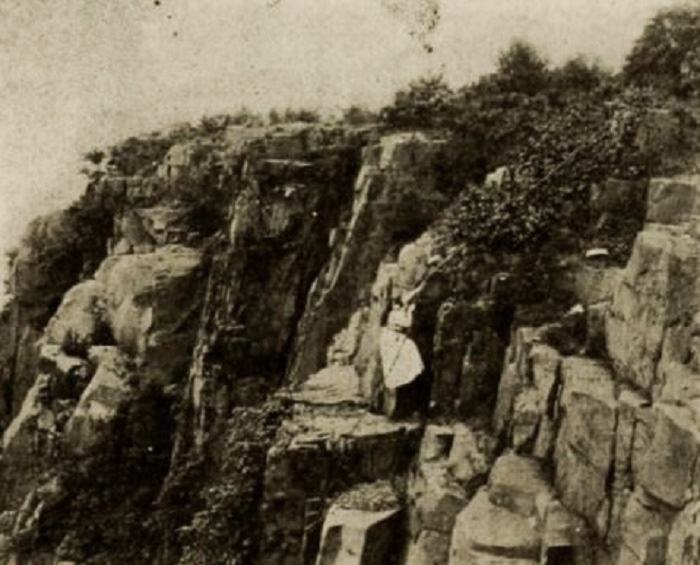
The first time I saw The Yellow Traffic—in a dripping Portland loft where a 16-mm print rattled through an elderly Edison—its images seared themselves onto my retinas like phosphor after a lighthouse flash. Ninety-six years after its premiere, this maritime morality play still smells of kelp and kerosene, still hums with the crackle of Josiah’s improvised spark-gap set. Forgotten by encyclopedias, dismissed by nickelodeon chroniclers, the picture is nevertheless a cornerstone of American silent cinema: part swashbuckler, part social exposé, part hymn to the nascent miracle of radio.
Most sea stories pick a human heart and lash it to the mast; The Yellow Traffic does the opposite. The Caroline is the film’s beating ventricle, her varnished ribs reflecting every shifting moral tide. Cinematographer George Davis (also playing Elias Drake) shoots her low and wide, so that figureheads of saints and cherubs seem to leer down like judges. When Ketch’s smuggler barrels thud across her decks, each impact lands like a verdict on the nation itself—on its hunger for cheap labor, on its willingness to auction conscience for profit.
Monochrome though it is, the movie traffics in color metaphors: the “yellow” of its title, the bruised indigo of night raids, the arterial reds tinting every intertitle. Director William V. Mong, who also essays the reptilian Ketch, uses tinting like a dialectic—amber for honest day, viridian for lawless seas, sulphur for the hold where human cargo suffocates. The palette is argument, not ornament.
In 1922 the word “wireless” still tasted science-fictional; audiences gasped when Josiah’s rooftop aerial first spat blue fire across the screen. Today the sequence feels prophetic: information as resistance, encryption as liberation. Watch how the camera fetishizes brass key and coherer tube, how Morse dots bloom across a black card like malignant stars. The film intuits that tyranny is data asymmetry, and that literacy—here, fluency in spark—can topple empires.
Faye Cusick’s Mercy eschews flapper fizz; her cheekbones carry Puritan severity, her gaze the unblinking rectitude of a Matthew Brady portrait. When she rejects Ketch’s diamond clasp, she does so with the measured cadence of someone reading scripture to sharks. George Davis’s Elias is less coast guardian than monk—every gesture weighted by the knowledge that the ocean he patrols is older than any law. And Mong’s own Ketch radiates that particular Gilded-Age rot: manicured nails never quite hiding the blood beneath.
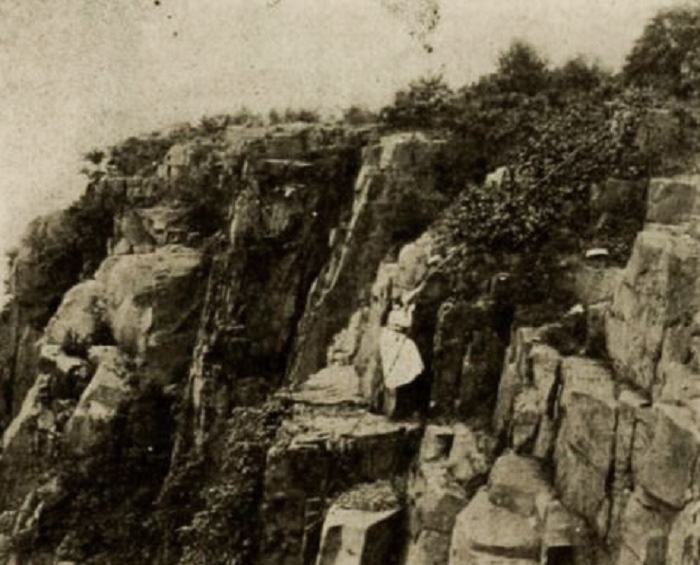
The smugglers pack human beings into oaken bellies, corked and iron-hooped. The image is obscene yet weirdly sacramental: each barrel a seed of exploited flesh, a Jonah inverted. When Josiah hacks one open, the released sailor collapses like new birth, gasping amniotic brine. The film refuses to let us look away; the camera lingers on rivulet-soaked clothes, on ribcage percussion, forcing complicity.
Yes, we’ve seen plank-walks since Griffith’s buccaneer days, but Josiah’s version is existential. Bound with man-ropes, he drops not into shark-teeth but into a realm of pure endurance: a hundred-forty feet beneath the keel, lungs screaming, world muted to heartbeat and pressure. Underwater photography—achieved with a bell-jawed brass housing—renders the ocean a cathedral nave, sunlight shafting like stained glass. It’s baptism by ordeal, technology fused with flesh.
The final reel stages a melee worthy of Fairbanks at his most acrobatic, yet steeped in moral grime. Cutlasses spark against cargo hooks; a child’s marbles flung across planking send villains sprawling—a moment that feels both slapstick and savage. When the Stars-and-Stripes is re-hoisted, the fabric snaps in the wind like a fresh verdict, but the film withholds easy jingoism: the victors stand ankle-deep in gore, unsure whether they have saved the ship or merely inherited its sins.
Released months after the Chinese Exclusion Act’s tightening, The Yellow Traffic brandishes a progressive streak unusual for its era. It indicts not only smugglers but the demand they service: sweatshops, railroads, plantations hungry for bodies. In this it shares DNA with The Golden West’s indictment of Manifest Destiny, or The Cheat’s exposé of colonial entitlement. Yet its critique is more nuanced—capitalism’s maw masquerading as benevolent paternalism.
Mercy is no decorative buoy waiting rescue. She orchestrates shore-to-ship intelligence, hoodwinks Ketch’s lieutenants, and wields a belaying pin with surgical fury. Her romance with Elias is courtship as partnership: their first kiss occurs only after they co-author a semaphore plan to triangulate the Caroline’s clandestine anchorage. The film flirts with but ultimately transcends damsel tropes—something The Lady Outlaw strove for yet seldom achieved.
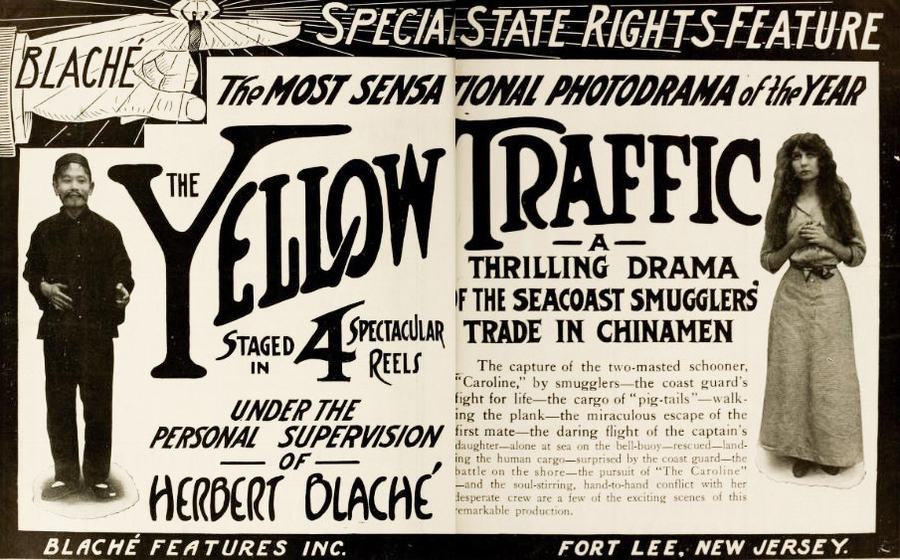
Beyond wireless, note the film’s obsession with mechanical reproduction: the ship’s steam winch becomes gibbet; Ketch’s pocket phonograph spools a Strauss waltz that masks the moans below deck. Even the editing—jump-backs to Mercy’s attic receiver—feels proto-Steampunk, a celluloid lattice of gears and gaps. One suspects that if the filmmakers had stumbled upon synch sound, they’d have weaponized it too.
For decades The Yellow Traffic languished on the Library of Congress’s “missing believed lost” ledger until a 2017 attic haul in Gloucester yielded a 35-mm nitrate negative—half-submerged in lobster traps, reeking of kelp. Restoration chemists at the George Eastman House spent eighteen months bathing the reels in alcohol baths, re-etching intertitles, and stabilizing the amber tint. The new 4K scan reveals textures previously ghosted: barnacle pores, the nap of Ketch’s silk lapel, the copper sheen on Josiah’s transmitter coil.
Most revivals slap on generic Kabalevsky; last year’s Brooklyn Academy screening commissioned Au Revoir Simone’s spectral synths punctuated by foghorn and bow-scrape. The result: a soundscape that coils around the silent imagery like damp rope, climaxing in a cacophony of distorted wireless pings—Morse rendered as industrial drum.
Where Chained to the Past wallows in Victorian guilt and Anfisa romanticizes peasant fatalism, The Yellow Traffic chooses confrontation. Its moral arc is neither redemption nor ruin but resistance—a DNA strand shared with Spirit of the Conqueror yet sharpened by maritime urgency.
Rewatching in an age of container-ship trafficking and encrypted dark-web auctions, the film feels prophetic. The barrels have become forty-foot reefers; the wireless, blockchain ledgers; Ketch’s diamond stickpin, a hedge-fund smile. Yet the ethical equation remains: demand is the ultimate smuggler.
The Yellow Traffic is more than reclamation curio; it is a gauntlet thrown across a century. It argues that technology sans conscience becomes another plank to walk, that love sans equality is merely barter. See it on the largest screen you can find—preferably one that smells faintly of salt and rust—and let its copper sparks crawl across your own synapses. Ten out of ten, and may every tide bring more lost reels to light.

IMDb 4.2
1928
Community
Log in to comment.