Is Sweet Marie worth watching today? Short answer: yes, but with significant caveats that ground it firmly in its silent era context. This film serves as a fascinating, if sometimes frustrating, window into early 20th-century storytelling, particularly for those with a deep appreciation for cinematic history.
It's a film best suited for silent film enthusiasts, historians, and anyone curious about the foundational elements of narrative cinema. It is emphatically not for viewers seeking modern pacing, complex character development, or high-fidelity visual and audio experiences.
The Persistent Echo of War and Love
"Sweet Marie," a fascinating relic from the silent era, plunges us into a narrative steeped in the romantic idealism and lingering psychological imprints of World War I. Our protagonist, a former doughboy, has returned from the European trenches not with battle scars etched visibly upon his flesh, but with a more profound wound: an unyielding fixation on a French girl he met amidst the chaos of war. He is a man of means, his wealth affording him the luxury of singular devotion, and his life has become a relentless, almost quixotic, quest for this elusive "Sweet Marie." His conviction that she has also made the journey to America transforms his existence into a daily urban expedition, a painstaking combing of city streets and shadowy corners, each day a renewed testament to his unwavering hope.
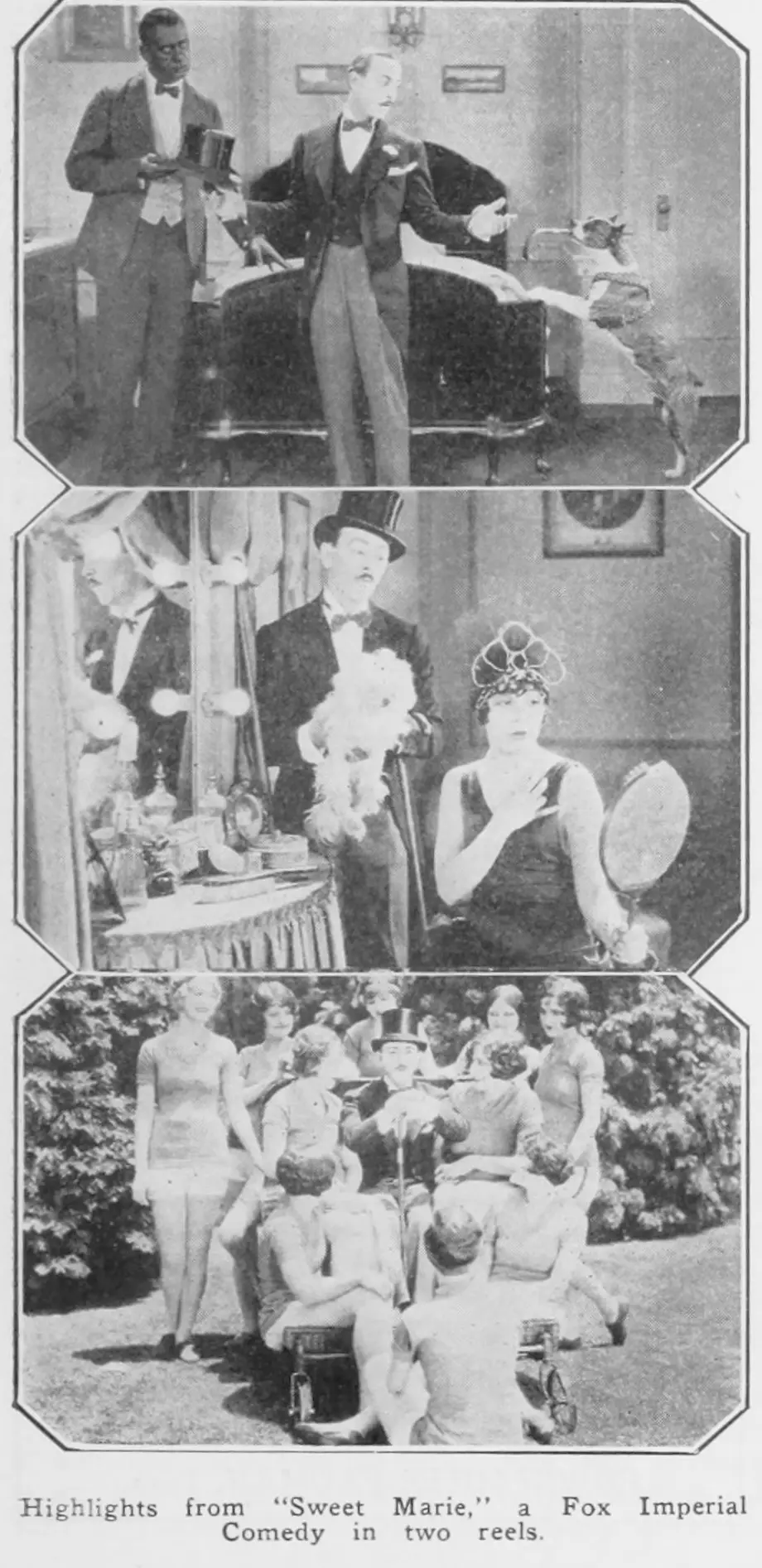
Scene from Sweet Marie
Cinematic perspective: Exploring the visual vocabulary of Sweet Marie (1925) through its definitive frames.
The film, in its simple elegance, paints a picture of post-war aspiration and the often-romanticized memory of wartime encounters. It’s a powerful, if understated, commentary on how deeply personal connections can transcend the global upheaval of conflict, becoming a driving force in one’s life long after the guns fall silent. The very notion of an ex-soldier dedicating his entire opulent existence to finding a fleeting love speaks volumes about the era's romantic sensibilities, where grand gestures were not just plot devices but reflections of a perceived ideal.
Fate's Hand and Familiar Faces
As is often the case in such tales, fate, a notoriously capricious playwright, intervenes. Our hero's tireless search does not culminate in a chance meeting on a bustling thoroughfare, but in the smoky, clandestine atmosphere of a cabaret. Here, amidst the clinking glasses and the murmur of patrons, he discovers Marie, not as the innocent girl he remembered, but as a dancer, a figure of allure and vulnerability. This revelation alone is a poignant subversion of his idealized memory, forcing him to confront a more complex reality.
The plot thickens with the introduction of the cabaret's owner: the protagonist's former top sergeant. This twist is less a coincidence and more a narrative inevitability in silent-era melodrama, binding the characters in a web of past allegiance and present rivalry. The sergeant, a brute of a man, is himself enamored with Marie, desiring to keep her for himself. This immediate conflict establishes a clear villain and a formidable obstacle, transforming the romantic quest into a more primal struggle for possession.
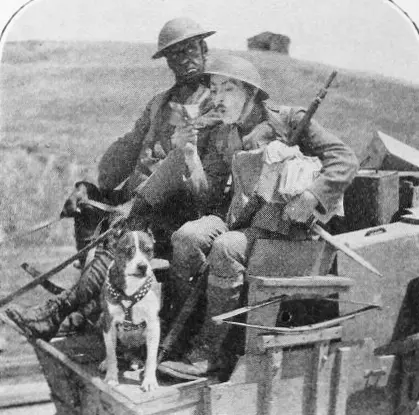
Scene from Sweet Marie
Cinematic perspective: Exploring the visual vocabulary of Sweet Marie (1925) through its definitive frames.
The stage is thus set for a classic confrontation, a battle not just for Marie's hand, but for the very ideals of love and freedom. The film cleverly uses these familiar archetypes to propel its straightforward narrative, relying on the audience's understanding of good versus evil, and the inherent justice of a hero's triumph.
Early Verdict: Does It Work?
Let’s get straight to it. "Sweet Marie" is a peculiar beast, a film that demands a specific kind of patience and historical curiosity. Its strengths lie in its earnest portrayal of a bygone romantic ideal and its surprisingly effective use of its animal co-star.
This film works because: It captures a genuine, if simplistic, romanticism of the era, bolstered by an endearing performance from Pal the Dog, who consistently steals scenes and provides much-needed dynamism. The central conflict, while melodramatic, is clear and emotionally resonant for its time.
Scene from Sweet Marie
Cinematic perspective: Exploring the visual vocabulary of Sweet Marie (1925) through its definitive frames.
This film fails because: Its pacing is undeniably slow by modern standards, its character development is rudimentary, and the narrative, while charming, lacks the sophisticated layers contemporary audiences expect. The human performances often verge on caricature.
You should watch it if: You are a dedicated student of early cinema, fascinated by the evolution of film narrative, or simply have a soft spot for silent-era melodrama and animal actors. It's a delightful, if dated, piece of history.
The Art of Silent Performance: Cast and Character
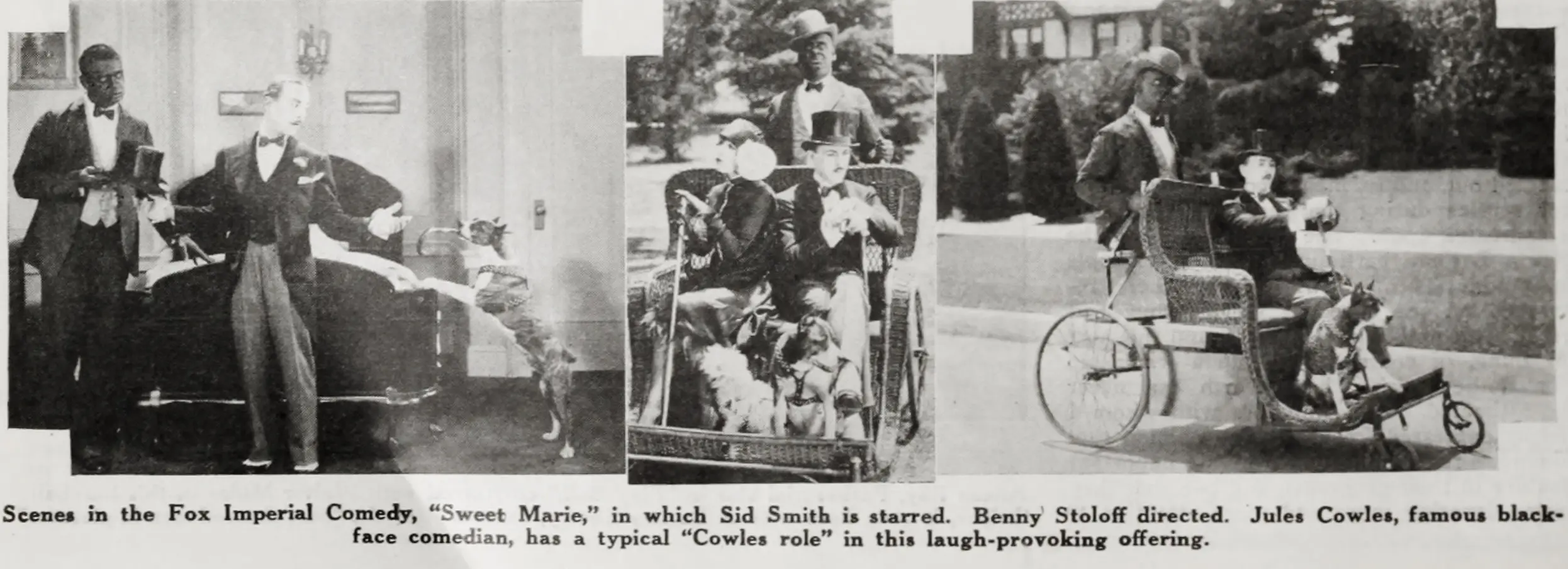
In the silent era, acting was an art of exaggerated gesture, facial contortion, and physical storytelling, and "Sweet Marie" is a textbook example. Jules Cowles, as the heroic doughboy, embodies the earnest romantic lead with a broad, almost theatrical style. His expressions of yearning, determination, and eventual triumph are clear, if not nuanced. He is a noble figure, driven by a singular purpose, and Cowles delivers this with unwavering commitment, even if his portrayal might feel a touch one-dimensional to modern eyes.
Scene from Sweet Marie
Cinematic perspective: Exploring the visual vocabulary of Sweet Marie (1925) through its definitive frames.
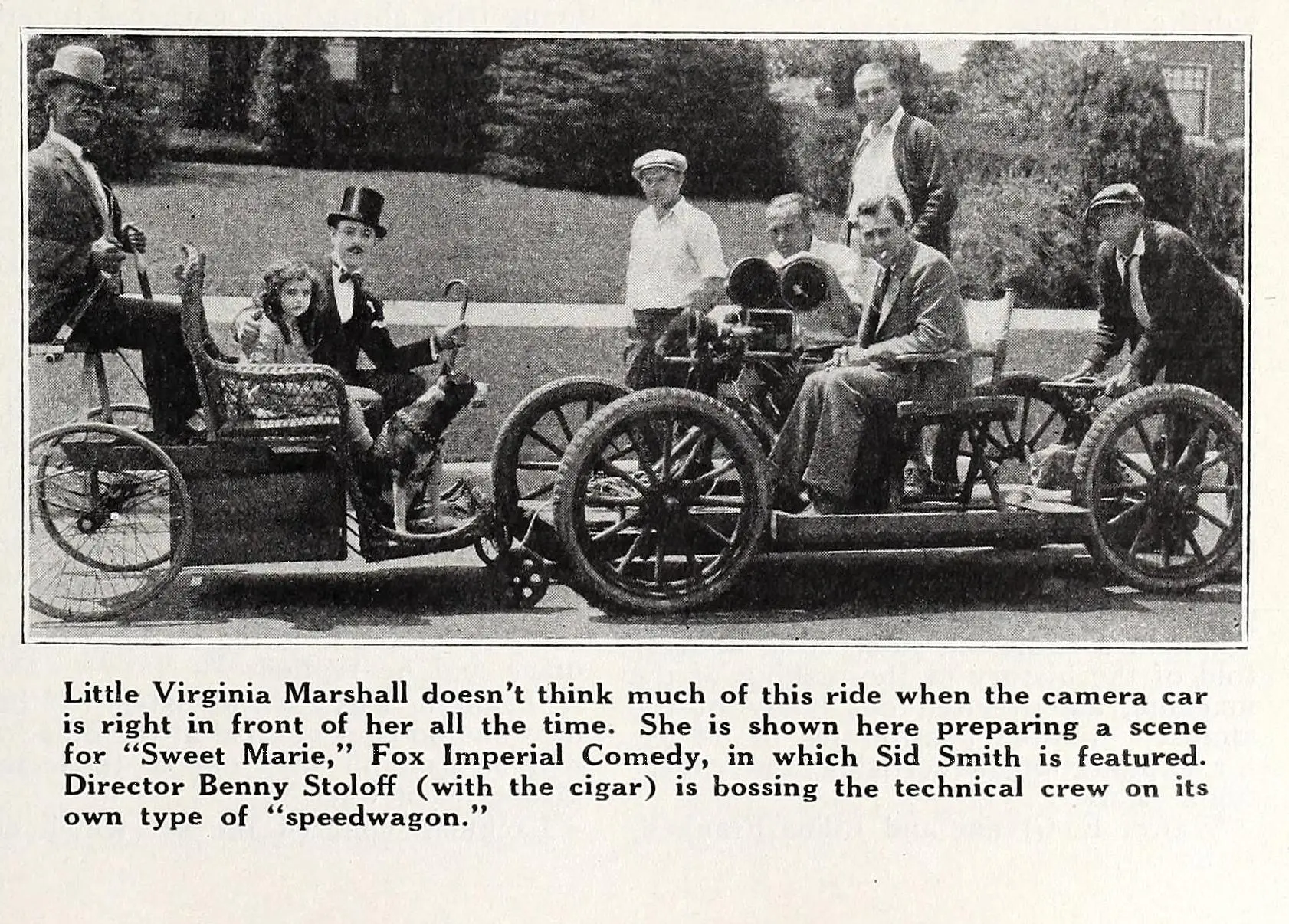
Virginia Marshall, as the titular Sweet Marie, brings a delicate vulnerability to her role. Her character is less an active agent and more an object of desire, a common trope for female leads of the period. Yet, Marshall imbues Marie with enough pathos to make her plight believable, particularly in the cabaret scenes where her dance sequences are imbued with a subtle melancholy. She is the prize, the damsel in distress, and she plays it with an understated grace that contrasts sharply with the broader performances around her.
Sidney Smith, as the menacing former top sergeant, is the quintessential silent film villain. He scowls, he sneers, he physically dominates the screen. Smith understands the assignment perfectly: to be an imposing, unlikable obstacle. His performance is a masterclass in silent-era villainy, relying on physicality and stark facial expressions to convey his possessive and aggressive nature. He is not a complex villain, but an effective one, providing the necessary dramatic friction.
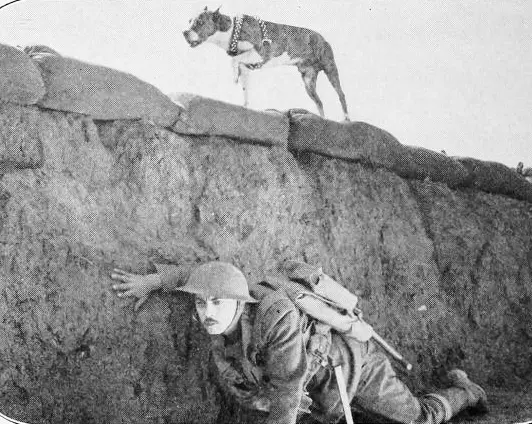
But the true standout, the unexpected scene-stealer, is Pal the Dog. Pal is not merely a prop; he is an active participant in the narrative, a loyal companion whose intelligence and timely interventions are crucial to the plot's resolution. His presence elevates the film beyond simple melodrama, adding a layer of charm and genuine warmth. Observe, for instance, Pal’s focused attention during the climactic fight scene, his actions not random but seemingly deliberate, a testament to the remarkable training of animal actors of that era. Pal’s quiet charisma is arguably the most humanizing element of the entire production, a surprising observation given the human cast.
Scene from Sweet Marie
Cinematic perspective: Exploring the visual vocabulary of Sweet Marie (1925) through its definitive frames.
Direction and Narrative Flow
The direction in "Sweet Marie" is straightforward, adhering to the established conventions of early narrative cinema. The film’s unknown director (as is often the case for many films of this vintage) prioritizes clarity and progression over stylistic flourish. Scenes are generally static, favoring medium shots that allow the actors’ full body language and expressions to convey meaning. The camera acts largely as an observer, guiding the audience through the plot points without drawing undue attention to itself.
Pacing, as mentioned, is a significant hurdle for contemporary viewers. The narrative unfolds at a deliberate, almost languid pace, characteristic of films made before the rapid-fire editing techniques became standard. There are long takes, extended reaction shots, and a reliance on intertitles to convey dialogue and exposition. This slower rhythm allows the audience to absorb the visual information, but it also demands a shift in viewing expectation. For example, the sequence of the doughboy searching the city feels extensive, almost repetitive, yet it serves to underscore his unwavering dedication, a narrative function often condensed in modern storytelling.
Despite the measured pace, the narrative flow is surprisingly fluid, moving logically from the hero's quest to the discovery, the conflict, and finally, the resolution. There’s a clear cause-and-effect progression that keeps the story comprehensible, even if the emotional beats feel somewhat understated by today’s standards. The director understands the fundamental task: to tell a story efficiently within the technological and artistic constraints of the period.
Cinematography and Visual Storytelling
The cinematography of "Sweet Marie," while rudimentary compared to later advancements, effectively serves its purpose. The film is shot with a clear, functional aesthetic, utilizing natural light where possible and often relying on basic studio lighting setups for interior scenes. The black and white photography, typical of the era, creates stark contrasts, particularly effective in the shadowed interiors of the cabaret, which hint at a world of moral ambiguity contrasting with the hero's clear-cut idealism.
Production design, while not extravagant, is sufficient to