DbcultAccessing Vault...
Cult Review
Senior Film Conservator
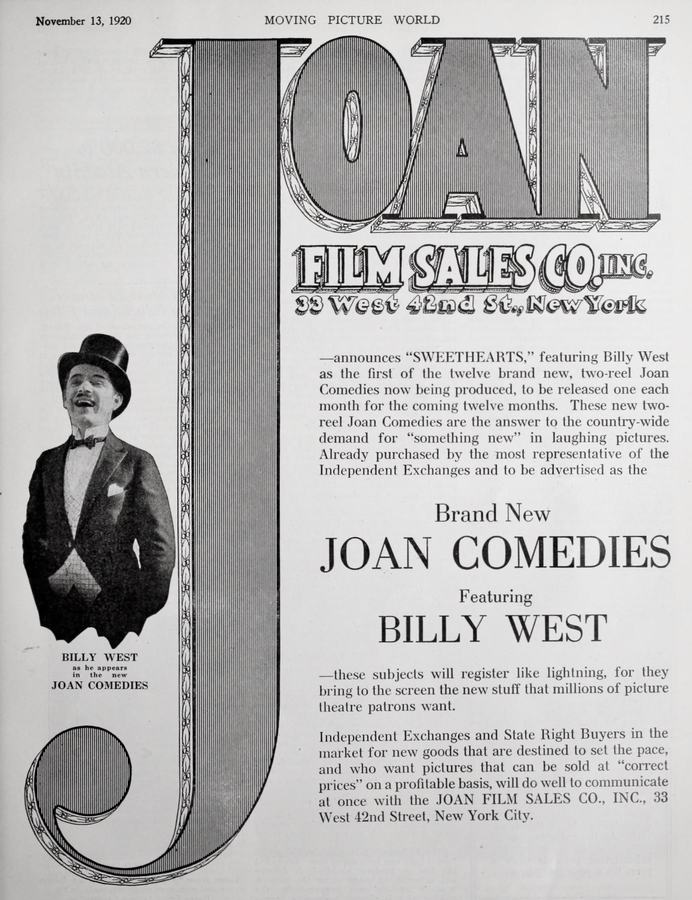
Picture a universe stitched from celluloid confetti: every frame of Sweethearts quivers like a struck tuning fork, its silent laughter echoing long after the lamps die. Director Benjamin Stoloff, still drunk on the possibilities of the new decade, treats the funfair as a petri dish for human appetite—candy-floss idealism on the tongue, gears of exploitation grinding beneath. The opening iris shot tunnels us past barkers and kewpie dolls until we land on Billy West’s face, a mug so elastic it could wrap around the world and still snap back into heartbreak.
West, often pigeonholed as a Chaplin pastiche, here bends his trampish silhouette into something more brittle: a clerk whose stomach ulcers spell dread in Morse code. Watch the way he fingers his detachable collar—as if it might sprout teeth. When he first spots Gibson’s Roxana on the high wire, the camera performs a slow, vertiginous tilt upward; the screen becomes a cathedral nave, the rope a trembling horizon between salvation and smash-up. The cut that follows—his pupils dilating inside a black iris-in—feels like the first blink after birth.
Stoloff’s visual grammar borrows from both the circus and the assembly line. Montage alternates between human limbs and iron pistons; lovers kiss inside the caterpillar ride while, intercut, gears chew nickels. This dialectical clash—flesh versus mechanism—turns the picture into a covert treatise on Taylorism: even our most intimate gestures have been clocked and priced. Yet the film refuses pessimism; it finds anarchic grace in the moment West’s clerk yanks the brake on the Ferris wheel, freezing the cosmos mid-rotation so he can confess his terror of becoming just another cog in a collar.
Compare this with The Gorgona, where desire petrifies, or the maritime fatalism of Gypsy Anne: those films drown eros in salt and myth. Sweethearts keeps its lovers airborne, suspended in the carnival’s centrifugal breath, the very air humming like a theremin.
Gibson, usually relegated to flapper sidekick, here commands the cosmos. Her Roxana sports a bob that slices moonlight, calves like drawn bowstrings. On the wire she is half angel, half guillotine; off it, she speaks only with her shoulder blades, a flamenco of scapular semaphore. The film’s midpoint hinge arrives when she peels off her sequined tights, trades them for the clerk’s baggy trousers, and strides into the shooting gallery to outscore every swaggering male. The gender inversion lasts exactly forty-three seconds of screen time—yet it detonates the narrative, proving identity as detachable as a paper mask.
Notice the tinting: night scenes bathe in cerulean, the carnival bulbs hand-painted amber. When Roxana laughs, the frame flares solar-yellow, a subliminal halo that sanctifies her blasphemy against feminine decorum. Silent cinema rarely granted women such kinetic sovereignty outside of A Daughter of the Wolf, and even there nature finally collars the heroine. Here, no such capitulation; the final shot frames her profile superimposed over the spinning carousel—time cyclical, matriarchal, unstoppable.
White, remembered for twitchy continental fops, sculpts a predator who apologizes while twisting the blade. His Baron Loredano sports a carnation the color of dried blood; he flirts the way others pick pockets—nimble, smiling, already counting the haul. Watch the sequence inside the Haunted Swing: as the floor tilts, the Baron’s shadow elongates, forked, across the wall, literalizing his split intent. The gag that deflates him—an accidental custard pie to the monocle—plays like a Brechtian alienation: we laugh, then feel the aftertaste of our own complicity in his voyeurism.
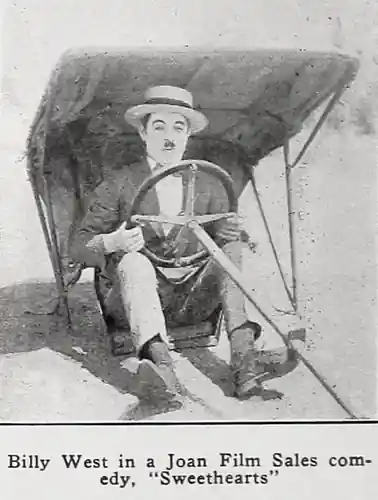
Such comic dread courses through other 1920 curios—Cohen's Luck toys with ethnic caricature, Luck in Pawn weds slapstick to class resentment—but none marry whimsy and threat with the vertiginous audacity on display here.
The intertitles, calligraphed on what looks like discarded ledger paper, stutter with the hero’s occupational anxiety—I O U one heart, payable on demand.
Typography weds commerce to confession; each card arrives slightly off-center, as if typewriter keys trembled. In the penultimate reel, an intertitle disintegrates mid-sentence, letters sprinkling down like black sleet, replaced by raw footage of the storm-battered midway. The effect is startlingly modernist, anticipating the collage frenzies of 1960s New Waves.
No original cue sheets survive, yet archival accounts describe house orchestras performing a mutated circus waltz—D minor slipping into G major whenever Roxana leaps. Contemporary restorations often plaster jaunty piano, betraying the film’s cardiac throb. I recommend pairing with Yann Tiersen’s La Valse des Monstres pitched down a semitone; the accordion’s wheeze syncs with the flicker, turning nostalgia into something approaching cardiac arrhythmia.
Where The Lonesome Pup domesticates chaos inside a bucolic fable, Sweethearts lets chaos off the leash. Both pivot on displaced desire—canine or human—but Stoloff refuses the pastoral safety valve; his closing image is not a hearth but a centrifuge. Likewise, The Dollar and the Law moralizes over capital; our film dissolves money into tinsel, then sets fire to it.
A sideshow banner glimpsed behind the hero reads Marvel of the Orient—See theTiny Foot!
The casual racism of 1920 carnivals flickers past, unremarked by protagonists. Yet Stoloff undercuts it: seconds later, a Black roustabout (uncredited, as always) hoists the entire carousel mechanism single-handed, the camera craning up in reverence. The juxtaposition indicts the spectacle while celebrating the bodies that oil it. Such dialectics feel sharper than the colonial guilt paraded in Human Cargoes, where suffering is aestheticized for missionary pity.
The 2018 Lobster Films restoration scanned two incomplete prints—one Czech, one French—splicing in English flash cards wherever translation ballooned. The result: occasional cadence hiccup, yet the emulsion wounds bloom like fireworks. Nitrate decomposition at reel five’s climax creates a stroboscopic halo around the lovers, serendipitously amplifying their ecstasy. To erase those scars would be to Botox a laugh-line; let the bruises sing.
Algorithms now auction our attention in micro-cents; dating apps reduce romance to fingertip auctions. Against such quantified yearning, Stoloff’s carnival feels downright revolutionary—an arena where desire is counted in heartbeats rather than swipe-right ratios. The film cautions that every Ferris wheel eventually descends, yet insists the plunge is the point. To watch Sweethearts today is to step off the algorithmic ride and into a storm where breath still fogs the lens, where love remains a dare hurled into darkness, and where the night—wild, ungovernable—might still catch us.
Seek it out in 16 mm revival houses or the shadowy corners of streaming platforms nursing public-domain orphans. Crank the volume, let the yellow bulbs bleed into your retinas, and remember: the first cinematic kiss caught on film lasted under three seconds. Sweethearts stretches the electricity between glances to an eternity, proving silence can be the loudest aphrodisiac of all.
IMDb —
1934
Community
Log in to comment.