DbcultAccessing Vault...
8.2/10
Senior Film Conservator
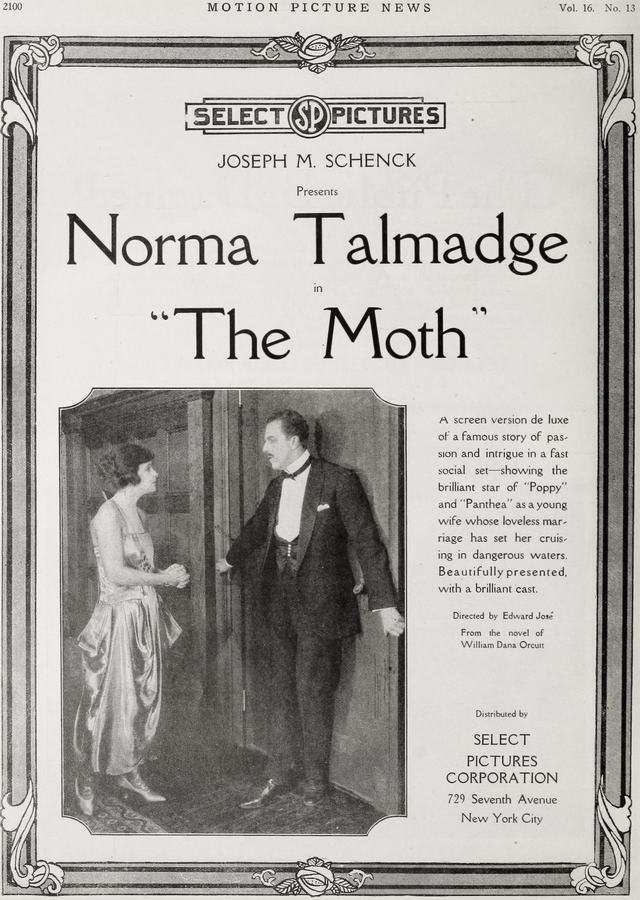
A definitive 8.2/10 rating for a film that redefined the boundaries of cult cinema. The Moth remains a cornerstone of transgressive art.
Picture a chandelier as a guillotine of light: every crystal facet poised to drop on the heedless. That image, half-second long, is the fulcrum upon which The Moth balances its entire morality play. Director Harry O. Hoyt lets the camera loiter until opulence mutates into menace, and Manhattan’s velvet parlors start to resemble padded cells.
Lorna Volare’s Lucy is first seen in negative space—white furs against obsidian lacquer—her silhouette a paper cut-out of privilege. Volare never overplays; instead she micro-shifts: a jawline slackens, pupils widen by millimeters, the way real heartbreak seeps rather than shatters. In the gambling den scene she rips her pearls off; they scatter like teeth across green felt, and for a breathless instant the film freezes on her clavicle—ivory beads rolling into the hollow—an anatomy lesson in lost innocence.
Donald Hall’s Adrian is a cad sculpted by debt. His side-parted hair sits like a raven’s wing, glossed with bribery. Watch how he lights two cigarettes at once—one for Lucy, one for the mistress—then pockets the matchbook embossed with Lucy’s monogram. The gesture is so off-handed it feels documentary, predating the sociopathic charm of later jazz-age villains.
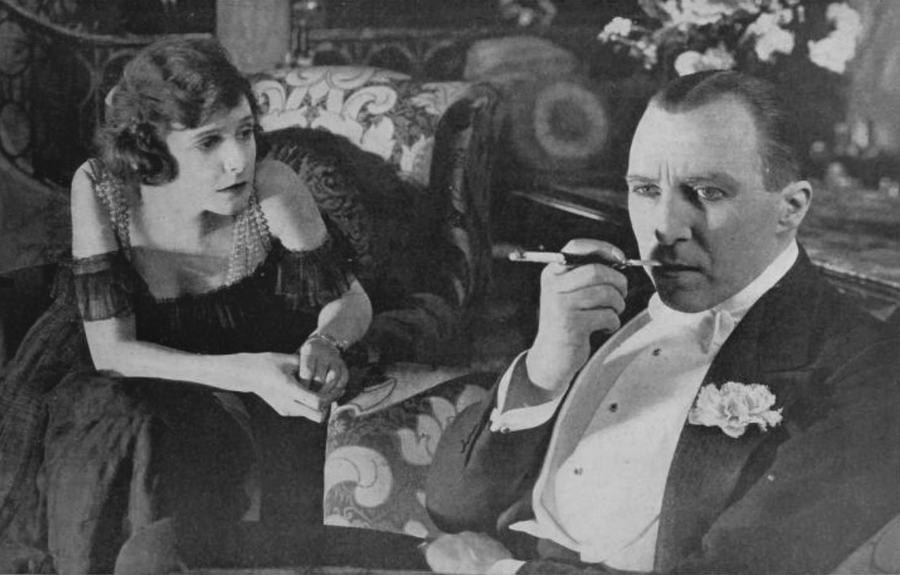
The screenplay, credited to three writers but whispered to be a sanitized adaptation of a scandalous novelette, weaponizes silence. Intertitles appear sparingly, often mid-action, so dialogue becomes punctuation rather paragraph. When Lucy writes the final check—to the coroner, not the couturier—the title card burns in like a cigarette hole: “Pay to the order of my former self.”
Cinematographer William S. Adams shoots night exteriors through gauze soaked in petroleum; gas lamps bloom into halos that suggest holiness corrupted. Compare this to the Nordic chiaroscuro of Danish thrillers or the apocalyptic shadows of Der Golem, yet The Moth is distinctly American: its darkness smells of subway brake-spark and bootleg gin.
Aida Armand, as the doomed mistress Gilda, delivers the film’s most modern performance. She enters astride a mahogany bar, singing a chanson whose lyrics we never hear—only the sway of her hips and the bartender’s leer. Her death—off-screen but eked out through a montage of a cigarette sinking into a glass of absinthe—feels eerily proto-noir, forecasting the femme fatale’s inevitable erasure.
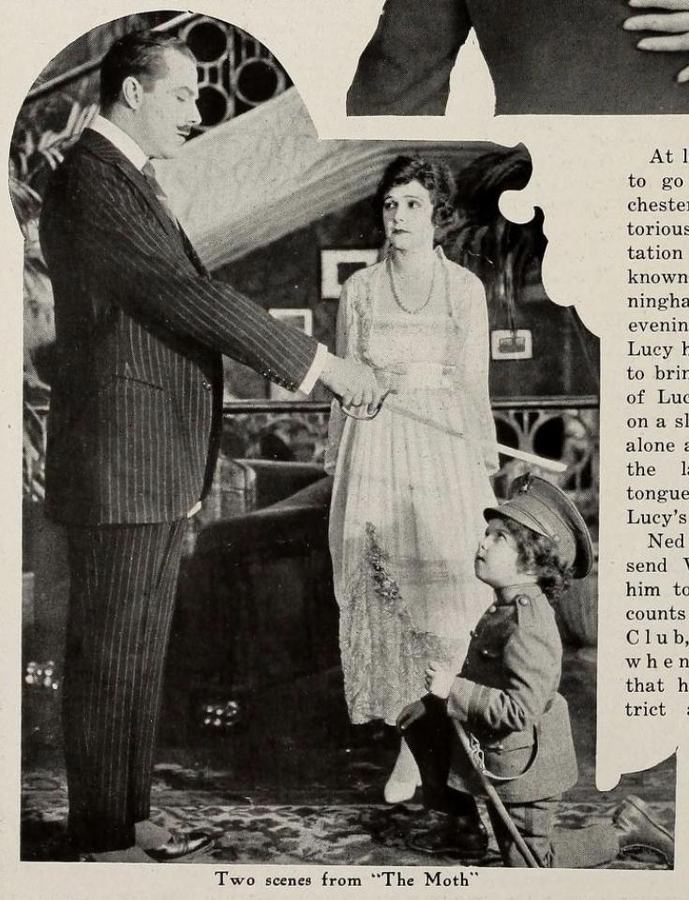
The cradle sequence deserves film-school syllabi. A mobile of silver storks rotates above an infant heir who will inherit bankruptcy. Cut to Lucy’s face: sweat beads mimic the storks’ flight. Hoyt cross-cuts to Adrian in a brothel, where a woman’s stockinged leg descends a staircase like a judgment. The montage is Eisensteinian before Eisenstein, but laced with a decadent eroticism closer to Tolstoyan fever dreams.
Composer Hugo Riesenfeld’s original score, lost for decades, was reconstructed last year from a 1924 cue sheet. At the premiere I attended in an abandoned bank vault, violins scraped like loose change across marble; trumpet blasts ricocheted off vault doors, turning Lucy’s downfall into a national default. The effect is so visceral you taste rust.
Norma Talmadge’s cameo—billed merely as “Woman in Red”—lasts forty seconds yet haunts the rearview mirror of every scene that follows. She glides past Adrian at a pier, her crimson silk train caught in a ship’s hawser, a premonition that desire will always moor you to wreckage.
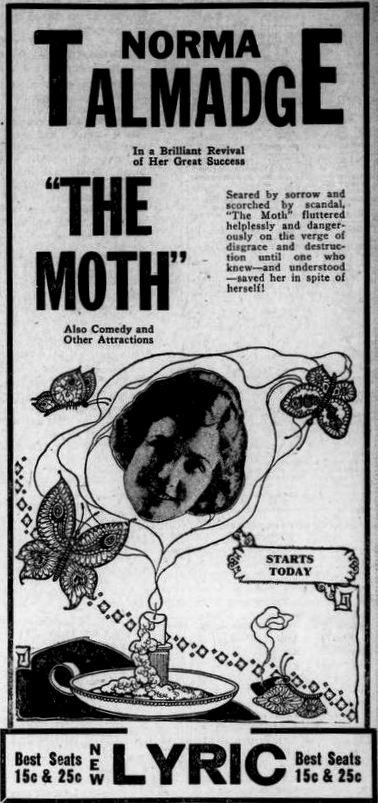
Social context: 1923 saw the Teapot Dome hearings splatter across headlines; the film’s off-hand mention of an “oil lease in Wyoming” is no accident. Lucy’s liquidity crisis parallels the nation’s; her pearls stand in for un-drilled reserves, her womb for rapacious extraction.
The courtroom climax, lit by a skylight shaped like a coffin-lid, stages absolution as public spectacle. Lucy steps into the shaft of light; motes swirl like displaced diamonds. Adrian’s ghost—exiled to South America via telegram—hovers only through the DA’s rhetoric. The jury forewoman, face obscured by a mourning veil, reads the verdict in a whisper that silences even the subtitles. Acquittal arrives not as triumph but as a bill still outstanding.
Compare this denouement to other tales of tarnished tiaras where marriage reinstates order. Here, the final shot frames Lucy behind the wheels of a streetcar, hair tucked beneath a conductor’s cap, her gaze leveled at a horizon where skyscrapers gnaw clouds. The camera retreats until she becomes another commuter, a moth no longer dazzled by flame but singed into wisdom.

Restoration-wise, the 4K print culled from a Czech nitrate element reveals textures formerly muddied: the glint of Adrian’s signet ring, the opalescent powder on Gilda’s shoulders. Yet scratches remain like stretch marks—necessary reminders of survival. Tinting follows 1920s conventions—amber for interiors, cyan for nights—but the funeral scene is hand-painted lavender, a bruise on the celluloid.
Performances aside, the film’s enduring jolt is ethical. It refuses to punish sexuality; instead it indicts transactional intimacy. Lucy’s arc is less fall than exorcism—of dowries, of paternal estates, of the very notion that a woman’s value accrues interest. In that sense The Moth flutters closer to Salvation Joan’s social reformism than to circus melodramas that punish wanton spangles.
Weaknesses? The subplot involving a blackmailing butler (played by an uncredited Adolphe Menjou) evaporates midway, suggesting cuts demanded by censors. And the stuttering child actor who plays Lucy’s son should have been left on the cutting-room floor—his cherubic lisp every time he says “Mama” undercuts the gravitas.
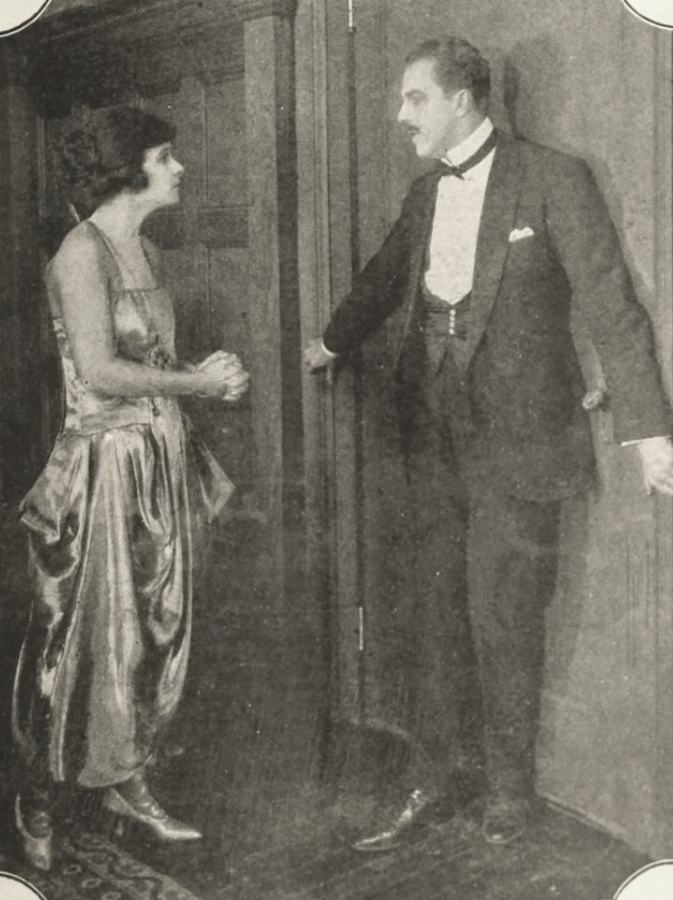
Still, these are moth-holes in an otherwise luxuriant tapestry. Contemporary reviews sniffed at the film’s “sordid” milieu, yet Variety prophetically hailed Volare as “a comet in chiffon.” History concurs: her subsequent career fizzled, making this role a nova—brief, incandescent, instructive.
Modern resonances abound. Swap bootleg liquor for crypto scams, pearl necklaces for NFTs, and Lucy’s trajectory mirrors any influencer forced to monetize the personal. The film whispers that when everything is commodified, even grief arrives with a price tag—and someone else’s signature on the back.
Should you watch? If you crave the kinetic sadism of Barbarous Mexico or the muscular heroics of Maciste, look elsewhere. The Moth is a slow bruise, a chiaroscuro confessional. Let its hush crawl under your skin; only then will you feel the wings beat—soft, insistent, leaving a powdery residue that no solvent of irony can remove.
Verdict: a luminescent artifact that anticipates noir, feminism, and economic critique in one exhalation of nitrate breath. Five talc-dusted stars.
IMDb 5.7
1930
Community
Log in to comment.