DbcultAccessing Vault...
Cult Review
Senior Film Conservator
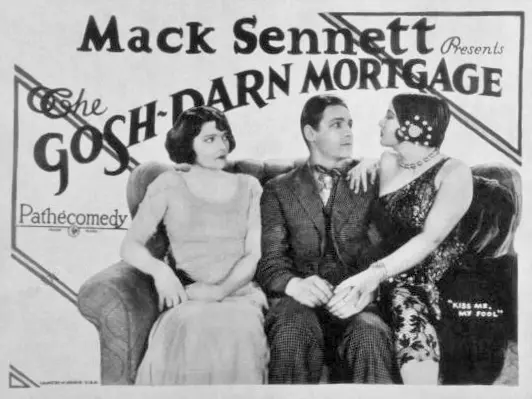
Is The Gosh-Darn Mortgage a forgotten gem of the silent era? Short answer: yes, but only if you appreciate the frantic, almost mathematical absurdity of a 1920s identity farce. It is a film that thrives on the anxiety of the era, specifically the fear of the 'city man' coming to take the family farm.
This film is for enthusiasts of physical comedy and those who enjoy seeing the 'old homestead' tropes subverted by sheer narrative chaos. It is definitely NOT for viewers who demand logic-driven plots or those who find the repetitive 'wrong bride' trope exhausting. It is a product of its time, but its energy is surprisingly modern.
1) This film works because it refuses to take the 'mortgage' drama seriously, turning a tragic financial situation into a playground for slapstick identity swaps.
2) This film fails because the third act relies too heavily on the male characters being impossibly unobservant, even by the standards of 1920s comedy.
3) You should watch it if you want to see the comedic roots of writers like Felix Adler, who would later refine this brand of chaos for the Three Stooges.
Yes, it is worth watching for its historical value and its relentless pacing. While many silent films of this era, like The House of Toys, focused on the heavy moral weight of domesticity, The Gosh-Darn Mortgage chooses to sprint toward absurdity. It offers a fascinating look at how rural audiences processed the fear of urban expansion through laughter. If you can handle the grainy texture of the past, the payoff is a masterclass in comedic timing.
The script, penned by Felix Adler and Al Giebler, is a fascinating study in escalating stakes. Adler is a name that carries weight in comedy circles, and here you can see his early fascination with 'the switch.' The plot isn't just about a mortgage; it's about the interchangeability of people when money is on the line. The father, played with a frantic desperation by William McCall, treats his daughters as collateral. This could have been a grim drama, similar to the tone found in The Miracle of Life, but Adler steers it into the realm of the ridiculous.
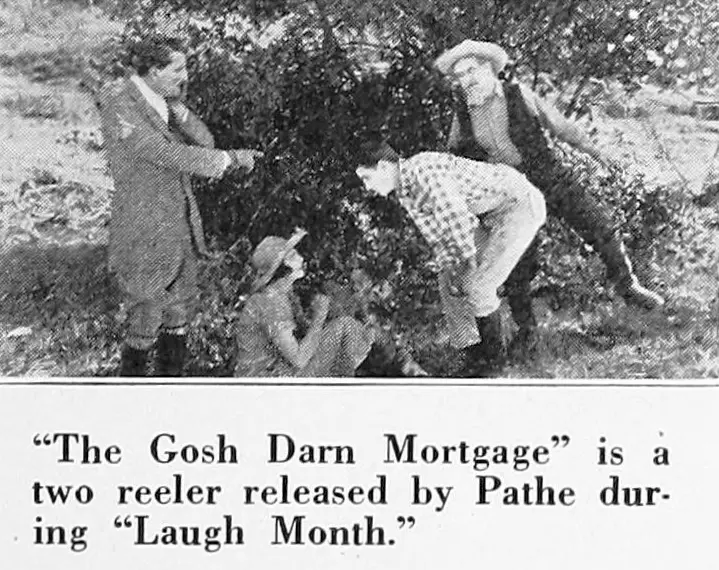
Consider the scene where the 'unwilling bride' first puts the veil on the 'willing' one. It’s not just a plot point; it’s a visual manifestation of the film’s theme. The veil acts as a mask that strips away individuality. In the eyes of the city slicker and the desperate father, the girl doesn't matter—only the contract she represents. This is a cynical observation for a comedy, but it gives the film a bite that many of its contemporaries lack. It’s a brutal sentiment wrapped in a gag.
Douglas Gerrard plays the city stranger with a smugness that is immediately recognizable. He is the quintessential urban predator, a trope that was ubiquitous in silent cinema. However, Gerrard adds a layer of buffoonery that makes his eventual confusion satisfying. He isn't just a villain; he's a mark. When he fails to distinguish between the two sisters, it’s a commentary on his own superficiality. He didn't come for a wife; he came for a transaction.
Peggy O'Neil and Thelma Parr provide the film's heartbeat. O'Neil, in particular, has a way of using her eyes to signal the audience that she is three steps ahead of the men. Her performance reminds me of the sharp, witty energy seen in My Girl Suzanne. She isn't a victim of the mortgage; she is the one manipulating the outcome. The way she passes the veil back and forth is choreographed like a dance. It’s tight. It’s fast. It works.
The visual language of the film is grounded in the 'Old Homestead' aesthetic. We see the familiar porches, the dusty lanes, and the cramped interiors of a family on the brink of ruin. The director uses these spaces to create a sense of claustrophobia. When the city chap enters, he feels too large for the rooms, an invasive species in a small pond. This visual contrast is a subtle but effective way to heighten the tension before the comedy takes over.
The pacing is where the film truly shines. Unlike slower character studies like Frou Frou, The Gosh-Darn Mortgage wastes no time. Every scene serves the eventual bride-swap climax. The editing during the final sequence, where the veil moves with the frequency of a shuttlecock in a badminton match, is surprisingly sophisticated for 1926. It requires the viewer to pay attention to the small details of costume and movement, making the payoff all the more rewarding.
While the city slicker is framed as the antagonist, a modern viewing reveals the father to be the truly disturbing figure. He is willing to sell his daughter to a man she hates to save a pile of wood and stone. The film treats this as a comedic motivation, but there is a dark undercurrent here. It’s a brutally simple sentence: He loves his land more than his kin. The comedy arises from the daughters outsmarting his greed, which makes the 'true love triumphs' ending feel like a victory over the patriarchy as much as a victory over debt.
The Gosh-Darn Mortgage is a loud, proud, and messy piece of silent cinema. It doesn't have the poetic grace of The Star of Bethlehem, nor does it have the gritty realism of The Border Legion. Instead, it offers something arguably more entertaining: pure, unadulterated chaos. It takes the very real fear of the 1920s—losing one's home—and laughs in its face. It works. But it’s flawed. The film is a testament to the idea that even in the face of financial ruin, a well-placed veil and a bit of wit can save the day. If you can appreciate the craft behind the confusion, you’ll find much to love here. It’s a frantic, funny, and slightly cynical look at the price of love and the cost of a mortgage.
IMDb —
1916
Community
Log in to comment.