DbcultAccessing Vault...
Cult Review
Senior Film Conservator

You should probably only watch Taht dow el kamar if you are the kind of person who likes looking at old, dusty photographs for fun. It is not a polished experience. If you want a fast plot or clear audio, you will absolutely hate this.
But if you like seeing how people used to move and dress in 1930s Egypt, it's kind of a goldmine. It feels like watching a ghost story that doesn't realize it's a ghost story yet.
The first thing I noticed was how heavy the makeup is on everyone. Fathy El-Safory looks like he has about three inches of powder on his face. In some shots, the light hits him and he glows like a lightbulb. It’s a bit distracting, but also weirdly beautiful in a way modern movies aren't.
There is this one scene where the characters are just sitting and the silence goes on for so long. You can hear the hiss of the film reel. It’s almost like the movie forgot what it was supposed to do next.
The title translates to Under the Moonlight, which sounds romantic. Mostly though, the 'moonlight' looks like a very bright desk lamp sitting just out of frame. It creates these massive, chunky shadows that swallow up half the actors' faces.
I found myself staring at the background more than the actors. The furniture looks so uncomfortable. Everything in the room feels like it would break if you sat on it too hard.
Abdel Mooti Higazi wrote this, and you can tell he was trying to make something that felt 'big.' But it feels small. It feels like a group of friends got together and decided to be Serious Actors for a weekend.
It reminded me a bit of the awkwardness in The Fairylogue and Radio-Plays. That same feeling of 'we are figuring out how this technology works as we go.'
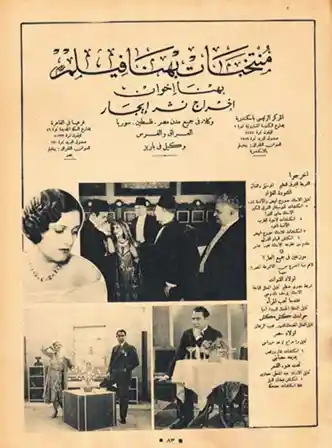
Ensaf Rouchdi has this way of tilting her head that is clearly meant to be tragic. After the third time she did it, I started counting. She does it a lot.
The movie is clunky. Transitions just sort of happen, like someone accidentally bumped the projector. One minute they are talking, the next it's a different day and nobody explained why.
I liked the outdoor shots the most. You get these tiny glimpses of life that wasn't staged for the camera. A stray dog or a dusty street that hasn't changed in a century.
It’s a bit like watching Two Timid Souls but without the French polish. It's raw and kind of falling apart at the edges.
Is the acting good? Not really. It’s very theatrical. Every gesture is ten times bigger than it needs to be. If someone is sad, they don't just cry, they collapse into the nearest chair like their bones turned to water.
There is a specific shot near the end where the camera just lingers on a door. For no reason. It’s just a door. I waited for something to happen, but then the scene just cut away.
I think I liked that door shot the most. It felt accidental and honest. Human error is all over this movie, and that’s why I didn't turn it off.
Don't go looking for a masterpiece here. Look for the cracks. That is where the interesting stuff is hiding in this one.
IMDb —
1929
Community
Log in to comment.