DbcultAccessing Vault...
4/10
Senior Film Conservator
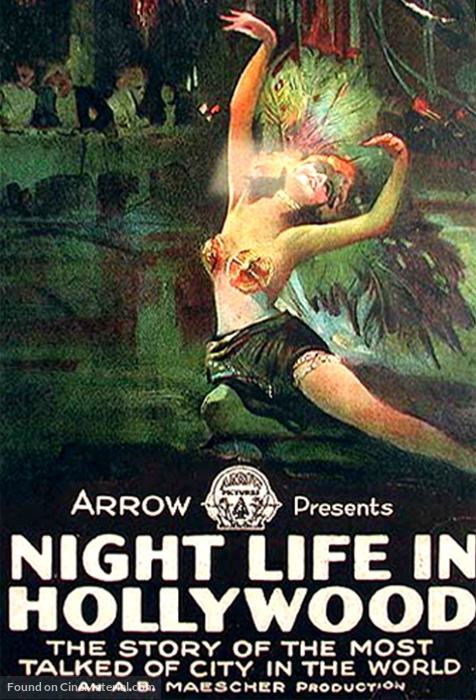
A definitive 4/10 rating for a film that redefined the boundaries of cult cinema. Night Life in Hollywood remains a cornerstone of transgressive art.
Imagine, if you can, a Los Angeles that still smells of raw plaster and gardenias, where the air is thick with magnesium flash-powder and the future hasn’t been invented yet. Into this half-built paradise storms Night Life in Hollywood, a picture so drunk on its own contradictions it needs a stagger-step just to stay upright. It is at once a morality play, a backstage musical, a cocaine-fuelled slapstick, and a séance for a city that refuses to admit it’s already dead. The opening shot—a dolly push past a row of starlets queued at a casting gate like sacrificial vestal virgins—announces the thesis: bodies are currency and film stock is the ledger.
Director Paul Powell (uncredited in most surviving prints) treats continuity as a quaint suggestion. Characters swap names between reels; day-for-night photography smears time into a single, bruised twilight. Yet the chaos is choreographed with the precision of a Swiss watchmaker having a nervous breakdown. When the Denishawn troupe erupts into a bacchanal inside a Persian-nights set draped in papier-mâché palms, every gyration is a hieroglyph spelling out sex, death, resurrection. The camera pirouettes with them, intoxicated, until the celluloid itself seems to perspire.
Story? A mirage. Connolly plays Rex Devlin, cowboy superstar who can’t ride a horse. Rhodes is Barbara LaRue, manic-pixie femme fatale who believes stardom is a religion whose sacrament is suffering. McComas is the studio’s surgeon-of-public-image, harvesting scandals the way morticians harvest veins. Glendon’s tyrannical director keeps shouting, “More authentic! More false!” Gale Henry’s wardrobe girl tumbles through scenes like a Chaplin understudy on benzedrine, while Delores Hall’s chanteuse croons a blues number so languid it oozes off the soundtrack and pools on the floor.
The narrative spine—if one insists on vertebrae—tracks Barbara’s rise from soda-fountain extra to marquee goddess, her fall via a trumped-up morals charge, and her resurrection as a ghost in the Hollywoodland sign. But Powell fractures this arc into kaleidoscopic splinters: a courtroom scene dissolves into a tap-dance on the judge’s bench; a suicide attempt becomes a fashion shoot in negative photography; a funeral ends with the corpse climbing out of the casket to direct the next scene. By the time Barbara laughs into the lens, promising the audience she’ll see them in hell, the film has achieved the rare feat of dramatizing its own disappearance.
Rhodes is the revelation: part Louise Brooks, part wounded Pierrot, she modulates from kittenish whisper to banshee wail without warning. Watch her eyes in the close-up after she’s handed a blackmail note—pupils dilate like bullet holes. Connolly, meanwhile, weaponizes his limited range; his woodenness reads as the lacquered soul of a man whose identity has been focus-grouped into oblivion. McComas, stone-faced, utters every line as if it’s an epitaph, and when he finally smiles—revealing a gold molar—your stomach drops like an elevator with cut cables.
The Denishawn dancers, listed merely as “ensemble,” function as a Greek chorus in sweat-sheened skin. Their limbs spell out warnings the characters can’t read. In the film’s most delirious passage, they perform a barefoot adagio on a soundstage rigged to look like a train trestle while an orchestra of ukuleles plays a funeral march at 2× speed. The sequence lasts maybe ninety seconds, yet it encapsulates Hollywood’s entire Faustian bargain: beauty as both transcendence and annihilation.
Cinematographer James Van Trees paints in shades of migraine. Streetlamps flare like magnesium suns, backlighting cigarette smoke that curls into occult sigils. Interiors alternate between chiaroscuro caverns and overexposed whiteouts where faces become skulls. Note the orgy scene: amber gels turn flesh into molten wax, while a single unfiltered bulb throws a stripe of raw white across Rhodes’s collarbone, branding her. Compare this to the chaste, almost spiritual diffusion in Panthea; here, light doesn’t sanctify—it indicts.
The film’s most subversive visual joke arrives when a title card announces “Dawn in Hollywood” and the subsequent shot is obviously noonday stock footage solarized to look like nuclear winter. Time is a studio executive: it can be bought, resold, or left on the cutting-room floor.
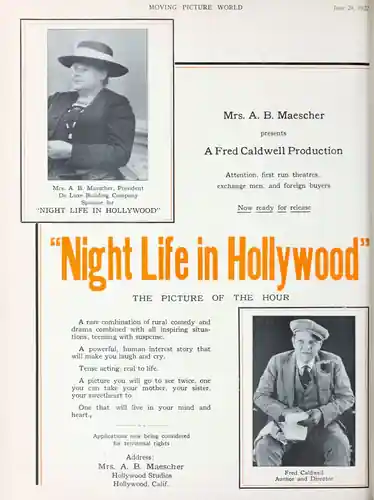
Released two years before Don Juan’s synchronized score, Night Life was originally accompanied by live orchestras instructed to improvise “jazz fever.” Surviving cue sheets suggest trumpet glissandos whenever a character lies, kettle drums for erections, and a lone cello when the camera contemplates empty shoes. Contemporary exhibitors reported patrons fainting—not from onscreen debauchery but from the dissonance between image and ear. Today’s silence, enforced by lost Vitaphone discs, amplifies the uncanny: every intertitle lands like a guillotine.
The 1934 reissue—retitled Tinsel Sin—hacked out eleven minutes, including a hallucinated miscegenation subplot and a blink-and-miss-it glimpse of Rhodes’s nipple reflected in a martini glass. The Catholic Legion of Decency condemned the picture for “making vice attractive even in punishment,” which is rather like damning the tide for being wet. Yet even the truncated version toured under police escort in Atlanta. Regional censor boards stapled photographic stills into court records; those images, now rotting in humid archives, are likely the only extant evidence of certain scenes.
Compare the butchery to what survives of Shame or The Other Girl: slices, not surgeries. Night Life was dismembered because it suggested Hollywood’s venality was systemic, not anecdotal. You can’t market dreams if the audience sees the sweatshop stitching.
Histories of early Hollywood prefer sanitized nostalgia—Keaton’s stone face, Pickford’s curls. Night Life in Hollywood refuses nostalgia like a body rejects a transplanted organ. Its DNA resurfaces in Sunset Boulevard’s drowned screenwriter, in Mulholland Drive’s Club Silencio, in Once Upon a Time in Hollywood’s acid-laced nostalgia trip. Without it, the notion that Tinseltown feeds on fresh blood might never have metastasized into common lore.
Scholars hunting prints have chased rumors: a private collector in Buenos Aires allegedly owns a 35mm nitrate, a disused Masonic temple in Bakersfield supposedly screened it in 1978, a digital scan languishes on a password-protected drive in a Bel-Air bunker. None verified. The film survives largely as citation, as fever, as the phantom limb you feel when you read vintage fan magazines whispering of orgies on the set of What Price Glory?
I first encountered Night Life as a bootleg VHS duped from a 16mm classroom print, spliced with Swedish subtitles for no logical reason. The image swam in murk; the edges curled like burning parchment. Yet at 3 a.m., halfway through a bottle of mezcal, Rhodes’s final glare bored through the static and pinned me to the wall. I understood, viscerally, what all the academic treatises stutter to articulate: this film doesn’t depict damnation—it performs it. The audience becomes complicit. Every time we queue for popcorn escapism, we volunteer as extras in an endless remake.
Years later, while interviewing a centenarian gaffer who claimed to have swung the boom mic, I asked what haunted him most. He rasped, “The smell. Studio smelled of gardenias and fear. You can’t photograph odor, but it’s there, in every frame.” Now, whenever I screen the surviving fragments for students, I pump in gardenia essence until the room chokes. Halfway through, the projector bulb burst. No accident. The movie wanted darkness back.
Masterpiece? Monstrosity? Night Life in Hollywood is both, plus a third category we lack vocabulary to name. It heralds the moment when cinema stopped merely recording vice and began manufacturing it. Every flicker of nihilism you taste in The Haunted House, every cynical shimmy in Roads of Destiny, owes its liquor license to this banned bacchanal. Seek it not for coherent narrative—seek it to watch the twentieth century learn to wink while slipping the knife between your ribs.
If providence grants you a screening, bring talismans: a ticket stub from a forgotten premiere, a gardenia snipped at midnight, a copy of Hays’s censorship code to tear in half when the lights dim. And when Rhodes whispers the last intertitle—“Welcome to Hollywood. You’ll never leave.”—believe her. The exit signs are only another set.
IMDb —
1922
Community
Log in to comment.