DbcultAccessing Vault...
Cult Review
Senior Film Conservator
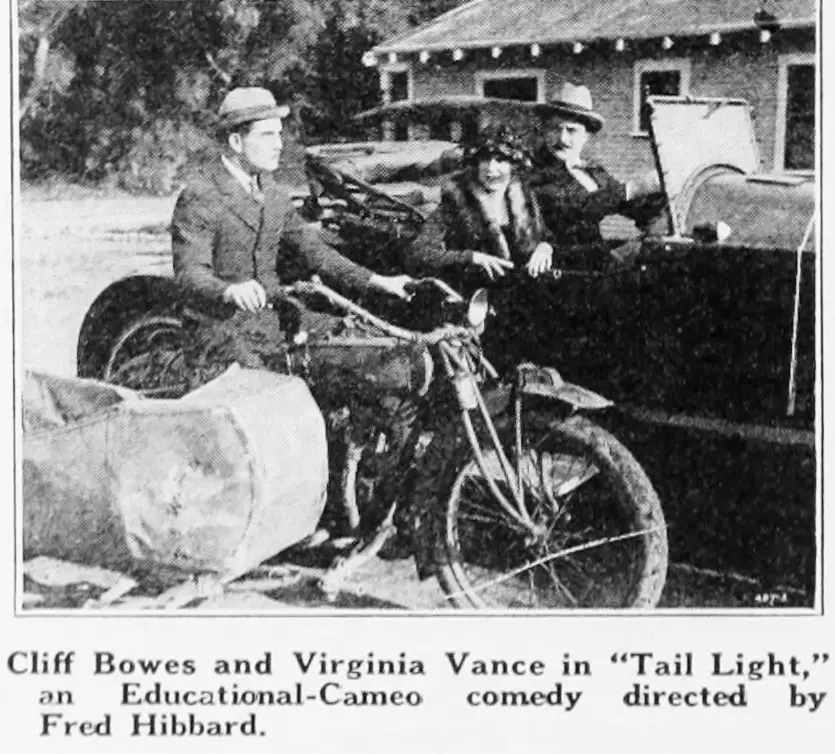
The silent era was a crucible of experimentation, a period where the syntax of visual storytelling was being forged in the fires of vaudeville and the burgeoning demands of the nickelodeon. Tail Light, directed with a keen eye for rhythmic timing by Fred Hibbard, stands as a testament to the period's ability to extract high-octane entertainment from the most trivial of premises. While many films of the time sought the epic scale of historical dramas like The World Aflame, Hibbard and his star, Cliff Bowes, realized that the human condition is often best reflected through the lens of a well-timed stumble or a serendipitous mishap.
At the heart of Tail Light lies a singular, absurd catalyst: a pin cushion. In the world of 1920s comedy, props were not merely set dressing; they were active participants in the narrative. When this domestic object becomes lodged in the saddle of the titular horse, the film pivots from a sports drama—reminiscent of the earnestness found in The Thoroughbred—into a surrealist exploration of endurance. The pins represent a persistent, nagging reality that undermines the grandeur of the 'Brown Derby.' It is this juxtaposition between the high-stakes environment of the race and the low-stakes annoyance of the pins that creates the film's unique comedic friction.
Cliff Bowes, a performer whose physicality often rivaled the greats of his era, uses the discomfort of his character to showcase a range of motion that is both exhausting and exhilarating to behold. Unlike the more stoic heroism seen in Fearless Flanagan, Bowes' jockey is a man constantly at the mercy of his environment. Every buck of the horse, every frantic adjustment of his seating, is a choreographed dance with pain. This isn't just slapstick; it's a study in the resilience of the human body when faced with the inexplicable. The way Bowes contorts himself to avoid the 'amusing results' of the pins is a masterclass in mime, proving that words are entirely unnecessary when you have a sharp object and a galloping horse.
While Bowes carries the physical burden of the film, Virginia Vance provides the necessary narrative anchor. In silent shorts, the female lead often functioned as the motivation for the hero's struggle, but Vance brings a specific sparkle to her role that elevates the material. Her screen presence reminds me of the delicate balance found in The Lily of Poverty Flat, where the emotional stakes must feel real even if the situation is ludicrous. Vance's reactions to the race—the shifting tides of hope and confusion as she watches Cliff's erratic riding—give the audience permission to find the humor in the jockey's plight. Without her grounded performance, the film might have drifted into the realm of pure abstraction.
The supporting cast, including the old lady whose pin cushion becomes the film's unintentional villain, adds a layer of social texture. There is a charm in the way Hibbard captures the crowd at the Brown Derby. It feels lived-in, a cross-section of society that stands in stark contrast to the more theatrical settings of films like My Lady's Slipper. The spectators are not just background noise; they are the witnesses to a comedy of errors that they themselves have inadvertently caused.
Fred Hibbard’s direction is characterized by a relentless forward momentum. In an era before sophisticated tracking shots, the depiction of the race in Tail Light is remarkably dynamic. The editing cuts between the frantic jockey, the confused horse, and the cheering crowd with a precision that keeps the viewer engaged. Hibbard understands that the key to slapstick is the escalation of stakes. It’s not enough that the pins are there; their presence must become increasingly problematic. The race itself becomes a metaphor for the frantic pace of the 1920s, a decade that was itself racing toward an uncertain finish line.
Comparing Tail Light to the more somber, message-driven films of the period, such as The Leech or the harrowing Cocaine Traffic; or, the Drug Terror, highlights the essential role of comedy in the cinematic ecosystem. While those films sought to educate or warn, Hibbard’s work seeks to liberate. There is a subversive joy in watching a prestigious event like the Brown Derby be completely derailed by a sewing accessory. It is a reminder that no matter how high we climb or how fast we ride, we are all susceptible to the 'pins' of fate.
The cinematography in Tail Light utilizes the natural light of the outdoor racing circuit to create a sense of authenticity. The dust kicked up by the horses, the sweat on Bowes’ brow, and the tangible texture of the saddle all contribute to the film’s immersive quality. This isn't the stylized, almost fairy-tale aesthetic of Rumpelstiltskin; this is a film that feels grounded in the dirt and grit of the track. Even the slapstick elements feel tethered to reality, governed by a twisted version of Newtonian physics where every action has an equal and opposite—and usually painful—reaction.
We see echoes of this visual storytelling in other shorts like At the Front, where the environment itself becomes a character. In Tail Light, the horse is more than a vehicle; it is a comedic partner. The animal's natural movements are recontextualized by the presence of the pins, making its every stride part of the joke. This requires a high level of coordination between the trainer, the actor, and the director, a feat that is often overlooked in modern assessments of silent comedy.
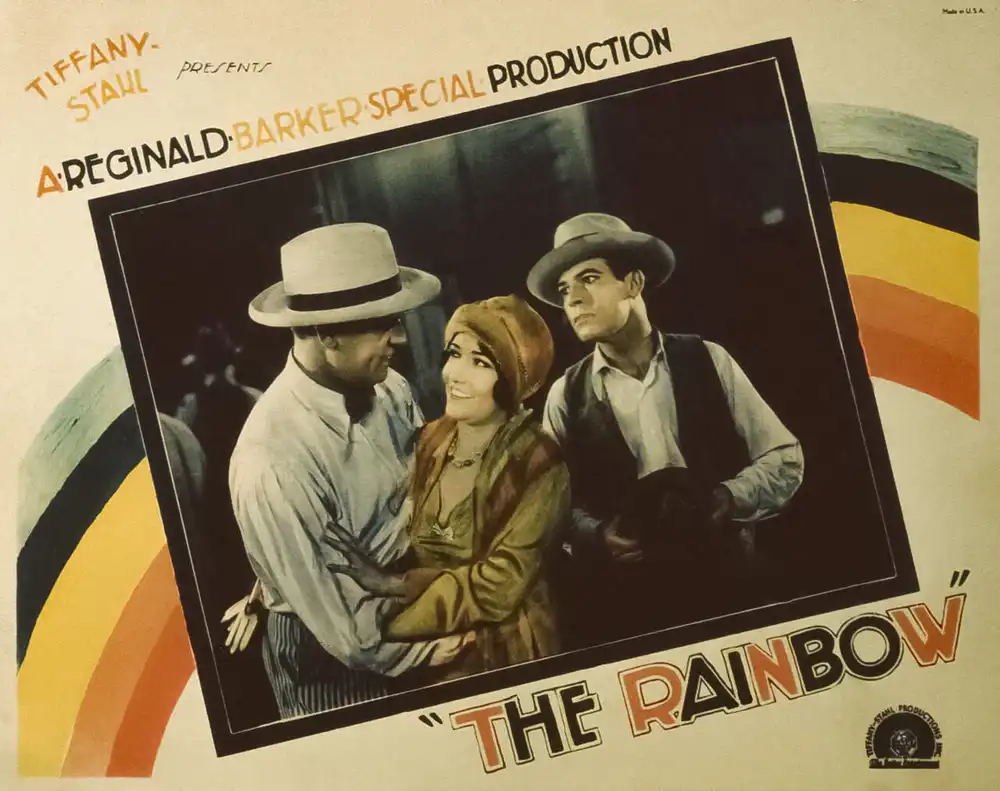
When we look at the broader landscape of 1910s and 20s cinema, Tail Light occupies a fascinating niche. It lacks the melodrama of Camille or the suspense of The Adventure Shop, yet it commands the viewer's attention through sheer inventive energy. It shares a certain DNA with Hair Trigger Stuff, another film that balances action with character-driven moments, though Tail Light leans much more heavily into the absurd. It’s a film that doesn’t take itself seriously, which is precisely why it remains so watchable today.
Even compared to something like Sweet Papa, which plays with familial dynamics, Tail Light feels more focused, more singular in its pursuit of the laugh. It understands that a jockey, a horse, and a pin cushion are all the ingredients one needs for a cinematic feast. The film doesn't overstay its welcome, moving with the same speed as its equine protagonist. It is a lean, mean, comedic machine that strips away the fluff and leaves only the pure essence of the gag.
In the grand tradition of films like The Heart of the Blue Ridge or Held in Trust, which explore themes of honor and duty, Tail Light offers a refreshing counter-narrative. It suggests that sometimes, victory isn't about the fastest horse or the strongest will; sometimes, it's about who can survive the most ridiculous circumstances. Cliff Bowes’ performance is a reminder of a time when actors were required to be part-stuntman, part-dancer, and part-clown. His victory in the Brown Derby is a win for every person who has ever had a bad day at work and somehow managed to come out on top.
As we rediscover these gems of the silent era, Tail Light stands out as a bright, flickering beacon of pure entertainment. It’s a film that understands the fundamental truth of cinema: we want to be moved, we want to be thrilled, but most of all, we want to laugh at the absurdity of it all. Hibbard, Bowes, and Vance delivered exactly that, creating a short that is as sharp and enduring as the pins in Tail Light’s saddle.
IMDb —
1927
Community
Log in to comment.