DbcultAccessing Vault...
Cult Review
Senior Film Conservator
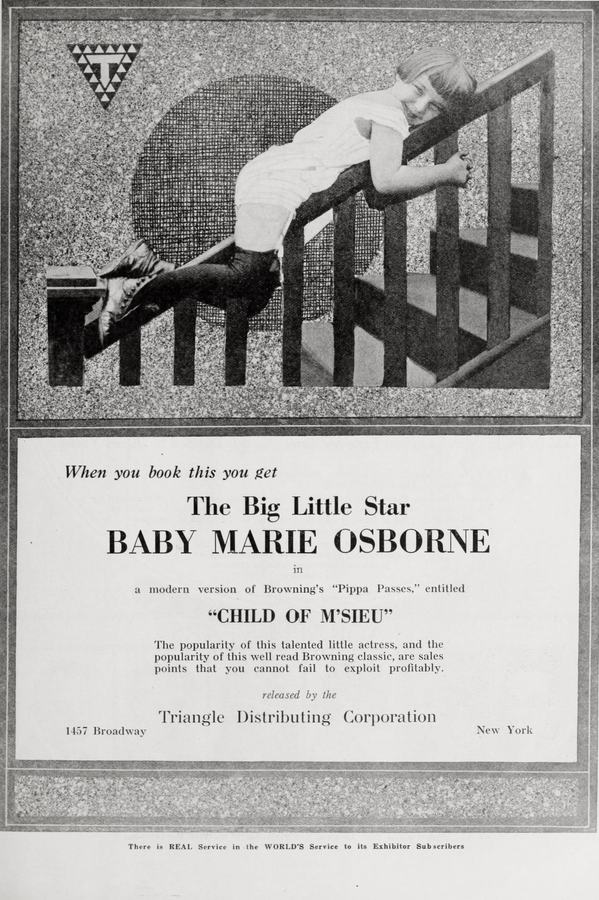
In the annals of early cinema, where narratives often grappled with grand melodramas and stark moralities, there occasionally emerged a film whose quiet power resonated far beyond its humble origins. 'Child of M'sieu' stands as one such luminous example, a cinematic parable that, despite its age, speaks volumes about the enduring human capacity for redemption, the transformative influence of innocence, and the subtle, yet profound, ripple effect of genuine kindness. Directed with a delicate hand and penned by the insightful Robert Browning, this film isn't merely a story; it's an experience, a gentle balm for the cynical soul, reminding us that even in the grimiest corners of existence, light can find a way to bloom.
The setting itself, M'sieu's tavern, is a character in its own right. It's not the grand, bustling establishments often depicted in period pieces, but rather a more intimate, perhaps even seedy, haunt where life's discarded souls seek fleeting solace in drink and camaraderie. Harrish Ingraham's portrayal of M'sieu, the tavern keeper, hints at a man hardened by his trade, yet not entirely devoid of a hidden tenderness. Within these walls, amidst the clinking of glasses and the hushed confessions, lives Marie, brought to life with an ethereal grace by the remarkable Marie Osborne. Her presence is a stark, almost miraculous, contrast to her surroundings. She is not merely an orphan existing within the tavern; she is its moral compass, its unwitting spiritual guide. Her songs, simple and pure, are not just melodies; they are incantations, weaving a subtle magic that disarms the patrons' hardened hearts. Imagine a room filled with individuals wrestling with their own demons – avarice, resentment, despair – and then picture a child's voice, clear and unburdened, cutting through the din, replacing their 'evil thoughts' with nascent stirrings of goodness. This isn't overt sermonizing; it's a gentle, almost imperceptible, transfiguration. It reminds one of the profound impact a single, pure entity can have on a damaged collective, much like a single dewdrop can refract the entirety of the morning sun.
One of the film's most poignant narrative threads intertwines Marie's destiny with that of Absinthe, the old musician. Portrayed with a quiet dignity by Claire Alexander, Absinthe is a figure steeped in regret, a shadow of his former self. He once graced grand stages, accompanying a great singer, only to be cast aside by the insidious grip of alcohol. Now, his talent is confined to the tavern, a stark reminder of a glorious past irrevocably lost. Yet, in Marie, he finds not judgment, but an unwavering companion. Their bond transcends age and circumstance, a testament to the power of shared humanity. Marie's innocent affection and the purity of her spirit seem to offer Absinthe a form of quiet absolution, a chance to reconnect with the unsullied passion for music that once defined him. It's a subtle narrative of redemption, not through grand gestures, but through the consistent, gentle presence of an unblemished soul. This dynamic explores the timeless theme of finding solace and purpose even after profound personal failings, echoing sentiments found in films like The Broken Promise, where characters grapple with the consequences of past choices and seek a path toward mending their fractured lives. The visual language here, though silent, speaks volumes about the quiet dignity of a man finding a measure of peace in the twilight of his years, guided by the very innocence he perhaps once squandered.
The arrival of Claire, played with compelling vulnerability by Katherine MacLaren, introduces another layer of emotional complexity to the narrative. Claire is the daughter of the very singer Absinthe once accompanied, now left adrift and contemplating the ultimate escape at the river bank. Her despair is palpable, a heavy shroud threatening to consume her. It is Marie who discovers her, a serendipitous encounter that feels almost preordained. Marie's intuitive empathy and unwavering belief in goodness draw Claire away from the precipice, leading her back to the unexpected sanctuary of M'sieu's tavern. This act of intervention is critical, showcasing Marie's role not just as a passive fount of good, but as an active agent of salvation. Claire's journey from suicidal ideation to finding purpose within the tavern's bustling environment is beautifully rendered. She helps out, immersing herself in the daily routines, and slowly, painstakingly, begins to heal. This arc of finding meaning through service and community is a powerful testament to the film's core message: that even the most shattered spirits can be mended through connection and compassionate engagement. In some ways, Claire's initial despair and subsequent journey towards recovery resonate with the thematic explorations seen in films like The Life Line, which often depicted characters on the brink, pulled back by an unexpected intervention or newfound purpose. The subtle transformation of Claire is a masterclass in silent film acting, where every gesture, every flicker of emotion across MacLaren's face, conveys the profound internal struggle and eventual resurgence of hope.
No tale of redemption is complete without the prospect of new beginnings, and in 'Child of M'sieu', this comes in the form of Philip, a frequent patron of the tavern, portrayed by Philo McCullough. Initially, Philip is depicted as someone whose moral compass might have strayed, perhaps prone to the 'evil thoughts' Marie so effectively dispels. However, Marie's persistent, gentle influence, particularly through her singing, works its quiet magic on him. He is not overtly lectured or chastised; rather, he is subtly nudged towards a better version of himself by the sheer force of her innocent goodness. This rehabilitation, a testament to the film's belief in innate human goodness, paves the way for a tender romance. As Claire begins to find her footing in the tavern, she and Philip are drawn to each other, a connection fostered and perhaps even orchestrated by Marie's benevolent presence. Their love story is not one of dramatic fireworks but of quiet understanding and mutual respect, born from shared experiences within the tavern and the overarching influence of Marie's transformative spirit. It's a beautiful portrayal of how a community, even an unlikely one, can foster love and growth, a theme that, while perhaps less overtly dramatic, is just as profound as the intricate mysteries of a film like Seven Keys to Baldpate, which explores how characters interact and influence each other within a confined space, albeit for very different ends. The blossoming relationship between Claire and Philip serves as a tangible manifestation of Marie's impact, a living testament to the power of her presence.
The success of 'Child of M'sieu' hinges significantly on its cast, who, in the absence of spoken dialogue, must convey a wealth of emotion and character through expression, gesture, and movement. Marie Osborne, as Marie, is simply captivating. Her performance is imbued with an authenticity and an almost preternatural understanding of her character's purity. She doesn't just play Marie; she is Marie, a radiant force of nature whose very being seems to uplift those around her. It’s a performance that stands out, even amidst the strong ensemble. Harrish Ingraham brings a world-weary gravitas to M'sieu, his gruff exterior occasionally softened by a paternal glance towards Marie. Philo McCullough embodies Philip's journey from moral ambiguity to earnest affection with nuanced restraint. Katherine MacLaren's Claire is a study in emotional range, moving convincingly from the depths of despair to the quiet joy of newfound love. And Claire Alexander's Absinthe is a masterclass in conveying a lifetime of regret and quiet dignity through subtle facial expressions and body language. The chemistry between the actors, particularly the unspoken bonds, forms the bedrock of the film's emotional resonance. Their collective efforts elevate the simple narrative into a profound exploration of human connection and the power of empathy. The sheer expressiveness required for silent film acting is often underestimated, but here, each performer delivers a masterclass, communicating complex internal states without a single line of dialogue. This level of nuanced portrayal is what allows a film from this era to transcend its technical limitations and connect with modern audiences on a deeply emotional level.
The screenplay by Robert Browning is a testament to the power of humanist storytelling. It eschews complex plot twists or grand spectacles in favor of an intimate study of character and the quiet drama of moral transformation. Browning understands that the most impactful stories often lie in the subtle shifts within the human heart. He crafts a narrative where goodness is not a preached doctrine but an active, permeating force. The idea that a child's pure spirit can literally replace 'evil thoughts with good ones' is a bold, almost allegorical, premise, yet it is handled with such sincerity that it never feels saccharine or unbelievable. Instead, it feels like a hopeful truth, a reflection of an ideal we all aspire to. The writing allows for deep character development through action and reaction, providing the actors ample opportunity to convey their inner worlds without words. It's a script that trusts its audience to interpret subtle cues and emotional nuances, a hallmark of effective silent film writing. Browning's work here is a reminder that even in the earliest days of cinema, writers were exploring profound philosophical questions about human nature and the potential for moral elevation. His narrative structure, while seemingly simple, is deceptively rich, allowing for multiple layers of interpretation regarding the nature of good, evil, and the transformative power of compassion. It's a story that could easily become overly sentimental, but Browning's deft touch ensures it remains grounded in a believable, if idealized, human experience.
Beyond the performances and the script, 'Child of M'sieu' employs the cinematic language of its era to great effect. The use of close-ups to capture the subtle shifts in emotion, the carefully composed frames that highlight the contrast between Marie's innocence and the tavern's grittiness, and the pacing that allows moments of quiet reflection to breathe – all contribute to the film's lasting impact. The themes explored are universal and timeless: the search for redemption, the corrupting influence of vice, the healing power of love and compassion, and the profound impact of even the smallest acts of kindness. Marie's character, in particular, serves as an archetypal figure of unblemished purity, a beacon in the metaphorical darkness. Her influence is a quiet revolution, transforming a microcosm of society without a single forceful act, only through the gentle force of her being. This is a film that champions the inherent goodness in humanity, even when it lies buried beneath layers of hardship and despair. It's a powerful counter-narrative to the often-bleak portrayals of urban life, offering a vision of hope and possibility. Comparisons could be drawn to films like A Child of the Wild, if that film also explores the redemptive or civilizing influence of an innocent character on a rough environment or hardened individuals. The film masterfully uses its silent medium to convey these complex ideas, relying on visual storytelling and the emotional depth of its actors to carry the narrative. The absence of dialogue forces the audience to engage more deeply with the visual cues, making the experience more immersive and introspective. The enduring power of 'Child of M'sieu' lies in its ability to transcend its historical context and speak to contemporary audiences about the timeless values of empathy, forgiveness, and the transformative power of a pure heart.
'Child of M'sieu' is more than just a historical artifact; it's a vibrant, emotionally resonant piece of cinema that continues to inspire. It asks us to consider the profound impact one individual can have, particularly one whose spirit remains untainted by the world's cynicism. It's a gentle reminder that true strength often lies not in power or authority, but in compassion and unwavering belief in the good. The film's message is as relevant today as it was upon its release: that hope can be found in the most unexpected places, and that even the most hardened hearts can be softened by a touch of genuine kindness. It's a film that leaves you with a quiet sense of optimism, a belief in the restorative power of human connection. For those who appreciate the artistry of early cinema and stories that champion the human spirit, 'Child of M'sieu' is an absolute gem, a film that, like Marie herself, radiates an enduring, transformative light. It doesn't rely on grand pronouncements or dramatic flourishes; instead, it crafts its narrative with a delicate touch, allowing the profound emotional arcs of its characters to unfold naturally. This subtlety is its greatest strength, inviting viewers to reflect on the film's themes long after the final frame. The film serves as a beautiful counterpoint to the more cynical narratives that sometimes dominate cinema, reminding us of the simple yet profound impact of a pure heart. Its legacy is not just in its historical significance but in its timeless message of hope and the potential for redemption that resides within us all.
IMDb —
1920
Community
Log in to comment.