DbcultAccessing Vault...
Cult Review
Senior Film Conservator
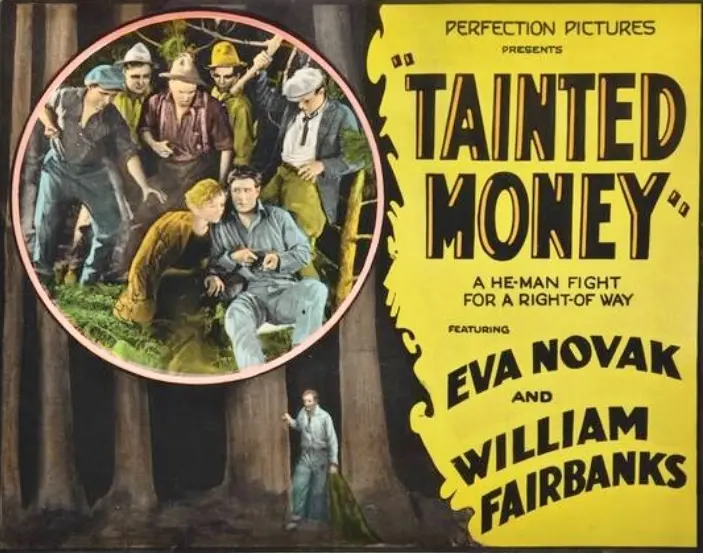
Tainted Money, a silent film released in 1924, is a testament to the artistry and storytelling prowess of early cinema. Directed by Stuart Paton, this film delves into the dark underbelly of the banking industry in Paris, weaving a complex narrative that intertwines personal relationships with corporate machinations. The story centers around Bruce Gordon, a dedicated banker, whose world is thrown into chaos when he discovers a fraudulent scheme within his own institution, orchestrated by his own brother, Paul Weigel.
Eva Novak portrays the love interest, a noble woman caught in the web of political and financial entanglements. The film's visual aesthetics are breathtaking, with intricate sets and a stark contrast between the opulence of the banking world and the squalor of the lower classes. The cinematography captures the essence of Paris, from the bustling streets to the opulent interiors of the banks and grand palaces.
The performances are outstanding, with Bruce Gordon delivering a nuanced portrayal of a man torn between duty and conscience. His character's journey from a naive, idealistic banker to a morally compromised figure is poignantly rendered, making his transformation both believable and emotionally impactful. Eva Novak's performance is equally commendable, adding depth and complexity to her character, who must navigate the treacherous waters of high society while maintaining her integrity.
Tainted Money is not just a film about money; it is a profound commentary on the corrupting influence of power and the fragility of moral boundaries. The narrative is intricately woven, with multiple layers of intrigue and betrayal that keep the audience engaged from beginning to end. The film's exploration of the relationship between personal and professional life is particularly noteworthy, as it highlights how one's actions in the business world can have far-reaching consequences on their personal relationships and sense of self.
The supporting cast, including Frank Clark and Edwards Davis, provides a solid foundation to the main storyline. Their characters, while not central to the narrative, add depth and texture to the overall picture, enriching the film's world and contributing to its richly detailed atmosphere. William Fairbanks and Carl Stockdale, in smaller but pivotal roles, bring a sense of realism and authenticity to the film, enhancing its overall quality.
One of the film's greatest strengths lies in its ability to balance its political and social commentary with its human drama. The film does not shy away from the harsh realities of the time, including the economic struggles and the moral dilemmas faced by individuals caught in the crossfire of political and corporate power. The script, penned by Stuart Paton, is sharp and insightful, offering a nuanced exploration of the complexities of the era.
The film's production design is another highlight, with meticulous attention to detail in the costumes, sets, and props. The visual storytelling is particularly effective in conveying the contrast between the opulence of the banking world and the hardship faced by those on the periphery. The use of lighting and camera angles enhances the film's mood, creating a sense of tension and unease that permeates every scene.
Tainted Money's pacing is well-constructed, with a narrative that builds gradually, ensuring that the audience remains invested in the characters and their fates. The film's climax is particularly well-executed, with a series of twists that keep the audience on the edge of their seats. The resolution, while bittersweet, offers a sense of closure that is both satisfying and thought-provoking.
Comparatively, Tainted Money holds its own against other films of its era. When placed alongside films like Pace That Kills and Madame Du Barry, it demonstrates a unique blend of social commentary and personal narrative. Unlike the more melodramatic or romantic films of the period, Tainted Money offers a more realistic and gritty portrayal of the era, making it a standout in the genre.
In conclusion, Tainted Money is a remarkable film that stands the test of time. Its exploration of financial corruption, moral decay, and the human cost of such vices is both timely and timeless. The performances, direction, and production values all contribute to a film that is not merely entertaining but also a profound reflection on the human condition. For those interested in early cinema, political and social history, or simply a gripping tale of intrigue and betrayal, Tainted Money is an indispensable watch.
Rating: 4.5/5
Additional Reading:
Pace That Kills - A fitting comparison, offering a similar exploration of societal corruption.
Madame Du Barry - A different approach to historical and social commentary.
IMDb 7
1934
Community
Log in to comment.