DbcultAccessing Vault...
Cult Review
Senior Film Conservator
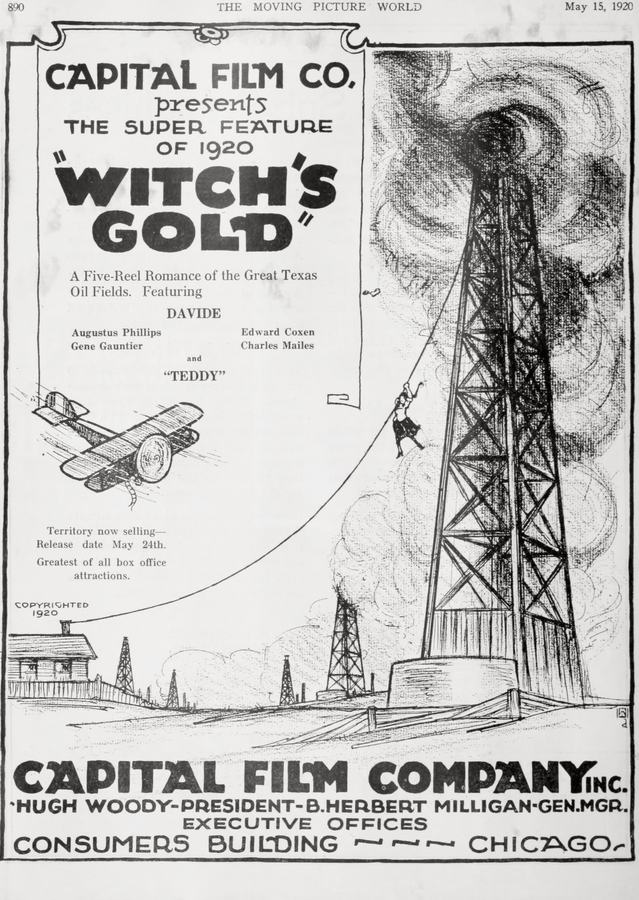
In the nascent years of cinematic storytelling, when the silver screen was still finding its voice, films like Witch's Lure emerged, captivating audiences with their blend of high stakes, moral dilemmas, and burgeoning visual spectacle. Released in 1917, this silent melodrama plunges viewers into an era defined by rapid industrial expansion and the often-ruthless pursuit of wealth, particularly the elusive 'black gold' that fueled an entire nation's dreams. It’s a fascinating artifact, not just for its narrative intricacies but for what it reveals about the anxieties and aspirations of a society grappling with modernity. The film, though perhaps not as widely remembered as some of its contemporaries, offers a compelling glimpse into the popular entertainment of the time, showcasing the dramatic conventions, character archetypes, and technological marvels that defined early cinema. Its plot, a intricate tapestry of financial desperation, cunning betrayal, and improbable heroism, unfolds with a relentless pace, demanding the viewer's rapt attention from its quiet, desperate beginnings to its explosive, aerial climax.
At the heart of this gripping narrative lies the predicament of Peggy Martin and her ailing father, whose very existence hangs precariously on the success of an oil well. Their mortgage is due, and the threat of foreclosure looms large, a specter of destitution that was all too real for many families in that period. The well, leased to the ostensibly enterprising, yet deeply malevolent, Brill, represents their last, best hope. Brill, portrayed with a sinister charm typical of the era's villains, is no mere businessman; he is an architect of deceit, a predator in pinstripes. His scheme is multi-layered and utterly reprehensible: he accepts a clandestine bribe from the foreclosing landlord, a character equally devoid of scruples, to deliberately suspend operations at the well. This act alone is a profound betrayal, but Brill's villainy extends further. Knowing full well that the land is barren, he orchestrates an elaborate charade, faking a productive oil strike to inflate the value of shares, which he then sells off, pocketing a tidy profit while the Martins' dreams—and their financial security—are systematically drained away. This intricate web of fraud and manipulation paints a stark picture of the moral compromises often made in the pursuit of wealth, a theme that resonates even today.
The film's exploration of greed and desperation is particularly poignant. The Martins’ struggle for survival is juxtaposed against the opulent machinations of Brill and the landlord, highlighting the vast chasm between those who toil and those who exploit. Peggy Martin, while initially a figure of quiet despair, soon reveals a steely resolve, embodying the resilient spirit often celebrated in early cinematic heroines. Her innocence is contrasted sharply with the worldly cynicism of her adversaries, making her eventual triumphs all the more satisfying. The narrative, while rooted in the stark realities of financial hardship, also leans heavily into the melodramatic conventions of the time, using exaggerated emotions and clear-cut moral distinctions to draw the audience into its dramatic orbit. The struggle for the oil well becomes a microcosm of larger societal battles, a fight for justice against the overwhelming forces of avarice. The tension builds steadily, fueled by the audience's investment in Peggy's plight and their fervent hope for the downfall of the dastardly villains.
Enter Tex, Peggy's spirited and somewhat impulsive girlfriend, who provides a much-needed injection of madcap energy into the escalating drama. In a desperate, albeit misguided, attempt to save her friends, Tex decides to employ her feminine charms, intending to 'vamp' Brill and extract the necessary funds or information. This subplot, while potentially problematic through a modern lens, reflects the era's fascination with the 'vamp' archetype, a powerful, alluring woman who could manipulate men. However, Tex's innocent bravado quickly places her in genuine peril, demonstrating the inherent dangers of underestimating a true villain. It's a classic damsel-in-distress scenario, albeit one initiated by the damsel herself, adding a layer of ironic self-sacrifice to her character. Her predicament serves as a catalyst for the next crucial development, paving the way for the arrival of the story's true hero.
The timely intervention comes in the form of Billy, a young man whom Peggy knows only through correspondence. His appearance, almost a literal 'deus ex machina' from the world of written letters, is both romantic and thrilling. Billy rescues Tex from Brill's clutches, establishing himself as a figure of decisive action and moral rectitude. This introduction cleverly sets up the burgeoning romance between Peggy and Billy, a connection forged not merely by proximity but by shared values and a mutual understanding that transcends the physical. The casting, featuring talents like Gene Gauntier as Peggy, brought a certain gravitas and emotional depth to these roles. Gauntier, known for her expressive acting style, would have conveyed Peggy's inner turmoil and strength with a nuanced performance, a hallmark of the era's leading ladies. Similarly, the portrayal of Brill by Augustus Phillips likely leaned into the theatrical villainy that audiences expected, making him both despicable and compelling. Charles Hill Mailes as the father and Spottiswoode Aitken in another key role would have rounded out a cast skilled in the art of silent film performance, where gestures and facial expressions carried the weight of dialogue. Davide and Edward Coxen also contributed to the dramatic fabric of this compelling narrative.
The narrative escalates dramatically when the vengeful landlord, thwarted in his initial plans and perhaps enraged by Billy's interference, decides to take matters into his own hands. In a desperate act of pure malice, he sets the oil well ablaze. This act transforms the symbol of the Martins' hope into a towering inferno, a spectacular and terrifying visual that would have undoubtedly held silent film audiences spellbound. The fire is not merely an act of destruction; it is a manifestation of unbridled rage and a final, desperate attempt to quash any lingering hope. The cinematography, even in this early period, would have sought to capture the destructive power of the flames, using dynamic camera angles and perhaps even early special effects to enhance the spectacle. For a film of this vintage, such a sequence speaks volumes about the ambition of its filmmakers to push the boundaries of visual storytelling, creating a genuinely thrilling moment without the aid of spoken dialogue or advanced digital effects. It speaks to the ingenuity of early cinema to craft tension and awe through purely visual means.
The climax of Witch's Lure is nothing short of breathtaking, a daring spectacle that elevates the film beyond a simple melodrama into the realm of early action-adventure. Peggy, in a moment of sheer terror and desperation, finds herself trapped at the very summit of the blazing oil well, a prisoner of the landlord's fiery wrath. The scene is fraught with tension, her silhouette against the inferno a powerful image of vulnerability and imminent doom. Just when all hope seems lost, a new marvel of the modern age, a biplane, appears in the sky. It is Billy, accompanied by a friend, executing a daring aerial rescue. This sequence, featuring a rope lowered from the aircraft to pluck Peggy from the fiery abyss, would have been a truly groundbreaking stunt for its time. It not only showcases the burgeoning capabilities of aviation technology but also the nascent ambition of filmmakers to incorporate such thrilling, real-world elements into their narratives. This kind of spectacular set piece would have resonated deeply with audiences, much like the innovative use of technology in films such as The Battle of the Ancre and the Advance of the Tanks, albeit in a documentary context. While that film documented wartime machinery, Witch's Lure integrated technological prowess into a fictional, heroic narrative, demonstrating cinema's potential for escapism and wonder. The sheer audacity of the stunt, performed at a time when aviation itself was still a relatively new and dangerous frontier, underscores the filmmakers' commitment to delivering a truly unforgettable cinematic experience.
The resolution, following such a dramatic climax, brings a sense of poetic justice and romantic fulfillment. The land, now cleared of both the fraudulent promoter and the vengeful landlord, is acquired by a legitimate company, suggesting a return to order and progress after chaos. This corporate acquisition, while perhaps lacking the personal triumph of individual ownership, signifies a broader victory over corruption and a promise of stability for the region. More importantly, the trials and tribulations faced by Peggy and Billy have forged an unbreakable bond. Their correspondence-born affection blossoms into a tangible romance, culminating in their union. It’s a classic Hollywood ending, where virtue is rewarded, villains are vanquished, and love conquers all, providing a comforting closure for the audience. The film, in this regard, adheres to the established tropes of melodrama, delivering a satisfying emotional arc for its protagonists and leaving the viewer with a sense of hope and resolution. The triumph of good over evil, combined with the blossoming of true love, reinforces the moralistic underpinnings common to silent era storytelling.
Reflecting on Witch's Lure today, one can appreciate its historical significance as an example of early narrative cinema. It embodies the spirit of an era where stories were told with bold strokes and clear moral lines, where good and evil were readily identifiable, and spectacle was paramount. The film’s uncredited writers crafted a story that, despite its simplicity by modern standards, possessed a potent emotional core and a thrilling climax that would have left audiences breathless. The performances by Gene Gauntier, Charles Hill Mailes, Spottiswoode Aitken, Augustus Phillips, Davide, and Edward Coxen, though silent, would have been rich with expression, relying on exaggerated gestures and facial nuances to convey complex emotions to an audience accustomed to this particular form of acting. The use of intertitles would have bridged the gaps in dialogue, guiding the viewer through the twists and turns of the plot with succinct, impactful declarations, ensuring clarity and driving the narrative forward with precision.
While comparisons to other films of its time are challenging without a full understanding of their plots, one can infer thematic similarities. The struggle against a corrupt system and the fight for family solvency might find echoes in films like Love and the Law or The Gates of Gladness, if they too explored similar societal pressures and the pursuit of justice. The dramatic rescue, particularly the aerial element, could be seen as a precursor to the grand spectacles that would define later action cinema, perhaps even sharing a distant kinship with the theatricality of an early adventure short like The Little Terror, should it feature similar daring feats and high-stakes scenarios. However, Witch's Lure stands on its own merits as a robust example of a silent film that masterfully blends melodrama with genuine excitement, culminating in one of the most memorable climactic sequences of its era. It's a testament to the enduring power of classic narratives that, even without spoken dialogue, can convey profound human experiences and deliver exhilarating entertainment, reminding us of the foundational artistry upon which all subsequent cinema has been built.
IMDb —
1919
Community
Log in to comment.