DbcultAccessing Vault...
5.9/10
Senior Film Conservator
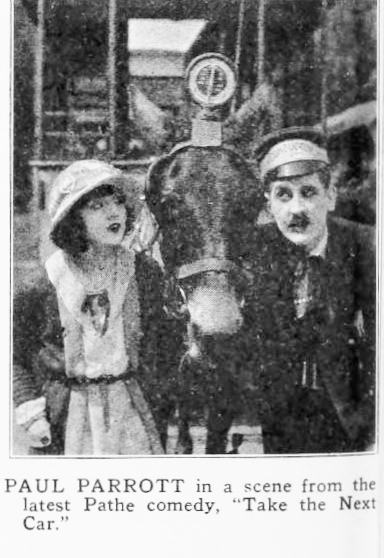
A definitive 5.9/10 rating for a film that redefined the boundaries of cult cinema. Take Next Car remains a cornerstone of transgressive art.
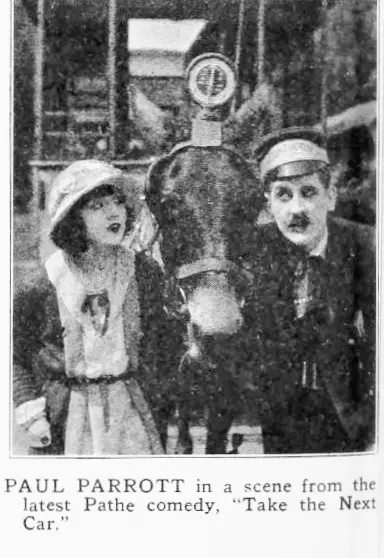
The year 1923: jazz blares from gramophones, bootleg gin hides in teacups, and the urban soundscape tilts from iron-wheeled canticles toward the sputter of low-rent combustion engines. Take Next Car seizes that zeitgeist, packaging it into a brisk two-reel sprint that feels like inhaling exhaust fumes and rosewater in the same breath. Director James Parrott—a maestro of controlled chaos—channels his inner anarchist, staging a citywide duel between entrenched municipal metal and the guerrilla entrepreneurship of jitney jockeys.
We open on a dawn depot: steam hisses, conductors semaphore neon time-cards, and the camera glides past riveted steel behemoths that once symbolized tomorrow. Enter George Rowe’s grizzled motorman, equal parts proletarian poet and gear-shifting Sisyphus; his every crank of the controller reverberates like a manifesto. Across the socioeconomic gulf glides Jobyna Ralston—all pearls, lace gloves, and a spine of rebar—sent by her ailing tycoon father to spy on the frontline. Sparks fly, literally: copper cables snap, trolleys careen, and the frame jitters with slapstick cataclysm that never forgets the class tension fueling the farce.
The plot, deceptively simple, mutates into a kaleidoscope of micro-aggressions against infrastructure: switch points greased with kitchen lard, counterfeit tokens flooding turnstiles, and a spectacular set-piece involving a haywire turntable that pirouettes like some demented merry-go-round. Parrott’s camera—liberated by lightweight Debrie models—loops, tilts, and even perches atop moving streetcars, evoking a proto-Germanic expressionist energy without the shadowy torment. The result is a sun-drenched carnival of peril, where pratfalls carry the bite of industrial commentary.
Rowe, often relegated to background bruiser roles, here channels Buster Keaton’s stone-faced stoicism while retaining the elastic athleticism of a Mack Sennett bath-house comic. His timing—particularly in a sequence where he must manually brake a runaway car while juggling a misplaced infant—feels calibrated by metronome. Ralston, remembered today chiefly as Harold Lloyd’s plucky love interest, claims agency with eyebrow-arching panache; she clambers over cowcatchers, wields a rivet gun, and even engineers a last-second reroute that saves the franchise. Their chemistry is less swoon than static shock: you feel the charge without anticipating the burn.
The supporting ensemble—James Parrott himself cameoing as a cackling jitney kingpin, Sammy Brooks as a token-booth kleptomaniac, Wally Howe’s corrupt city alderman—pop in and out like vaudeville jack-in-the-boxes. Each caricature lands a punchline yet hints at a larger ecosystem of graft, foreshadowing the municipal corruption dramas of the 1970s.
Cinematographer Jack Ackroyd lenses the urban grid with sooty chiaroscuro: elevated rails carve diagonal scars across the horizon, while tenement wash-lines flutter like surrender flags. Miniature work—audacious for 1923—renders a collapsing trestle that splinters into the river, an image so convincing exhibitors reportedly fielded phone calls from civil engineers.
The intertitles, penned by an anonymous gag writer, crackle with Jazz-age argot ("Hold tight, buttercup—this trolley’s hopping the moon!"). Font choice oscillates between bold sans-serif for mechanical noises and flapper-era curlicues for romantic asides, a typographic mash-up that predates postmodern pastiche by half a century.
Beneath the clown-white lies a bruise. The film dramatizes the real-world jitney craze of the late 1910s—ad-hoc autos that undercut fixed-rail franchises by charging a nickel a ride. Municipal archives show over 60 U.S. cities stripping tracks during this era, replacing electric civics with combustion anarchy. Take Next Car externalizes that tension inside a comic crucible, making every axle-snapping gag a referendum on public transit privatization.
Compare it to The Timber Queen (1922), where resource extraction fuels corporate skulduggery amid sequoias; both silents frame capitalism as kinetic obstacle course, but Parrott’s film localizes the stakes to your morning commute, rendering the abstract brutally intimate.
The narrative ricochets from depot to boardroom to riverside junkyard without pausing for expository oxygen. A Harold Lloyd-style "race against the clock" climax sees Rowe and Ralston re-lighting blown fuses while dodging wrench-wielding saboteurs. The editing—likely by Eddie Baker, also playing a hapless conductor—employs overlapping continuity cuts that splice objective and subjective perspectives, a technique that wouldn’t become fashionable until the French New Wave.
Yet Parrott refuses the modern trap of sensory overload. He plants visual callbacks (a wayward goat munching transfer tickets) that payoff reels later, rewarding attentive viewers with organic symmetry rather than contrived coincidence.
Ralston’s heiress is no passive suffragette prop. She engineers a copper-wire bypass using her pearl-handled hairpin, a symbolic fusion of industrial grit and debutante ingenuity. Their eventual kiss—framed beneath a flickering station lamp—feels earned because the film spends reels establishing mutual competence rather than hierarchical rescue. It’s a proto-screwball dynamic, predating Her Unwilling Husband’s marital sparring by six years.
Original exhibitors typically engaged a house organist to improvise; modern festivals have paired the film with avant-garde percussion ensembles that sample field recordings of subway screeches. Either approach amplifies the percussive essence—every wheel shriek becomes jazz cymbal, every coupling clang a bass note of urban anxiety.
For decades Take Next Car circulated only in 9-mm dupes, battered by projectionists who chopped one-reelers for kiddie matinees. A 4K restoration premiered at Bologna’s Il Cinema Ritrovato in 2022, scanned from a French archival negative. The tinting—amber for interiors, turquoise for night exteriors—restores the film’s original chromatic dialect, letting shadows glisten like oil slicks beneath sodium lamps.
Streamers hungry for silent comedy too often default to Keaton or Chaplin. Yet this urban fable—available via specialty Blu from Lighthouse Archives—offers a breezy gateway into the lesser-known Hal Roach ecosystem, alongside Muggsy and Wanted – $5,000.
Parrott’s film is a celluloid trolley jump: it vaults you from Roach’s backlot into the socio-technical crossfire of a century ago, yet the clang of profit over public good reverberates louder today. Climb aboard, clutch the leather strap, and relish a time when a five-cent fare could buy revolutions—and when saving a streetcar meant saving a city’s soul.

IMDb —
1921
Community
Log in to comment.