DbcultAccessing Vault...
6.9/10
Senior Film Conservator
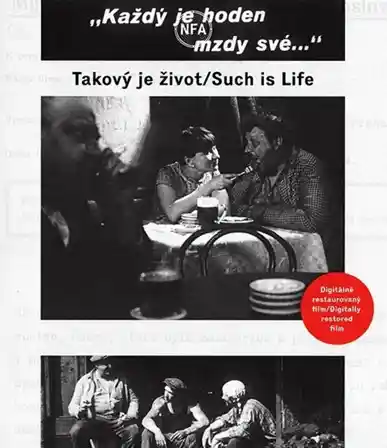
A definitive 6.9/10 rating for a film that redefined the boundaries of cult cinema. Takový je zivot remains a cornerstone of transgressive art.
Alright, so you’re looking for a silent film that doesn’t feel like homework? Takový je zivot, sometimes known as “Such Is Life,” from 1929, is absolutely worth checking out. It’s a gritty, almost documentary-like slice of life from late 20s Prague, following a working-class family through some serious hardship.
If you appreciate cinema that doesn’t pull punches and shows you things as they really might have been, without much sentimentality, this one’s for you. But if you need a neat plot, flashy moments, or a big, satisfying ending, you might find it a bit too stark. It’s got a heavy mood, no doubt.
The film opens right in the thick of it, showing the mother, a washerwoman, toiling away. Her hands are always in the suds, the steam thick around her. Then, this incredibly sudden, almost casual tragedy hits: she scalds herself, and that’s it. One moment she’s there, the next she’s gone.
The funeral scene really stuck with me. It’s not some grand, mournful affair. It feels small, crowded, in their tiny apartment. The neighbors are all crammed in, almost like they’re just another part of the furniture, quietly watching this sad, ordinary event unfold. You can practically _feel_ the stuffiness in that room. 😥
Her daughter, played by Zdena Kavková, is a manicurist. You see her trying to keep things together, trying to make a living. There’s a scene where she’s carefully painting someone’s nails, this small act of beauty in such a drab world. It’s a stark contrast.
Her father, well, he’s an alcoholic. His presence is just this constant, heavy shadow. He’s not a villain, just a broken man, often stumbling, avoiding eye contact. There's a moment where he's just sitting, staring blankly, and it says so much without a single word. His slumped shoulders tell the whole story.
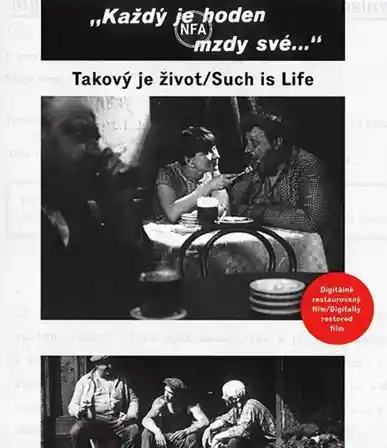
The camera work here is really something, especially for its time. It often moves through the narrow streets, past the crowded tenements, like it's just another person walking by. It gives the whole film this very immediate, almost voyeuristic feel. You're not just watching; you're _there_.
There are these small, specific moments that really ground it. Like the way light falls through a grimy window onto a pile of clothes, or a child playing with a stick in the background, completely oblivious to the adult drama. These little bits make it feel so _real_.
One detail I kept noticing was how the laundry itself became almost a character. Piles of it everywhere, always wet, always needing to be done. It’s a symbol of their endless work, their endless struggle. The steam rising from the tubs is almost suffocating.
Later, the daughter finds herself pregnant. Again, it’s not a dramatic reveal or a big, emotional scene. It’s just another turn in a life that seems to be going nowhere good. It feels less like a plot point and more like just… another thing that happens. What else can you expect?
The film uses these very simple, often static shots that let you really absorb the faces and their exhaustion. The close-ups on the mother’s hands, or the daughter’s weary eyes. They don’t overdo the acting; it’s all very understated, which makes it feel even more genuine. You see the fatigue in their bones.
And the ending? Well, it just sort of… stops. There’s no big resolution, no tidy wrap-up. It reinforces that whole “such is life” idea, where things just keep going, for better or worse, mostly worse in this case. It leaves you feeling a bit hollow, but that’s kind of the point. No easy answers here. 🤷♀️
It’s an interesting piece of cinema history, showing how powerful a story can be without a single line of dialogue. It’s raw, unflinching, and surprisingly modern in its approach to realism. You definitely feel like you've walked a mile in their shoes, even if just for an hour or so.

IMDb 7
1926
Community
Log in to comment.