DbcultAccessing Vault...
Cult Review
Senior Film Conservator
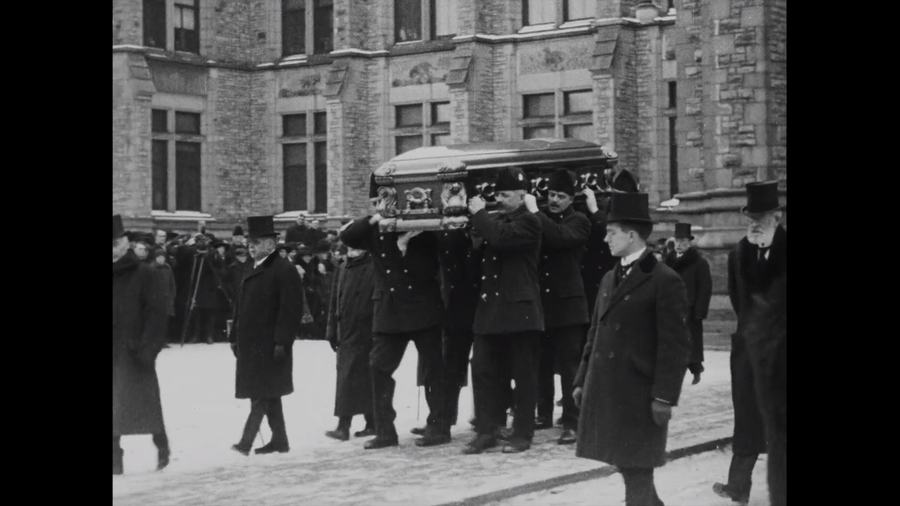
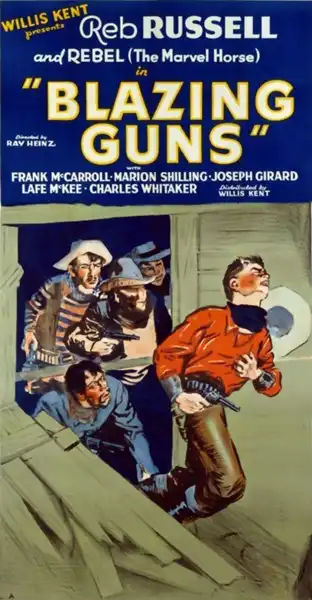
To watch Les funérailles de Sir Wilfrid Laurier (1919) is to step into a ghost realm where the silver halide crystals on the celluloid serve as the only remaining bridge to a vanished world. Directed by the visionary Léo-Ernest Ouimet, this isn't merely a newsreel; it is a profound meditation on the mortality of power and the birth of a national visual consciousness. While the fictional narratives of the late 1910s, such as the gritty The Lash or the socially charged Public Defender, sought to manufacture emotion through scripted artifice, Ouimet found a deeper resonance in the unadorned reality of a statesman’s final journey.
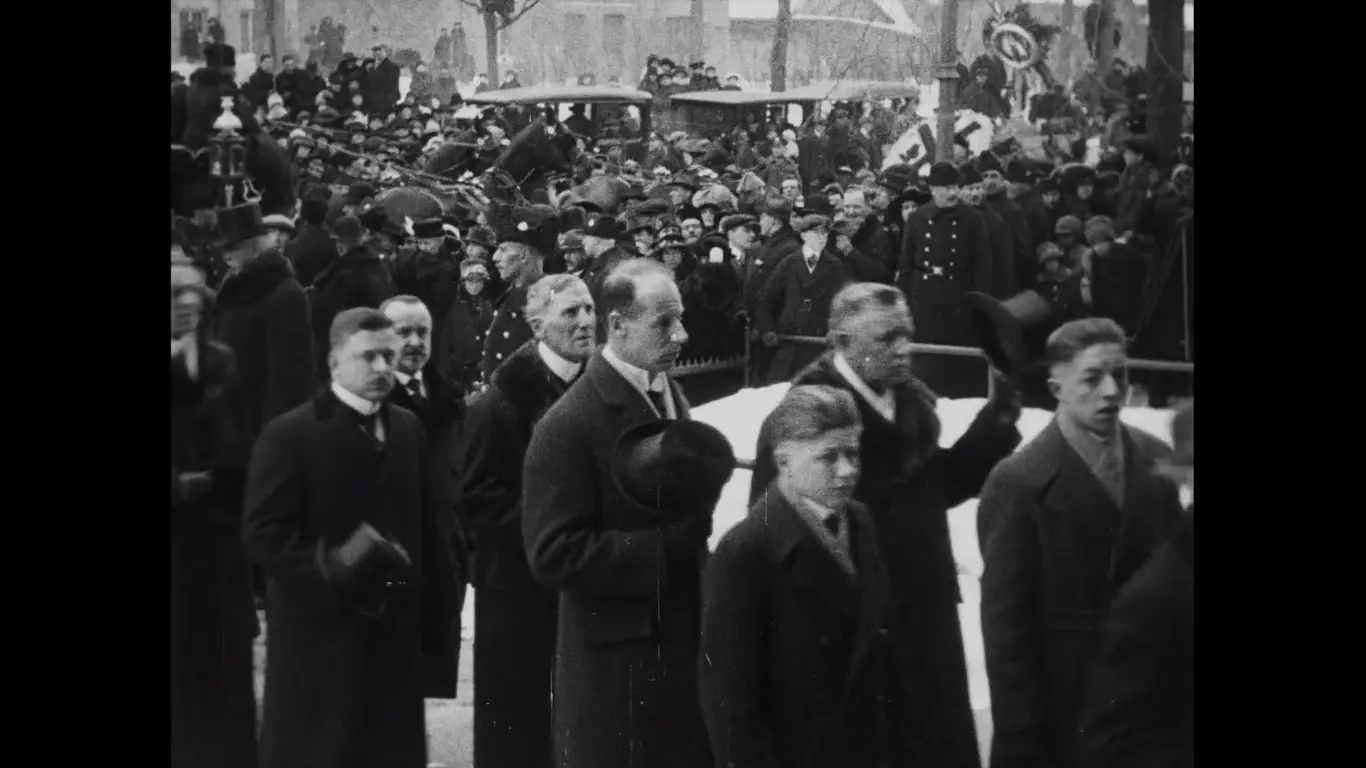
The film operates within the 'actuality' genre, a precursor to the modern documentary that often lacks the narrative hand-holding we expect today. However, the lack of a traditional plot is precisely where its power resides. Unlike the theatrical tension found in The Thunderbolt, the tension here is atmospheric and existential. We see the biting cold of Ottawa in February 1919, the steam rising from the horses’ nostrils, and the sheer density of the crowds. These are not extras; they are a populace witnessing the end of an era. Ouimet’s camera placement is strategic, capturing the scale of the event with a wide-angle perspective that dwarfs the individual, emphasizing the magnitude of the loss.
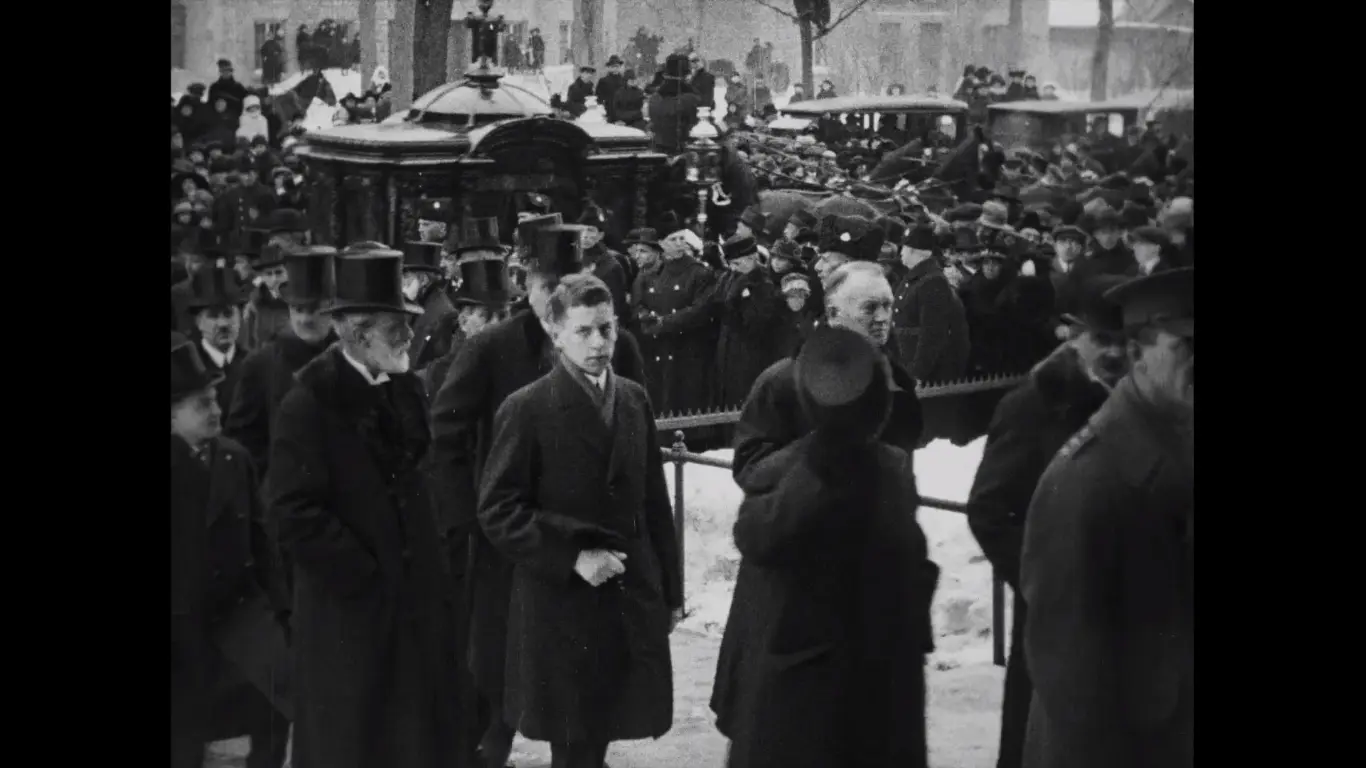
"In the silence of the silent era, the visual weight of a nation’s grief speaks louder than any synchronized score could ever hope to achieve."
When comparing this work to the international productions of the time, such as the German drama Die Augen der Schwester or the Danish Lille Teddy, one notices a distinct lack of European expressionism. Instead, Ouimet employs a rugged, North American pragmatism. There is no attempt to soften the edges of the event. The grain of the film stock mirrors the grit of the occasion. It is a stark contrast to the lighthearted escapism of Mirandy Smiles or the romantic entanglements of The Girl Problem. Here, the only 'problem' is the vacuum left by a titan of diplomacy.
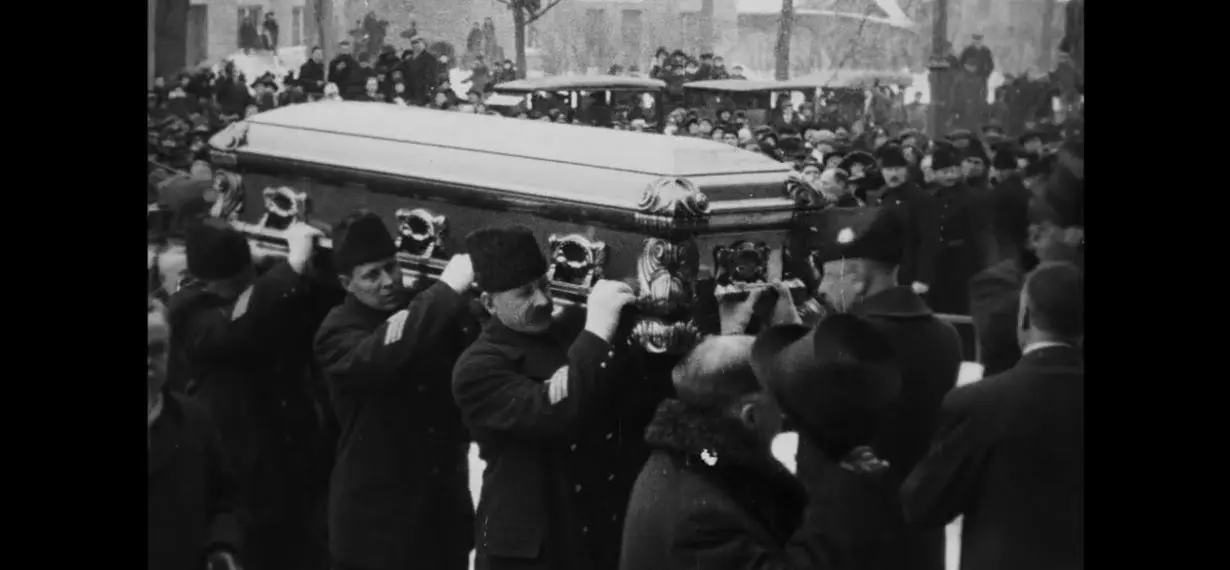
Léo-Ernest Ouimet was a pioneer who understood that cinema was the ultimate tool for nation-building. While Hollywood was busy refining the star system with films like The Velvet Paw, Ouimet was documenting the soul of Quebec and Canada. His work on Laurier’s funeral is arguably his most significant contribution to the archival record. He captures the transition from the 19th-century political style to the 20th-century media age. The procession is a slow-moving river of black wool and somber faces, a visual representation of The Silent Battle between memory and the inevitable march of time.
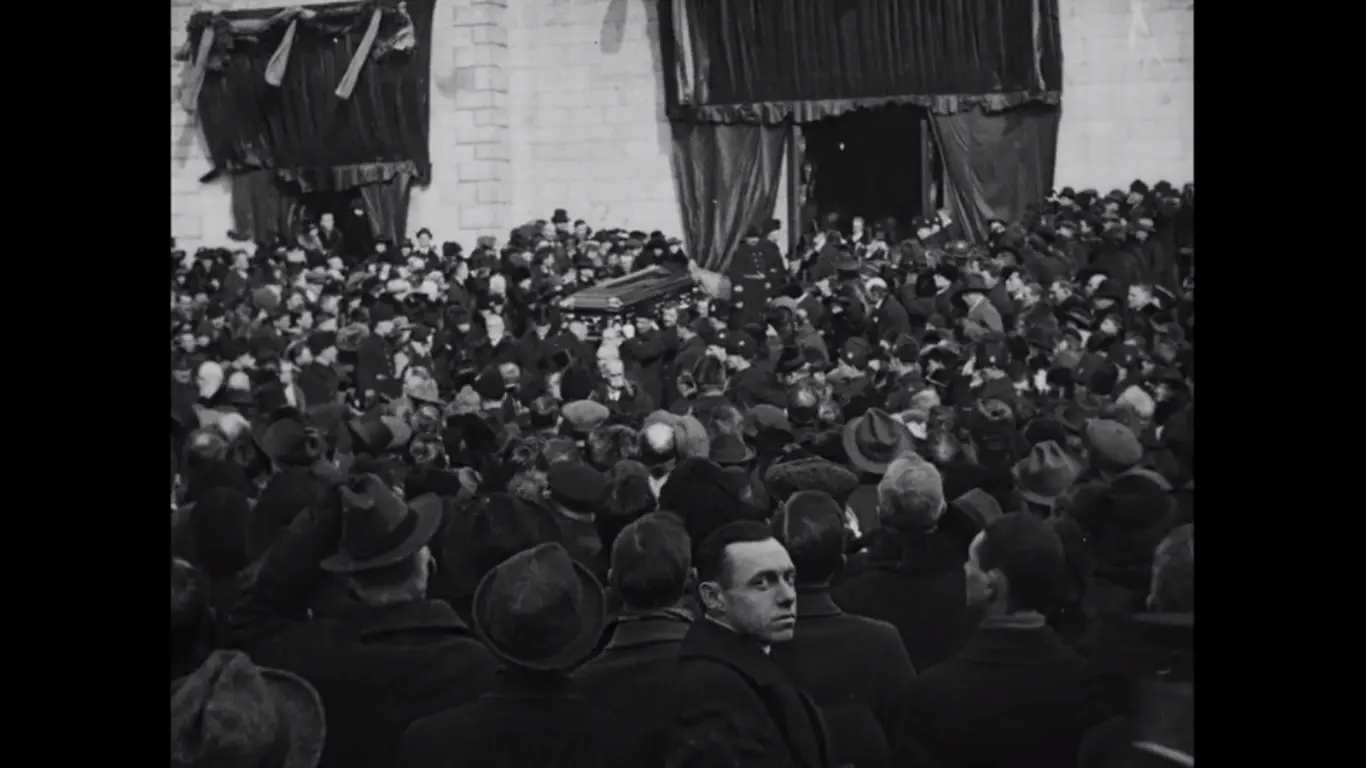
The technical constraints of 1919 meant that every foot of film was precious. Ouimet doesn't waste a frame. He captures the arrival of dignitaries with the same meticulousness that a director like those behind Nurse Cavell might use to frame a martyr. Indeed, Laurier is framed here as a secular saint. The film avoids the propaganda-heavy tones of The Claws of the Hun, opting instead for a dignified observation that allows the viewer to draw their own emotional conclusions. This is cinema as a witness, not a prosecutor.

If we look at The Firebrand, we see the energy of revolution; in Les funérailles de Sir Wilfrid Laurier, we see the stability of the establishment being laid to rest. There is a fascinating dichotomy between the domestic intimacy found in The Children in the House and the massive, public scale of Ouimet's work. One deals with the private sphere, the other with the mythic. Yet, both utilize the camera to freeze a moment that would otherwise be lost to the 'The Torture of Silence' (as explored in the thematic weight of The Torture of Silence).
The visual texture of the film is surprisingly rich for its age. The way the light hits the snow-covered streets creates a high-contrast environment that feels almost expressionistic, similar to the lighting choices in La madona de las rosas. However, while the Italian film uses light for religious ecstasy, Ouimet uses it to highlight the stark reality of the Canadian winter and the cold finality of death. There is no warmth here, only the duty of remembrance.
Watching this film today, over a century later, the experience is transformative. We are no longer just watching a funeral; we are watching the birth of Canadian documentary film. Ouimet’s insistence on capturing this event paved the way for the National Film Board and the entire tradition of Canadian cinema that prioritizes the 'real' over the 'reel'. In the context of 1919, this was a high-tech feat. Today, it is a sacred relic. It lacks the kinetic editing of modern documentaries, but it possesses a stillness that demands our full attention—a rare commodity in our current age of digital distraction.
The film serves as a reminder that before there were blockbusters and CGI, there was the simple, profound act of pointing a lens at the world and saying, 'This happened. This mattered.' The faces in the crowd, many of whom were born in the mid-19th century, look back at us through the grain, their expressions a mix of awe and sorrow. They are the living links to a pre-industrial Canada, just as this film is our link to them. It is a haunting, beautiful, and essential piece of cinema that deserves more than just a footnote in history books.
In conclusion, while it may lack the narrative complexity of The Silent Battle or the dramatic flair of The Lash, Les funérailles de Sir Wilfrid Laurier remains a towering achievement in actuality filmmaking. Léo-Ernest Ouimet didn't just record a funeral; he captured the soul of a nation at a crossroads. It is a film that demands to be seen, not just by historians, but by anyone who appreciates the power of the moving image to defy time itself. The sea blue shadows of the Ottawa streets and the dark orange flickers of the aging film stock create a palette of memory that is as vibrant today as it was in 1919.
A Masterpiece of Archival Veracity: 9/10
Community
Log in to comment.