DbcultAccessing Vault...
Cult Review
Senior Film Conservator
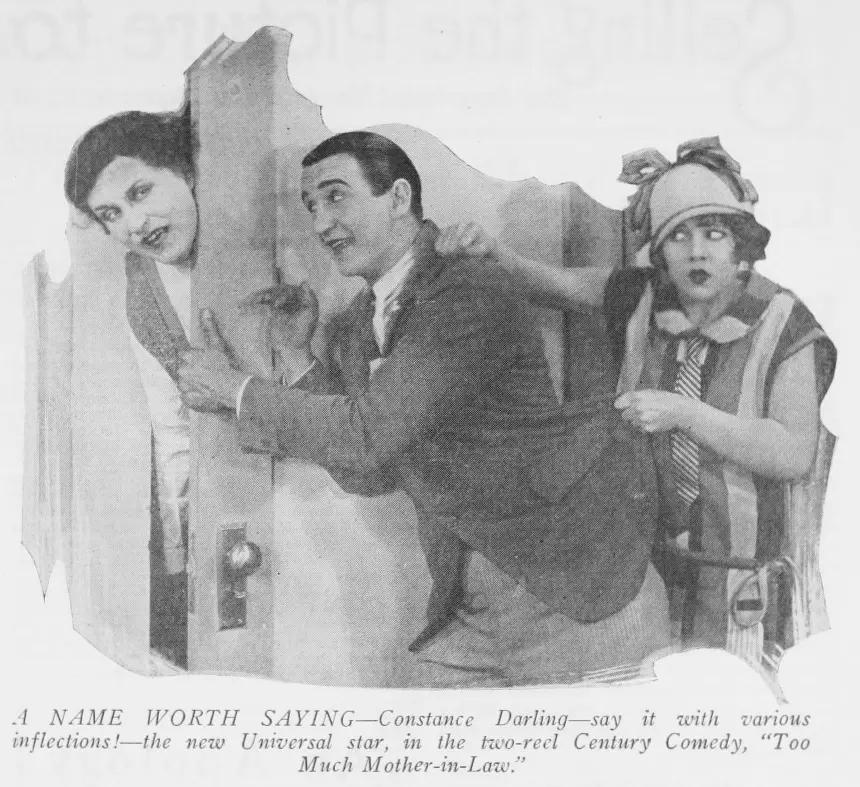
Ah, the silent era! A time when narratives unfolded not through booming dialogue, but through exaggerated gestures, expressive faces, and the universal language of physical comedy. It was an epoch where domestic strife, the eternal wellspring of relatable humor, found its purest, most unadulterated expression. And among the myriad cinematic offerings that explored the delicate, often tumultuous, dance of marital life, Noel M. Smith's 1924 short, Too Much Mother-in-Law, stands as a delightful, if somewhat forgotten, testament to the enduring appeal of the beleaguered husband and the formidable matriarch.
This isn't merely a film; it's a meticulously choreographed ballet of exasperation and absurdity, a masterclass in how a simple premise can be stretched, contorted, and ultimately resolved with a flurry of slapstick genius. The narrative opens on a scene of idyllic, if slightly clumsy, newlywed bliss. Our young couple, portrayed by Charles King and Constance Darling, radiate an almost palpable joy, their lives punctuated by charmingly innocuous mishaps, like the occasional cascade of dropped crockery – a visual shorthand for their endearing, if slightly untidy, domestic harmony. One can almost hear the gentle murmur of their contentment, a silent symphony of shared laughter and minor imperfections. This initial tableau is crucial, for it establishes the serene baseline from which the subsequent chaos will violently diverge, making the impending disruption all the more impactful.
The harbinger of this upheaval arrives not with a whimper, but with an emphatic, almost seismic, bang: the announcement of the bride's mother's imminent visit. Immediately, a subtle tension permeates the air, a silent foreboding that hints at the seismic shift about to occur. The couple, ever dutiful, sets off on their motorcycle, complete with its quaint sidecar, to greet the esteemed guest. The scene at the train station is a marvel of comedic staging. From the train carriage spills forth a veritable avalanche of luggage and porters, a chaotic outpouring that prefaces the grand entrance of Blanche Payson as the eponymous mother-in-law. Payson, a towering figure of imposing physicality, embodies the role with a terrifying grandeur. She is not merely a woman; she is a force of nature, a 'great big bologna' as the plot summary so aptly, and hilariously, describes her. Her very first lines, conveyed through a title card, are a scathing indictment of her son-in-law – she despises his name, his face, his very essence. It's an instant, brutal declaration of war, delivered with an unblinking, unapologetic certainty that leaves no room for doubt or pleasantries. This immediate antagonism sets the stage for a delightful tug-of-war, a comedic wrestling match for control of the domestic sphere.
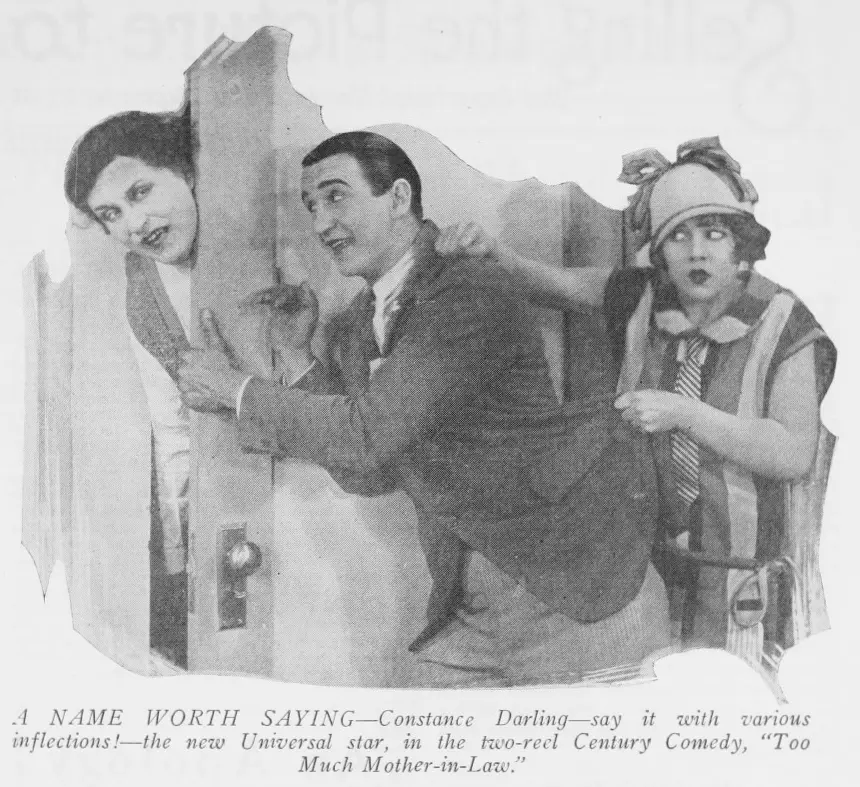
The journey home is a microcosm of the ensuing domestic tyranny. The mother-in-law, with an imperial flourish, commandeers the sidecar, piling her copious bags upon it, then settling herself atop this precarious mountain of luggage. The poor wife, relegated to a less glamorous perch behind her husband, becomes an unwitting accessory to her mother's grand pronouncements. As King navigates the motorcycle alongside a passing truck, a rogue dog, with an almost conspiratorial glee, extends its head and delivers a slobbery lick to the unsuspecting matriarch. Her ensuing 'hullabaloo' is a symphony of silent outrage, a testament to Payson's remarkable ability to convey exaggerated emotion without uttering a single word. This minor incident serves to further underscore her imperious nature and her immediate proclivity for dramatic complaint, cementing her status as the ultimate unwelcome guest.
Upon their arrival at the young couple's home, the mother-in-law's insatiable demands reach new heights. She forces her son-in-law to carry all her grips – a gargantuan task that nearly breaks his back, both literally and figuratively. The visual of Charles King, contorted and straining under the impossible weight of luggage, is a potent metaphor for the crushing burden his new guest represents. This physical comedy, while exaggerated, taps into a universal truth about the toll taken by overbearing relatives. The subsequent 'osteopathic treatment' is a moment of pure, unadulterated slapstick, pushing the boundaries of comedic misfortune to a point where the husband's very existence seems imperiled. It’s a darkly humorous commentary on the invasive nature of her presence, suggesting that her arrival has not only disrupted his peace but threatened his physical well-being.
The comedy then shifts from purely physical gags to more character-driven humor, with the introduction of a particularly vocal parrot. This feathered friend, with its uncanny ability to mimic and its penchant for calling the newcomer names, becomes a hilarious, albeit unintentional, mouthpiece for the husband's unspoken resentment. The parrot's squawking insults are a thinly veiled projection of King's character's inner turmoil, a silent film equivalent of an internal monologue. The mother-in-law, predictably affronted, retaliates by asserting her dominance over the household, ordering her son-in-law to serve tea to her old lady friends. This seemingly innocuous social gathering quickly devolves into delightful chaos as the tea is, unbeknownst to the guests, laced with booze. The sight of these otherwise respectable women becoming increasingly tipsy, their decorum unraveling with each sip, is a brilliant subversion of societal expectations and a highlight of the film's comedic inventiveness. It's a subtle act of rebellion, a small victory for the husband in his ongoing battle against his unwelcome guest, even if he's merely
IMDb 5.8
1930
Community
Log in to comment.