DbcultAccessing Vault...
Cult Review
Senior Film Conservator
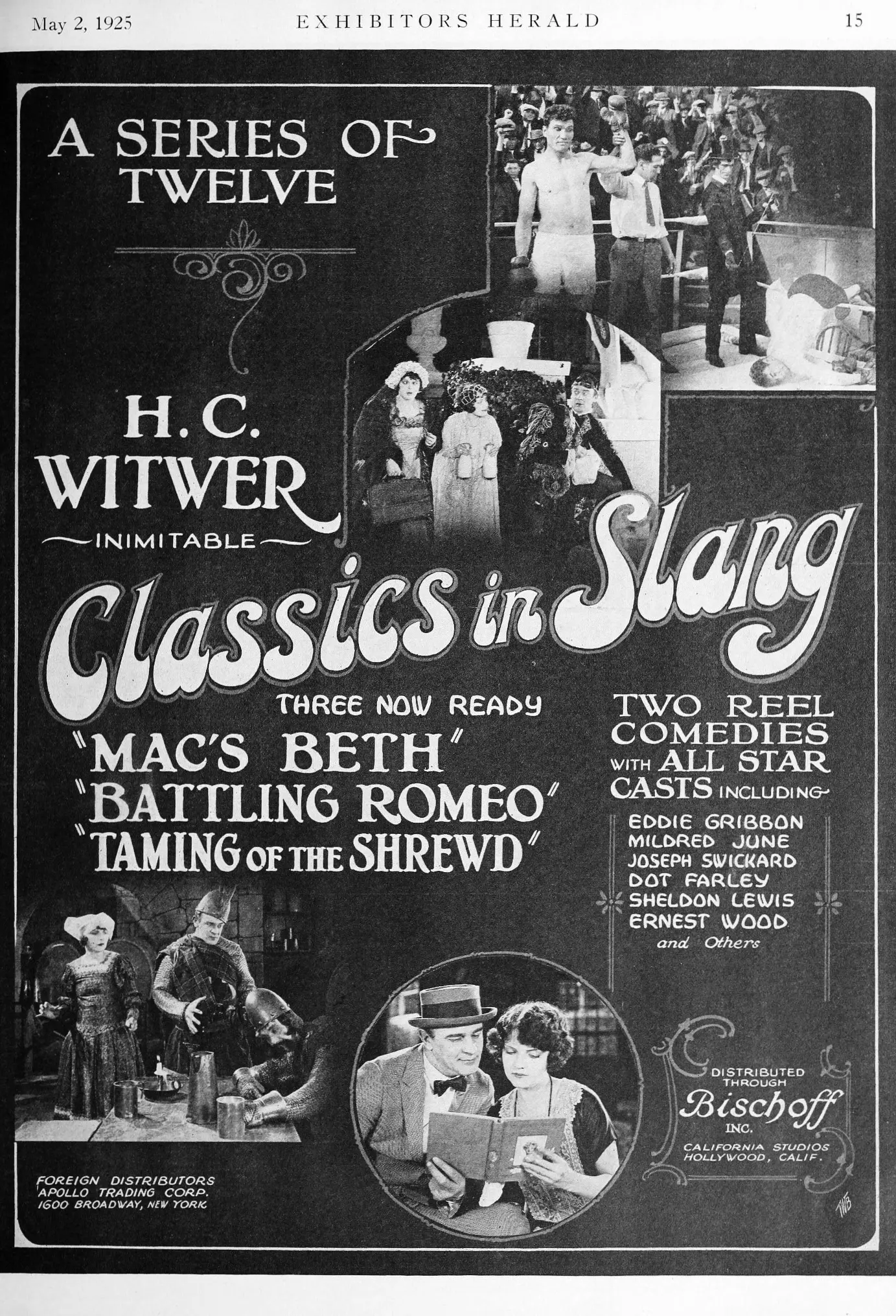
Is 'Taming of the Shrewd' worth watching today? Short answer: yes, but with significant caveats. This early cinematic exploration of wit and gender dynamics offers a fascinating glimpse into a bygone era of filmmaking, providing unexpected depth for those willing to look past its age.
This film is absolutely for cinephiles, historians of early cinema, and anyone interested in the evolution of romantic comedies or character-driven dramas. However, it is decidedly NOT for viewers seeking fast-paced action, modern narrative sensibilities, or those unaccustomed to the unique rhythm and visual storytelling of silent films. It demands patience, but it rewards attention.
'Taming of the Shrewd' emerges from the archives not merely as a relic, but as a surprisingly resonant piece of early cinema. Directed with a keen eye for character interplay and written by H.C. Witwer, the film takes a familiar Shakespearean premise and injects it with a distinctly modern, albeit 1920s, sensibility. It’s a battle of wits, not brute force, and that’s where its charm truly lies. The film works because it commits to its central premise of intellectual sparring, delivering performances that elevate what could have been a simplistic narrative.
This film works because of the undeniable chemistry and intelligent performances from its leads, particularly Dot Farley. Her portrayal of Beatrice Vance is nuanced, allowing her character to be strong and independent without devolving into caricature. Sheldon Lewis, as Arthur Sterling, provides an excellent foil, projecting a blend of charm and cunning that makes their dynamic genuinely engaging. Their silent exchanges speak volumes, a testament to the power of non-verbal acting.
This film fails because its pacing, while deliberate, occasionally drags, particularly in its middle act where some of Sterling’s schemes feel a touch repetitive. The limitations of silent film storytelling, while part of its charm, also mean that some of the more subtle emotional shifts in the characters are hinted at rather than fully explored, potentially leaving modern audiences wanting more explicit development. It’s a film that asks you to fill in some of the blanks.
You should watch it if you appreciate historical cinema, complex character studies, and stories where intelligence triumphs over convention. It’s a delightful challenge to engage with, rewarding those who invest their attention.
The film centers on Beatrice Vance (Dot Farley), an heiress whose sharp business acumen and unyielding spirit set her apart in a society still grappling with the notion of female independence. She’s not just a woman with money; she’s a woman who knows how to wield power, a rarity on screen at the time. Her reputation for 'shrewdness' precedes her, making her a formidable figure in both social and financial circles.
Enter Arthur Sterling (Sheldon Lewis), a charismatic industrialist whose ambition is matched only by his cunning. Sterling, used to getting his way, views Beatrice not as a potential romantic conquest in the traditional sense, but as a worthy intellectual adversary. His initial fascination quickly evolves into a strategic endeavor to 'tame' her, or rather, to prove his own superior wit by outmaneuvering her.
The plot, penned by H.C. Witwer, unfolds as a series of escalating confrontations. Sterling orchestrates intricate business deals and social maneuvers, each designed to corner Beatrice or force her hand. Yet, time and again, Beatrice demonstrates an uncanny ability to anticipate his moves, often turning his strategies against him with an elegant, almost playful, counter-strike. This isn't a story of a woman being broken, but of her resilience being tested and affirmed.
One particularly memorable sequence involves a high-stakes negotiation for a valuable property, where Sterling believes he has locked Beatrice into an impossible position. Farley’s subtle expressions, shifting from feigned distress to a knowing glint in her eye, brilliantly convey Beatrice’s internal calculation as she reveals a hidden clause or a previously undisclosed asset, leaving Sterling momentarily stunned. It's a masterclass in silent film acting, where the absence of dialogue amplifies the visual storytelling.
The film’s title, 'Taming of the Shrewd', becomes a fascinating misnomer by its conclusion. Rather than Beatrice being tamed, the narrative subtly shifts to Sterling’s own transformation. He doesn’t conquer her; he learns to respect her, and perhaps, even to appreciate the very 'shrewdness' he initially sought to subdue. This reinterpretation of the classic trope is arguably the film’s most significant contribution, hinting at a more egalitarian future for on-screen relationships.
"The true triumph of 'Taming of the Shrewd' is not in its resolution, but in its audacious refusal to conform to conventional romantic subjugation, offering a proto-feminist undercurrent that feels surprisingly potent."
The strength of any silent film rests heavily on the shoulders of its cast, and 'Taming of the Shrewd' is no exception. Dot Farley, as Beatrice Vance, delivers a performance that transcends the often-exaggerated gestures of the era. Her Beatrice is intelligent, poised, and possesses an inner fire that is captivating without being overtly theatrical. She uses her eyes, her posture, and the slightest tilt of her head to convey complex emotions and strategic thought. It’s remarkably understated for a silent picture.
Consider the scene where Beatrice first encounters Sterling at a society gala. Farley doesn’t just glare; she observes, her gaze holding a mixture of curiosity and immediate assessment. It’s a subtle yet powerful display of a woman who is always thinking, always calculating. She’s not merely reacting; she’s planning. This makes her character feel incredibly modern.
Sheldon Lewis, known for his versatile roles, brings a compelling blend of charm and menace to Arthur Sterling. His performance is robust, his physicality conveying Sterling’s confidence and occasional frustration. He manages to make Sterling both formidable and, by the end, surprisingly vulnerable. His reactions to Beatrice’s counter-moves are particularly well-executed, cycling through disbelief, irritation, and eventually, admiration. It’s a performance that could easily have veered into caricature, but Lewis keeps it grounded.
The supporting cast, including Ernest Wood, Josef Swickard, Eddie Gribbon, and Mildred June, provide solid foundational work, each contributing to the film's texture. Wood, in particular, offers some much-needed comedic relief as Sterling's bumbling associate, often serving as a foil to Sterling's own meticulous planning. His exasperated expressions during Sterling's failed attempts to outwit Beatrice are genuinely amusing and break the tension effectively.
While specific directorial credits are often blurred in early cinema, the overall visual language of 'Taming of the Shrewd' speaks to a thoughtful approach. The direction emphasizes clarity and character interaction, ensuring that the narrative remains comprehensible despite the lack of spoken dialogue. The use of close-ups is particularly effective in capturing the nuanced expressions of Farley and Lewis, allowing the audience to connect with their internal struggles and triumphs.
The cinematography, while not groundbreaking for its time, is competent and serves the story well. Lighting is generally functional, highlighting faces and key elements within the frame. There are moments, however, where the framing elevates the scene, such as the use of deep focus in certain negotiation scenes, allowing multiple characters' reactions to be observed simultaneously. This adds a layer of complexity to the visual storytelling that might be missed on a first viewing.
Pacing, as mentioned, is the film’s most significant challenge. Early silent films often suffered from uneven pacing, and 'Taming of the Shrewd' is no exception. While the initial setup and the climactic confrontations are engaging, some of the intermediary sequences feel stretched. This isn’t a flaw unique to this film, but a common characteristic of the era. Viewers accustomed to modern editing will need to adjust their expectations.
The tone is predominantly light-hearted and comedic, even amidst the intellectual sparring. There’s a distinct playfulness in the way Beatrice and Sterling interact, suggesting an underlying respect that blossoms into affection. However, there are also moments of genuine tension, particularly when Sterling's tactics become more aggressive, reminding the audience of the stakes involved for Beatrice's autonomy. It’s a delicate balance, and the film generally pulls it off.
Yes. Absolutely, yes. For all its age and the inherent limitations of silent cinema, 'Taming of the Shrewd' offers a compelling, often delightful, experience. It’s a testament to the power of well-crafted characters and intelligent storytelling, proving that a strong narrative can transcend technological constraints. It's a genuine historical artifact that still entertains.
Its exploration of gender dynamics, particularly the portrayal of an intelligent and independent woman, feels remarkably prescient. It avoids the simplistic 'damsel in distress' trope, instead presenting a woman who is more than capable of holding her own against a formidable male counterpart. This alone makes it a valuable watch for anyone interested in the evolution of female representation on screen. It’s not just an old movie; it’s a conversation starter.
While it won't appeal to everyone, those who engage with it will find a rewarding experience. It provides a unique window into the social mores and entertainment values of the early 20th century, all wrapped in an engaging narrative. You'll likely find yourself rooting for both leads, even as they try to outwit each other. It’s a film that stays with you, prompting reflection long after the final fade to black.
In the landscape of early cinema, 'Taming of the Shrewd' sits comfortably alongside other character-driven narratives that explored social dynamics. While not as grand in scale as a production like Around the World in 80 Days, it shares a similar focus on individual agency and wit. It’s a more intimate affair, focusing on personal battles rather than global adventures. The film also has thematic echoes with other 'battle of the sexes' narratives of the era, though it distinguishes itself by emphasizing intellect over mere romantic entanglements.
For those interested in the darker side of early cinema, comparing it to something like The Vampires: The Poisoner highlights the vast tonal range of the period. Where 'The Vampires' delves into suspense and crime, 'Taming of the Shrewd' revels in comedic sparring. It’s a reminder that cinema, even in its infancy, was already capable of diverse storytelling. The film's light touch is a welcome contrast to some of the more melodramatic offerings of its time.
The influence of writers like H.C. Witwer, who penned the story, cannot be overstated. Witwer's knack for sharp dialogue (even if only conveyed through intertitles) and engaging character dynamics is evident. His work here showcases a pre-Code sensibility, pushing boundaries in subtle ways regarding female autonomy. It’s a film that, in its own quiet way, challenged expectations. The fact that it still feels fresh in its core ideas is a testament to its foundational writing.
'Taming of the Shrewd' is more than just a historical curiosity; it’s a vibrant, intelligent piece of early cinema that deserves rediscovery. Its core premise, a battle of wits between two formidable individuals, remains compelling, and its resolution offers a surprisingly modern take on partnership and respect. Dot Farley delivers a standout performance that alone justifies the watch, portraying a character far ahead of her time.
It works. But it’s flawed. The pacing can be a hurdle, and the silent film format is undeniably an acquired taste. Yet, for those willing to lean in, to truly engage with its visual language and the nuanced performances, 'Taming of the Shrewd' offers a rich, rewarding experience. It’s a film that proves that true strength lies not in dominance, but in the recognition of an equal. Go watch it, but prepare to adjust your expectations and simply appreciate the craft on display. You might just find yourself charmed by its shrewd intelligence.
IMDb 6.2
1914
Community
Log in to comment.