DbcultAccessing Vault...
Cult Review
Senior Film Conservator
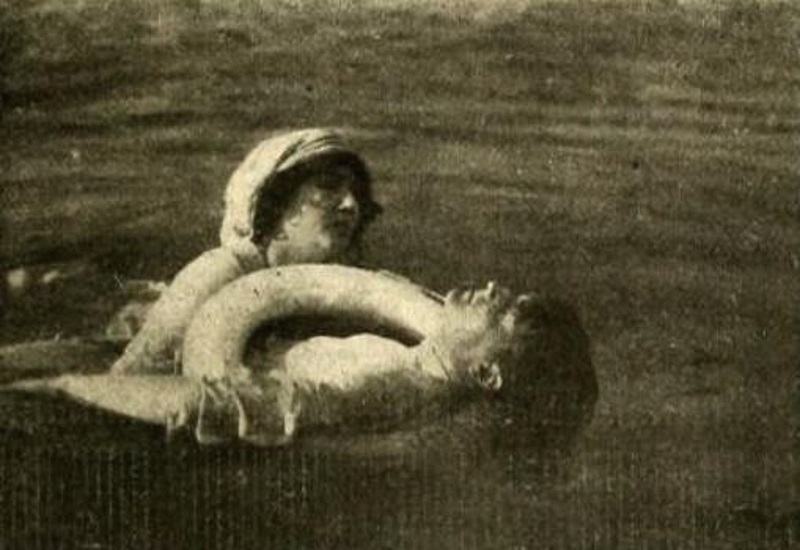
A jewel torn from the brow of Buddha becomes the mirror in which empire and ecstasy regard their own bruised faces.
There are films you watch and films that watch you; The Lotus Dancer belongs to the latter caste. Shot through with the tremulous nitrate shimmer of 1916, it feels less like a story screened than a séance summoned—lotus petals drifting across the frame like pale messages from another century.
Director Arthur Donaldson (never lauded enough) lets his camera linger on textures the way a lover traces collarbones. The sacred river at dawn is a sheet of hammered pewter; English drawing rooms gleam with the mortuary chill of silvered oak. When Metta—played by the luminous Rosie Mori—performs the temple dance, the screen blooms: her arms unfurl like silk banners, every wrist-bend a stanza of devotional calligraphy. Donaldson double-exposes the image so that ghost-lotuses hover around her torso, a proto-psychedelic gesture that anticipates Parsifal by six years.
Intertitles are sparse, almost ascetic. Instead, the film trusts Edith Lyle’s orchestral cue sheets—scored for sitar, cello, and military snare—to leak through the auditorium. The result: every rustle of the audience becomes part of the mix, as though we too are colonials trespassing on consecrated ground. When Sir Percy (Harold Lockwood, brittle as fine porcelain) raises the jewel to eye-level, the score drops to a single heartbeat-like tom-tom. You can almost hear the projector’s sprockets gasp.
Standard post-colonial readings brand the British as villains; The Lotus Dancer is cannier. Percy’s desire is less ownership than envy—he covets not land but radiance, the inner glow he glimpses in Metta’s eyes when she prays. The jewel is merely a portable sun. Thus the film stages colonialism as a fatal romance: the empire steals what it cannot name, then finds itself handcuffed to the poetry of the stolen.
Compare this to the diamond heist in The Mystery of the Black Pearl; there, theft is plot mechanics. Here it’s original sin.
Ethel (Pauline Curley) is the Edwardian ideal—rose-lipped, porcelain, forever framed in archways like a cameo. Metta, by contrast, is motion incarnate. Donaldson repeatedly cuts from Ethel’s static profile to Metta’s whirling silhouette, making stillness itself a colonial privilege. Yet neither woman is reduced to emblem; both love the same man for incompatible reasons, and the film grants each her moral grammar.
Much of the intrigue unfolds aboard a steamship whose decks become micro-colonies—first-class aflutter with foxtrot, cargo hold echoing with bhajans. In a bravura sequence, Donaldson cross-cuts between Percy waltzing with Ethel under chandeliers and Metta below deck teaching a sailor’s child to fold paper lotus boats. The montage births a visual equation: every twirl of empire’s ballroom costs a prayer somewhere in the hull.
When Metta knocks the poisoned cup from Percy’s gloved hand, crystal shards spray across the parquet like a constellation of moral quandaries. It’s the film’s hinge moment: the dancer chooses human life over cosmic restitution, thereby condemning herself to exile. Donaldson frames her hand mid-air—an instantaneous Rodin sculpture—then smash-cuts to the shattered reflections at her feet. We see her face multiplied a dozen times, as though the universe itself is voting on her choice.
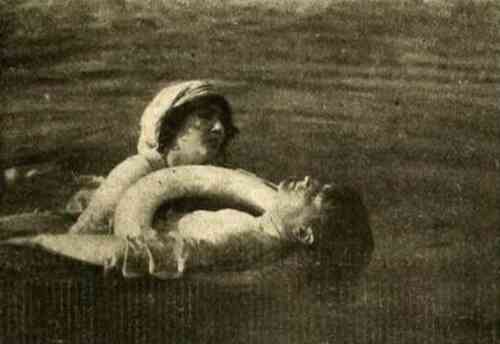
Back in the temple, with the jewel returned but her heart abroad, Metta performs the bharata natya of expiation. The camera circles her in a 360° dolly—unthinkable tech for 1916—while the frame rate slows, giving each ankle-bell’s glint a molten thickness. She collapses; the lotus petals drift across her torso like farewell telegrams. Fade to white. No resurrection, no reincarnation, only the stark cost of devotion.
Though monochromatic, tinting records specify:
Lockwood’s Percy ages a decade across ninety minutes; watch how his shoulders climb toward his ears once guilt calcifies. Mori, trained in Odissi, acts with her spine—every vertebra seems to pronounce a syllable of homesick Sanskrit. Their chemistry is neither kiss nor clinch but the moment eyes lock over the jewel: a transaction of souls.
Released months after the Easter Rising, the film’s meditation on stolen artifacts lands amid real-world demands for repatriation of colonial loot. Viewers in 1916 would have read headlines about the Crown Jewels debate; The Lotus Dancer offers mythic commentary, arguing that restitution without remorse merely resets the cycle of plunder.
Compare its moral nuance to later Orientalist romances like A Princess of Bagdad or The Adventures of Kathlyn, where native culture functions mainly as backdrop for Caucasian derring-do.
Archivists at BFI posit that approximately eight minutes—depicting Kassapa’s arrest in Mumbai—were excised for the UK print, perhaps to placate censors anxious about depicting imperial justice as fallible. The surviving negative jumps from shipboard reconciliation to Indian temple without narrative seam; the gap has inspired a thousand grad-theses on censorship and empire.
Watch The Lotus Dancer back-to-back with From the Manger to the Cross and you’ll notice both employ tableau aesthetics yet diverge in their theology: Christian forgiveness versus Eastern karmic balance. Or pair it with Quo Vadis for a diptych on empire’s inevitable collapse under the weight of its own desire.
Streaming in 4K restoration thanks to NitratePulse, the film now reveals textures invisible in 1916: the grain of Metta’s hand-woven sari, the hairline cracks in the Buddha’s lacquered scalp where Percy’s bayonet slips. These micro-details add a forensic layer; you feel you are witnessing evidence, not fiction.
If The Lotus Dancer were merely a lament for stolen treasure, it would be a footnote. Instead, it locates in a single gemstone the entire circuitry of desire, guilt, and grace. It shows how empires plunder not just objects but the capacity to behold them without wanting to own them. And it reminds us that the final dance belongs not to the victor, but to the one who dares to love the enemy and bear the wound of that love all the way home.
Five out of five petals—because some stories bruise you with beauty, and the bruise never quite fades.

IMDb 6.4
1932
Community
Log in to comment.