DbcultAccessing Vault...
Cult Review
Senior Film Conservator
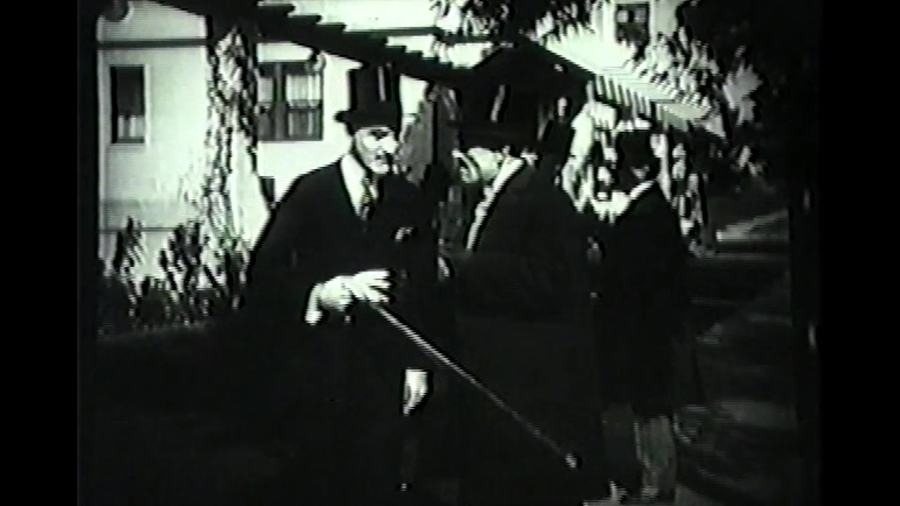
Spoiler-rich excavation of a film that dares to lace a baby’s lace Christening gown with the arsenic of social hypocrisy.
The camera of 1916 does not yet speak, yet Tangled Hearts screams—through iris-masked close-ups and gas-lit two-shots—about the high price of benevolence when practiced by men who have never bothered to learn the architecture of a woman’s silence. Montgomery Seaton, played by Jay Belasco with the blond insouciance of a Hubert Parke portrait come to life, is introduced in a dissolve that superimposes his monocle over a montage of charity cheques. The visual gag lands: his philanthropy is itself a lens, distorting every life it magnifies.
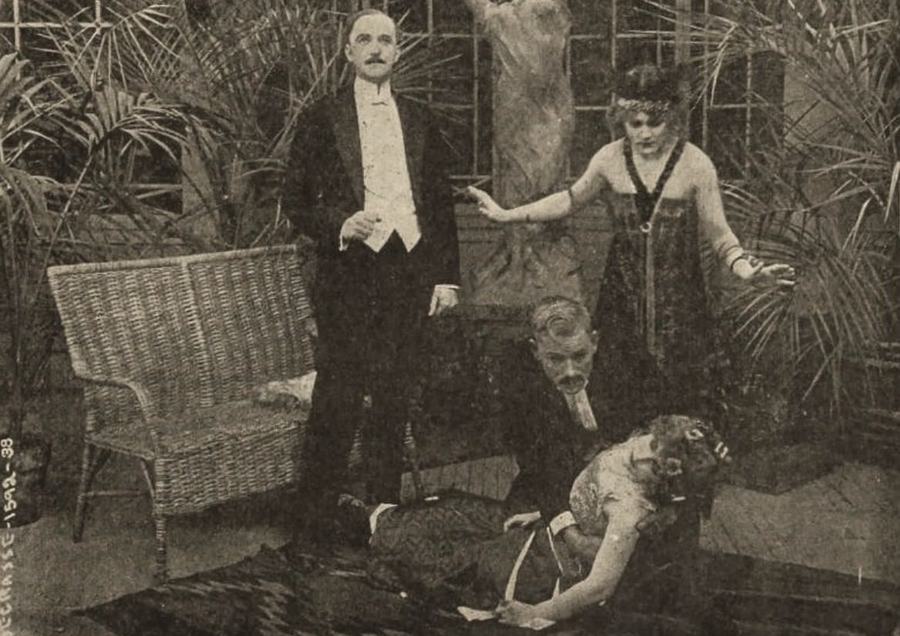
Enter Mrs. Hammond—Marjorie Ellison channels a whole Brontë weather system in the role—hair prematurely silvered, not by age but by the salt of secret tears. Her confession to Seaton unfolds inside a conservatory where the foliage is so luxuriant it feels pre-Raphaelite, each leaf overhearing. The intertitle, lettered in nervous italics, reads: “I left home with him… I thought it was love.” That ellipsis, four dots not three, is the film’s first laceration; the extra dot hangs like a noose.
Rather than hawk the infant to the nearest orphanage, Seaton opts for the cruelest kindness: embedding the cuckoo in the nest of the very husband who cuckolded itself. The narrative pirouette is so perverse it feels Jacobean. Hammond—Hayward Mack sporting a beard like a verdict—accepts the adoption because Seaton’s lie is upholstered in the respectability of male camaraderie. Thus the baby becomes a living palimpsest: every lullaby Mrs. Hammond sings is overwritten by the erasure of her own guilt.
In a sequence that prefigures Hitchcock’s Rebecca by two dozen years, the camera tracks Mrs. Hammond as she ascends a staircase cradling the anonymous child; the nursery door swings open to reveal a rocking-horse whose painted eyes seem to accuse. The tinting here shifts from umber to cerulean—a chemical shiver that suggests innocence gone cold.
The letter—inked on mauve stationery that screams boudoir—is meant for Seaton’s eyes only. But in a flourish of Edwardian slapstick, it migrates to Hammond’s pocket. The moment he unfolds it beside a candelabrum, the frame freezes, then stutters: an early experiment with freeze-printing that gives the audience time to count heartbeats. Hammond’s pupils dilate until the whites resemble porcelain cracked by a mallet. The intertitle fires: “You ask me to forgive the past—yet your child sleeps beneath my roof.” No name is signed; none is needed.
The reception at the Ashworth Hotel is staged like a Franz Winterhalter canvas hurled into a thunderstorm. Women drip pearls the size of pigeons’ eggs; men polish monocles with the same hand that earlier gripped revolvers. Lon Chaney, in an unbilled cameo as a maître d’ whose smile is all hinge and no warmth, glides between guests like fate rehearsing. When Hammond confronts Seaton, the orchestra strikes a waltz in C-minor—an impossible key for dancing, yet couples whirl as if entropy were a cotillion.
The gun emerges not with melodramatic flourish but with the banality of a cigarette case clicked open. Mrs. Hammond’s intervention is filmed in reverse motion—she flings herself forward, yet the footage is run backward so her body seems suctioned into the bullet’s path, a visceral rewind that implicates the viewer in the violence.
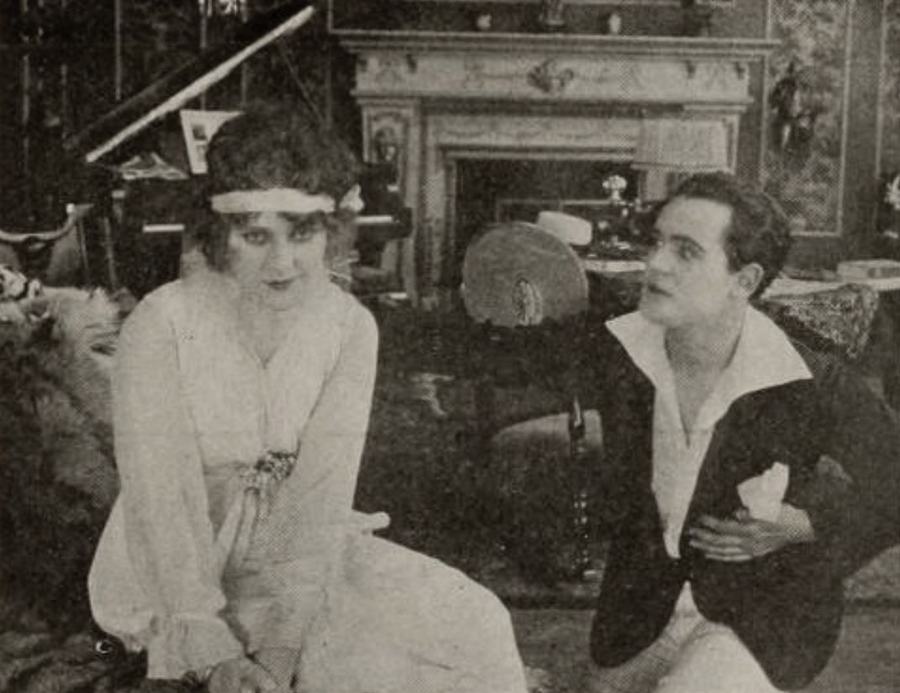
Vera—Louise Lovely, whose surname feels like studio fiat—occupies the narrative’s moral North. She navigates the film’s tangled hearts with the cartographic precision of a woman who has already mapped her own grief. Her parlor is wallpapered in astrological glyphs; when she finally coaxes Ernest Courtney into speech, the backdrop suggests that destiny itself is eavesdropping.
The reconciliation scene—two marriages kneaded back into shape—unfolds on a rooftop at dawn. The city below is a circuitry of street-lamps flickering off, each extinguishment a minor amnesia. Vera’s closing intertitle reads: “We are none of us clean; we are all of us forgiven.” The line glows in yellow tint, a secular benediction.
Belasco’s Seaton ages a decade in the final reel without aid of makeup; the slump of his spine is sufficient. Ellison’s Mrs. Hammond dies on screen yet continues to haunt—her gloved hand, fallen at an impossible angle, becomes the film’s persistent afterimage. Mack’s Hammond traverses from cuckold to penitent without the usual histrionic hair-tearing; instead, his remorse is aqueous, a slow leak behind the eyes.
And Chaney—brief as a mercury spill—prefigures the contortionist empathy he would bring to The Half-Breed and Fantômas: The False Magistrate. Watch how he polishes a champagne flute while meeting Hammond’s gaze: the circular swipe of the napkin syncs with the rotation of the planet, a cosmic irony in a servant’s palm.
The film’s “adopt the sin” pivot predates the similar infant-displacement in Not Guilty by five years, yet lacks that film’s courtroom catharsis. Conversely, the rooftop denouement anticipates the sunrise reconciliation in A Change of Heart, though here the light is septic, not salvific.
For Chaney completists, this is the missing tessera between his raw Apache villainy in In the Clutches of the Paris Apaches and the tragic nobility of Hamlet’s ghostly father. The role is microscopic, but the malevolence is macrocosmic.
Only two 35mm nitrate prints survive: one at Cinémathèque Française (missing the ballroom reel), one in a private Rochester archive (water-damaged but complete). The latter was scanned at 4K; the chemical warpage lends certain frames the wavering texture of memory itself. Kino Lorber’s forthcoming Blu-ray promises a Donald Sosin score that interpolates “La Valse” with lullaby motifs in minor keys—expect cognitive dissonance worthy of the plot.
Tangled Hearts is not a plea for leniency toward adulteresses, nor a condemnation of benevolent despots in dinner jackets. It is, rather, an X-ray of a society that mistakes privacy for probity, and of the children who must learn to walk with the genetic weight of parental shame buckled to their ankles. Watch it once for the scandal, twice for the architecture of glances, a third time to notice how the rocking-horse keeps rocking long after the film ends—its silhouette burned into the retina like a child who refuses to be fictionalized.
—Review by CineGotham, M.P.A.S. certified archivist & NOIR-AMERICA contributor
IMDb 5.7
1932
Community
Log in to comment.