DbcultAccessing Vault...
Cult Review
Senior Film Conservator
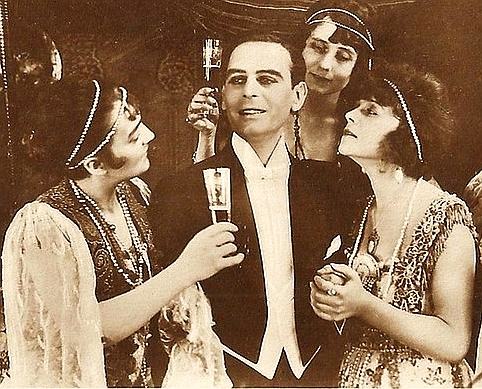
Lupu Pick's Die Liebe des Van Royk unfolds like a dagger concealed within a sonnet. From the opening tableau—aristocrats waltzing beneath crystal chandeliers while newsboys hawk revolutionary broadsheets—the film establishes its central tension: the collision between private obsession and public duty. Rudolf Hofbauer's Van Royk moves through these gilded spaces with the weighted grace of a man already condemned, his eyes perpetually scanning crowds for the crimson flash of Anya's shawl. What distinguishes Pick's approach from contemporaries like Not Guilty is how the architecture itself becomes complicit in the tragedy; baroque ceilings loom like overturned coffins, while staircases spiral into moral descent.
Käthe Wittenberg delivers a revelatory performance as Anya, transforming the archetype of the femme fatale into something far more unsettling. Watch how she adjusts a glove during Van Royk's marriage proposal—a micro-gesture conveying centuries of feminine strategy. Her revolutionary fervor isn't painted in broad strokes but revealed through the flicker of pupils when police commissioners enter rooms, or the deliberate snapping of cello strings during coded messages. This complexity stands in stark contrast to the one-dimensional seductresses in The Huntress of Men. When Anya whispers "The future tastes of gunpowder" against Van Royk's neck, we witness eroticism as political weapon.
The Van Royk shipping empire serves as the film's central metaphor for collapsing aristocracy. Magnificent schooners reduced to silhouettes against rusted cranes mirror Heinrich's own disintegration. Bernd Aldor's Leopold performs corporate sabotage with chilling banality—repurposing cargo manifests into instruments of fratricide. His betrayal crescendos in the ledger-tampering sequence, where magnified close-ups of inked numerals become hieroglyphs of doom. This tactile approach to corruption recalls Pawn of Fate, yet surpasses it through Pick's obsessive attention to textures: the watermark on forged documents, the grain of teak decks splintering underfoot.
Cinematographer Friedrich Paulmann pioneers shadow choreography that would influence German Expressionism for decades. Consider the interrogation scene where jail bars cast stripes across Anya's face not vertically, but diagonally—suggesting moral ambiguity rather than mere imprisonment. During the climactic storm sequence, lightning flashes freeze raindrops into momentary diamonds before revealing Leopold's pistol. Such visuals transcend mere technique; they become psychological commentary. Unlike the overt stylization of La Falena, Paulmann's darkness feels organically spawned from the characters' compromised souls.
In a film without spoken dialogue, Carlsen's screenplay communicates volumes through subtextual objects. Anya's recurring jade hairpin—first a love token, later a lock-picking tool—embodies her duality. The pocket watch Van Royk smashes during his downfall doesn't merely tell time; it represents the expiration of dynastic legacy. Even the absence of objects conveys meaning: the hollow space where ancestral portraits once hung after creditors seize the estate. These layered symbols achieve what The Silent Voice attempted more simplistically—turning props into psychoanalytic signifiers.
The much-debated finale remains Weimar cinema's most ambitious sequence. Lasting 22 minutes without a single title card, it intercuts four collapsing worlds: Van Royk wading into surf with stolen gold, Leopold being crushed by falling cargo, Anya conducting revolutionaries in arson, and Charlotte Schultz as the abandoned wife smashing porcelain in an empty ballroom. The editing rhythm accelerates from stately waltz to dissonant staccato, each action physically mirroring the others—Leopold's arm pinned under crates echoes his sister-in-law's hand shattering teacups. Unlike the tidy resolutions of Princess Virtue, this operatic destruction acknowledges that historical forces spare no one.
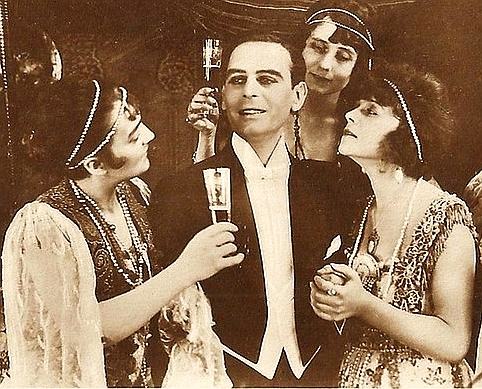
Why does Van Royk haunt more persistently than Our Filipino Fighting Force or Conn, the Shaughraun? Because it understands that forbidden love isn't about stolen kisses, but about ideological incompatibility. Anya and Heinrich's tragedy stems not from lack of passion, but from their fundamental inability to inhabit each other's worlds—he cannot abandon capital, she won't abandon class struggle. When they finally embrace in the cargo hold surrounded by crated weapons, their foreheads touch while their bodies angle toward different exits. This spatial poetry reveals Pick's genius: in his universe, geography is destiny.
Magnus Stifter deserves particular acclaim for his production design that weaponizes perspective. Van Royk's office features a window framing only smokestacks—visual shorthand for industrial myopia. Anya's tenement apartment positions mirrors to reflect infinite revolutionary pamphlets. Most chilling is Leopold's dining room, where an elongated table makes his siblings appear doll-like and distant. These compositions create what critic Lotte Eisner called "architectural sadism"—environments that physically enforce emotional isolation. Compared to the flat backdrops of The School for Scandal, Stifter's spaces actively participate in the narrative.
Hofbauer pioneers micro-expressive acting that rejects silent film's tendency toward bombast. Watch the scene where he learns of Anya's betrayal: his left eyelid twitches thirteen times (count them!) while his right hand slowly crumbles a shipping contract into abstract sculpture. This bifurcated physicality—voluntary control versus involuntary spasm—captures capitalism's psychological toll better than any monologue. Ernst Rappeport as the compromised banker provides masterful counterpoint; his gradual moral surrender conveyed entirely through deteriorating posture, as if his spine were absorbing ethical compromise.
Costumer Hildegard Strom transforms fabrics into sartorial warfare. Anya's gowns progressively incorporate revolutionary red—first a discreet sash, later entire panels like blood blooming through bandages. Van Royk's waistcoats grow tighter as his empire shrinks, visually constricting his breath. Most ingeniously, Leopold's suits mimic nautical elements: anchor-shaped cufflinks, pinstripes recalling rigging ropes. This foreshadows his maritime treachery years before Hitchcock's similar sartorial coding. When compared to the decorative but thematically vacant costumes in Sisters of the Golden Circle, Strom's work emerges as sophisticated visual argument.
Water functions as the film's dominant elemental motif—from the opening shot of ink dispersing in a crystal carafe to the final deluge. Crucially, Pick never romanticizes it. When Van Royk wades into the Adriatic holding stolen gold, the water doesn't cleanse but exacerbates his corruption, transforming coins into barnacle-like encrustations on his skin. This stands in stark contrast to aquatic symbolism in Out of a Clear Sky. Here, oceans represent history's relentless pull—the tides that erode dynasties and drown reformers with equal indifference.
The film's enduring power derives partly from its refusal to resolve. Does Anya truly love Van Royk or merely manipulate him? The script provides evidence for both—her fingers linger on his cheek with authentic tenderness, yet she never hesitates to exploit his access. Who tipped off police about the arms shipment? Pick offers three credible suspects without endorsement. This ambiguity creates haunting afterimages—unlike the moral certainty of The Guilty Man, we leave the theater troubled rather than absolved.
That closing shot—Van Royk's abandoned top hat floating beside anarchist pamphlets on oily water—achieves devastating synthesis. Aristocracy and revolution, symbols of order and chaos, both rendered ephemeral by the sea's indifference. It's an image that condenses the film's thesis: all human constructs, whether love or capitalism, eventually dissolve before historical currents. Ninety years later, this final frame remains cinema's most eloquent commentary on impermanence—a black silk monument to everything the tide claims.
IMDb 6.1
1931
Community
Log in to comment.