DbcultAccessing Vault...
Cult Review
Senior Film Conservator
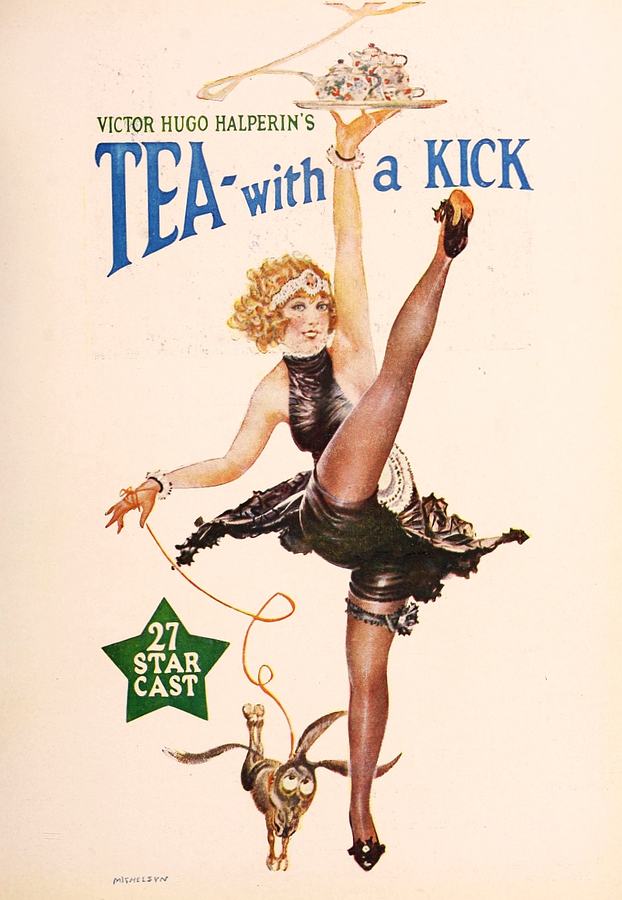
Stepping back into the nascent days of cinematic storytelling, Victor Halperin’s 1918 offering, 'Tea: With a Kick!', emerges as a delightful concoction of melodrama, burgeoning entrepreneurship, and the enduring human spirit. This silent-era gem, with its evocative title hinting at both a genteel setting and an underlying verve, captures a specific zeitgeist, blending the sentimental narratives popular at the time with a surprisingly modern sensibility regarding female agency and the pursuit of justice. It’s a film that, despite its age, still manages to charm and engage, reminding us that the fundamental ingredients of compelling drama – love, loyalty, and the triumph over adversity – are timeless.
At its heart, 'Tea: With a Kick!' is the tale of Bonnie Day, portrayed with an endearing blend of resolve and vulnerability by Doris May. Bonnie finds herself in an unenviable predicament: her father, a man of presumed integrity, has been unjustly imprisoned, the victim of a nefarious scheme orchestrated by unscrupulous stock swindlers. The legal system, in its lumbering and often fallible way, has failed him, leaving Bonnie with the daunting task of raising the considerable funds required for an appeal. This premise, while rooted in classic melodrama, provides a potent springboard for a narrative that champions self-reliance and ingenious problem-solving. Instead of succumbing to despair, Bonnie channels her grief and frustration into a remarkably innovative business venture.
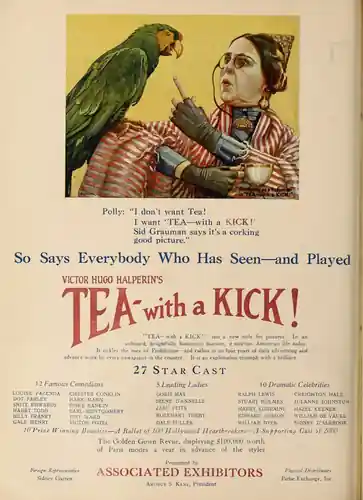
Her solution is not merely to open a tearoom, a respectable if somewhat mundane occupation for a young woman of the era, but to infuse it with an unexpected jolt of vitality. She enlists a group of stranded choristers, performers whose own artistic endeavors have been temporarily derailed, transforming her quaint establishment into a vibrant cabaret revue. This fusion of genteel tea service with lively theatrical performance gives the film its titular 'kick.' It's a brilliant narrative device, allowing for moments of lighthearted entertainment to punctuate the underlying tension of her father's plight. The cabaret becomes a metaphor for Bonnie's own spirited resilience, a public declaration that even in the face of injustice, joy and ingenuity can find a stage.
As Bonnie navigates the challenges of her burgeoning business, her personal life becomes equally entangled. Her Aunt Pearl, a character often found in such narratives as the voice of conventional wisdom, harbors aspirations for Bonnie to marry Napoleon Dobbings. Dobbings, a small-town capitalist, represents security and stability, a seemingly logical choice for a young woman facing financial uncertainty. Ralph Lewis, a veteran of the screen, likely imbues Dobbings with a suitable blend of self-importance and perhaps a touch of misguided charm, making him a plausible, if uninspiring, suitor. However, the heart, as always, has its own counsel, and Bonnie's affections are firmly set upon Art Binger, a young lawyer whose idealism and commitment to justice mirror her own. Creighton Hale, known for his earnest portrayals, would have brought a compelling sincerity to Binger, making him the obvious romantic hero.
The romantic subplot is not merely a distraction but an integral part of the film's thematic tapestry. It underscores the tension between pragmatic decisions driven by necessity and the authentic desires of the heart. Binger’s profession as a lawyer is not incidental; he represents the very mechanism through which Bonnie hopes to achieve her primary goal. His eventual success in securing Mr. Day’s release from prison is not just a personal triumph for him, but a culmination of Bonnie's tireless efforts and a vindication of their shared belief in justice. The narrative’s careful orchestration ensures that this legal victory arrives precisely at the zenith of Bonnie’s business career, creating a satisfying convergence of personal, professional, and romantic fulfillment.
In the silent era, acting was a highly physical art form, relying on exaggerated expressions, gestures, and body language to convey emotion and narrative. Doris May, as Bonnie Day, would have had to embody a wide range of feelings – filial despair, entrepreneurial determination, romantic longing, and ultimately, joy. Her portrayal would have been crucial in selling Bonnie's audacious plan to the audience. Similarly, Creighton Hale's Art Binger would need to exude competence, sincerity, and an unwavering commitment to his legal crusade. The dynamic between the two, conveyed through glances and subtle movements, would have formed the emotional core of the film.
Victor Halperin, though primarily credited as a writer here, would have been instrumental in shaping the film's rhythm and visual storytelling. The pacing of silent films often varied, but a narrative like this, with its blend of dramatic tension and lighthearted entertainment, would have demanded careful modulation. The scenes of the cabaret, for instance, would require a lively, energetic direction, contrasting with the more somber moments concerning Mr. Day's imprisonment. The use of intertitles would have been critical in conveying plot details and character dialogue, requiring concise yet impactful writing to maintain audience engagement. Halperin's ability to craft a story that balances these disparate elements speaks to a nascent understanding of cinematic flow and audience psychology.
Released in 1918, 'Tea: With a Kick!' arrived during a tumultuous period in world history, as the First World War was drawing to a close. While the film’s plot doesn't directly engage with wartime themes, the underlying current of struggle, resilience, and the desire for justice would have resonated deeply with audiences of the time. Films often served as a form of escapism, and a story of personal triumph against systemic injustice, punctuated by the cheer of a cabaret, would have offered a welcome respite from global anxieties.
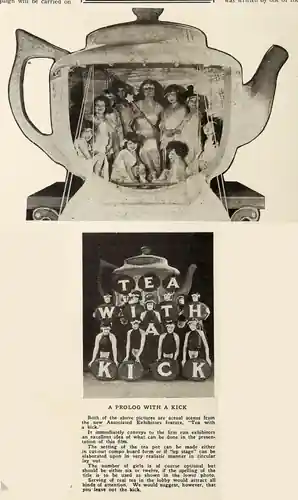
The incorporation of a cabaret revue within the narrative is particularly interesting. Vaudeville and live stage performances were incredibly popular, and silent cinema frequently drew inspiration from these forms. The idea of performance as a means of survival or fundraising is not unique; one might find thematic parallels in other films that explore the intersection of art and necessity. For instance, while vastly different in tone and scale, films that feature performers using their talents to overcome adversity share a common thread. The lighthearted, almost improvisational nature of Bonnie's chorister troupe brings to mind the energetic spectacles seen in films like Stop, Look and Listen, which also celebrated the vivacity of stage entertainment. The 'kick' in the title thus refers not only to the unexpected zest of the tearoom but also to the spirited defiance of a young woman using her wits and the power of performance to challenge injustice. This blend of the domestic with the theatrical creates a unique charm that sets the film apart from more straightforward melodramas of its time.
Beyond the surface narrative, 'Tea: With a Kick!' subtly champions themes of resilience and, perhaps more remarkably for its era, female agency. Bonnie Day is not a passive damsel in distress; she is the architect of her own rescue and, by extension, her father's. Her decision to open the tearoom and organize the cabaret is an act of proactive entrepreneurship, demonstrating a self-reliance that was increasingly celebrated in the early 20th century, particularly as women’s roles in society began to expand. She defies the expectations of her Aunt Pearl, who steers her towards a marriage of convenience, choosing instead to pursue both love and justice on her own terms. This depiction of a resourceful, independent woman working within societal constraints yet ultimately bending them to her will is a powerful undercurrent that lends the film a lasting appeal.
The film also touches upon the perennial struggle against corruption. The 'trumped-up charge' and the 'stock swindlers' represent a societal ill that resonates across generations. While the resolution is perhaps more neatly tied than in real life, the narrative’s dedication to seeing justice served provides a comforting sense of order. This pursuit of truth and vindication, facilitated by the diligent Art Binger, reinforces the idea that even against powerful, deceitful forces, integrity and persistence can prevail. This makes the film not just a romantic drama, but a quiet commentary on ethical conduct and the importance of a fair legal system.
Ultimately, 'Tea: With a Kick!' stands as a charming artifact of early cinema, a testament to the power of a well-told story, even without spoken dialogue. Its blend of domestic drama, legal suspense, and theatrical spectacle creates a unique flavor profile that is both comforting and invigorating. The film’s ability to weave together these disparate narrative threads into a cohesive and satisfying whole is a credit to Victor Halperin's storytelling vision and the expressive performances of its cast. It’s a reminder that sometimes, the most potent solutions to life’s grandest problems can be found in the most unexpected places, perhaps even in a tearoom enlivened by the joyous strains of a chorister cabaret. This film, with its quaint settings and earnest characters, delivers a delightful jolt, proving that even a cup of tea can indeed come with a most satisfying kick.
IMDb 5.2
1932
Community
Log in to comment.