DbcultAccessing Vault...
Cult Review
Senior Film Conservator
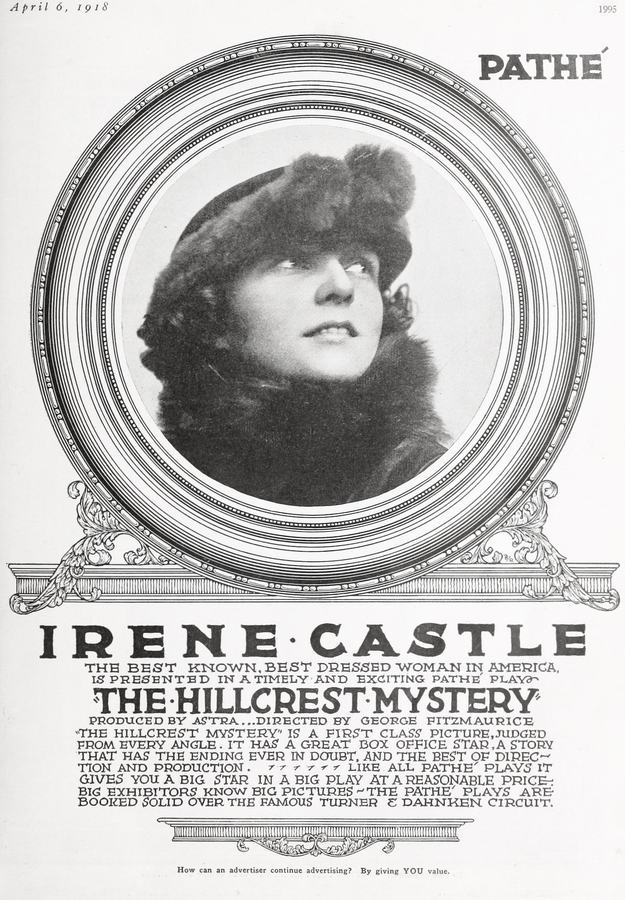
Stepping back into the cinematic past, one often finds themselves navigating the rich, evocative landscapes of silent film, where narrative prowess and nuanced performances spoke volumes without uttering a single word. ‘The Hillcrest Mystery’, a compelling product of its time, invites viewers into a world of suspense, betrayal, and the intricate dance of human relationships under duress. Penned by the formidable Ouida Bergère, this film presents a narrative that, while rooted in genre conventions, manages to carve out its own distinct identity through a blend of domestic melodrama and sharp-witted detective work.
At its core, the film revolves around Marion Sterling, portrayed with an arresting grace by Irene Castle. Castle, a figure of considerable renown beyond the silver screen, brings a certain aristocratic elegance to Marion, the daughter of a powerful shipbuilder whose life takes a dark turn. Her father's decision to commit his formidable industrial plant to the government’s service, a move imbued with patriotic fervor and significant financial implications, sets the stage for a tragedy that is both personal and potentially national in scope. The sudden, brutal murder of Mr. Sterling, depicted with a stark, almost visceral simplicity – two arms emerging from the rain-swept darkness to claim a life – immediately plunges the audience into a maelstrom of questions. This imagery, a fleeting but potent visual, speaks to the power of silent cinema to convey profound horror through suggestion rather than explicit depiction, a technique that would be refined in later thrillers but is already remarkably effective here.
Marion’s emotional landscape is as turbulent as the storm outside her home on that fateful night. She finds herself in a classic romantic dilemma, a triangle that adds layers of personal stakes to the overarching mystery. On one side stands Hugo Smith, her father’s partner, played by Wyndham Standing with a blend of gravitas and possibly veiled ambition. Smith’s affection for Marion is evident, a steady, perhaps even possessive, presence in her life. On the other, there is Gordon Brett, the young secretary, enacted by Ralph Kellard, who embodies the earnest, perhaps slightly naive, suitor. Marion’s heart, we are told, leans towards Brett, setting up a poignant conflict between duty, expectation, and genuine feeling. This romantic undercurrent is not merely a subplot; it’s intrinsically woven into the fabric of the mystery, making the stakes higher and the potential for betrayal even more devastating. The film skillfully uses these personal entanglements to deepen the audience’s investment, making us not just observers of a crime, but participants in Marion’s emotional turmoil.
The arrival of Detective Barney Moffat, a character brought to life by the seasoned DeWitt Jennings, marks a significant shift in the narrative’s momentum. Moffat is not your typical, plodding investigator. The plot description hints at his methods being “unusual and very effective,” a tantalizing detail that promises intellectual engagement beyond mere procedural steps. In the silent era, a detective’s quirks and brilliance often had to be conveyed through subtle gestures, piercing gazes, and clever staging, rather than expository dialogue. One can imagine Jennings imbuing Moffat with a keen observational eye, a deliberate pace, and perhaps a touch of eccentric genius that sets him apart from the more conventional police figures of the period. His presence immediately elevates the stakes, transforming the domestic tragedy into a full-blown criminal investigation that demands both logic and intuition.
Ouida Bergère’s screenplay for ‘The Hillcrest Mystery’ is a testament to her skill in crafting narratives that resonate. Known for her prolific work in the silent era, Bergère understood the nuances of visual storytelling and character development without spoken word. The initial suspicion falling upon Gordon Brett, the young secretary, is a classic narrative device, designed to misdirect and to heighten the emotional conflict for Marion. It forces the audience to question appearances and to look beyond the obvious culprit. This kind of red herring is a staple of the mystery genre, but in Bergère’s hands, it feels less like a trick and more like a carefully constructed piece of a larger puzzle, reflecting the era’s fascination with psychological intrigue. Films like ‘The House of Mystery’ or even the more melodramatic ‘The Root of Evil’ from a similar period, often employed similar narrative strategies, drawing audiences in with a central enigma and then slowly peeling back layers of deceit.
The dramatic revelation of the truth is promised to be a highlight, suggesting a climax that delivers on the suspense built throughout the film. In silent cinema, such reveals often relied on powerful visual cues, intense close-ups, and the collective gasp of an audience as the pieces finally clicked into place. It’s here that the performances of the entire cast, including J.H. Gilmour in an unspecified but undoubtedly pivotal role, would truly shine, conveying shock, despair, or triumph through facial expressions and body language alone. The effectiveness of such a moment hinges on the cumulative impact of the preceding narrative, the careful placement of clues, and the emotional investment in the characters. The promise of a “dramatic way” for the truth to emerge implies a theatrical flourish, perhaps a confrontation or an unexpected confession, rather than a simple exposition.
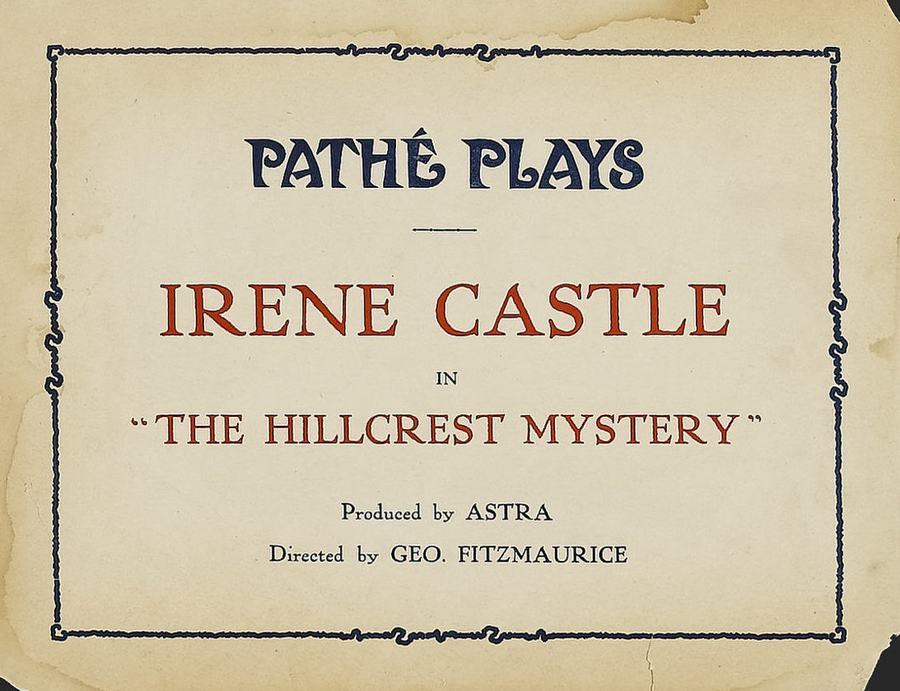
Irene Castle’s portrayal of Marion Sterling is undoubtedly a cornerstone of the film’s appeal. As a dancer and fashion icon, Castle brought a unique screen presence, a blend of fragility and inner strength. Her Marion is not merely a damsel in distress; she is a woman caught in a maelstrom of personal grief and romantic uncertainty, her every gesture and expression conveying the weight of her predicament. Her ability to convey complex emotions without dialogue would have been crucial, anchoring the audience’s empathy and driving the emotional core of the narrative. One might draw parallels to the powerful female leads in other silent melodramas, where actresses often carried the emotional weight of intricate plots, much like the compelling performances seen in films such as ‘Strathmore’ or ‘The Locked Heart’, where the heroines navigate societal pressures and personal tragedies with a compelling grace.
DeWitt Jennings, as Detective Moffat, would have provided a contrasting, grounding force. His experience in character roles meant he could imbue Moffat with a sense of authority and methodical intellect, even if his methods were described as unusual. The interplay between Moffat's detached observation and Marion's emotional turmoil would have created a compelling dynamic, crucial for a successful mystery. Ralph Kellard’s Gordon Brett, initially the sympathetic lover and then the prime suspect, would have required a delicate balance, portraying innocence under a cloud of suspicion without giving away the eventual truth. Wyndham Standing’s Hugo Smith, the partner with a potential romantic interest, likely played a more ambiguous role, his motivations perhaps shifting between genuine concern and self-interest, adding another layer of complexity to the suspects’ gallery. The success of a silent film often rested on the strength of its ensemble to convey these intricate relationships and psychological states.
The brilliance of ‘The Hillcrest Mystery’, like many films of its vintage, lies not just in its plot, but in its contribution to the evolving language of cinema. It’s a snapshot of a time when narrative conventions were being established, when the power of editing, cinematography, and performance were being explored in nascent forms. The depiction of the murder, with arms appearing from the dark, rainy night, is a masterclass in visual suggestion, creating terror through implication rather than explicit gore. This approach, characteristic of early horror and thriller filmmaking, cultivated a sense of dread that was often more potent than direct confrontation. One could compare this to the atmospheric tension in films like ‘Under the Gaslight’, a stage play famously adapted for the screen, which relied on similar melodramatic devices and suspenseful staging to captivate audiences.
Ouida Bergère’s writing is particularly noteworthy. She was part of a pioneering generation of female screenwriters who shaped the early narratives of Hollywood. Her ability to weave together a patriotic duty, a tragic murder, and a complex love triangle demonstrates a sophisticated understanding of dramatic structure and character motivation. The theme of a prominent industrialist dedicating his plant to the government also reflects a societal context, perhaps touching upon the industrial mobilization during World War I, adding a layer of contemporary relevance for audiences of the time. This infusion of real-world context into a fictional mystery grounds the story, making its stakes feel more tangible and its characters more relatable. The moral ambiguities and the exploration of justice, common themes in many films of the era, from ‘Other People’s Money’ to ‘My Partner’, are deftly handled here, ensuring that the film is not just a simple whodunit but a contemplation of human nature.
The film’s title itself, ‘The Hillcrest Mystery’, immediately conjures images of grand estates, hidden secrets, and the kind of closed-circle investigation that Agatha Christie would later perfect. It speaks to a particular brand of mystery that thrives on intimate settings and a limited pool of suspects, where the psychological interplay between characters is as important as the physical evidence. The narrative promises a satisfying conclusion, one where the ‘truth is brought out later in a dramatic way.’ This theatricality is a hallmark of silent cinema, where resolutions often came with a flourish, designed to leave audiences with a lasting impression. The journey to that truth, guided by Moffat’s ‘unusual’ methods, is where the real intrigue lies, showcasing the ingenuity of early filmmakers in building suspense and delivering catharsis.
Ultimately, ‘The Hillcrest Mystery’ stands as a compelling artifact of its time, a testament to the enduring power of a well-told story, regardless of the technological limitations. It combines the star power of Irene Castle, the seasoned presence of DeWitt Jennings, and the narrative craftsmanship of Ouida Bergère to deliver a silent film experience that is both an engaging mystery and a poignant human drama. For aficionados of classic cinema, it offers a fascinating glimpse into the origins of the thriller genre and the art of non-verbal storytelling, reminding us that some mysteries are timeless, and some truths are worth the dramatic wait.
IMDb 6.4
1931
Community
Log in to comment.