DbcultAccessing Vault...
Cult Review
Senior Film Conservator
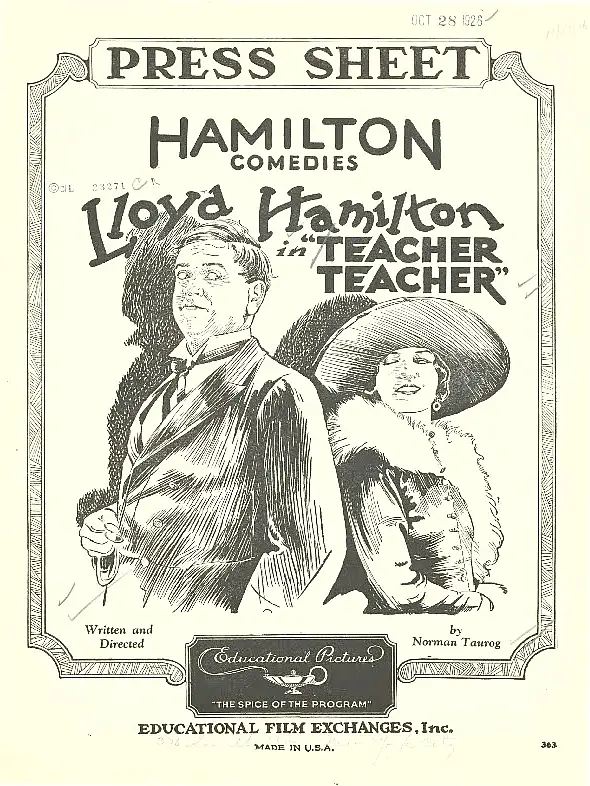
Is Teacher, Teacher worth watching today? Short answer: yes, but only if you have a high tolerance for the primitive, unrefined chaos of the pre-Buster Keaton era. It is a fascinating artifact for those who want to see the DNA of physical comedy before it became sophisticated.
This film is for the silent cinema completionist and fans of Lloyd Hamilton's specific brand of wide-eyed panic. It is absolutely not for anyone who requires a coherent plot or character development beyond 'man gets hit with things.'
To understand why Teacher, Teacher exists, one must understand the 1919 appetite for destruction. The film works because of its relentless, escalating kinetic energy that refuses to let the protagonist—or the audience—breathe. It fails because its middle act leans too heavily on repetitive classroom gags that feel like filler even in a short runtime. You should watch it if you want to see a masterclass in how early directors used animal actors to create set-piece finales that would be a nightmare to film today.
1) This film works because it captures a very specific, frantic anxiety regarding social climbing and the fragility of professional dignity.
2) This film fails because the 'Ham and Bud' dynamic (Bobby Burns and Lloyd Hamilton) often feels more like a collection of rehearsed vaudeville bits than a cohesive cinematic experience.
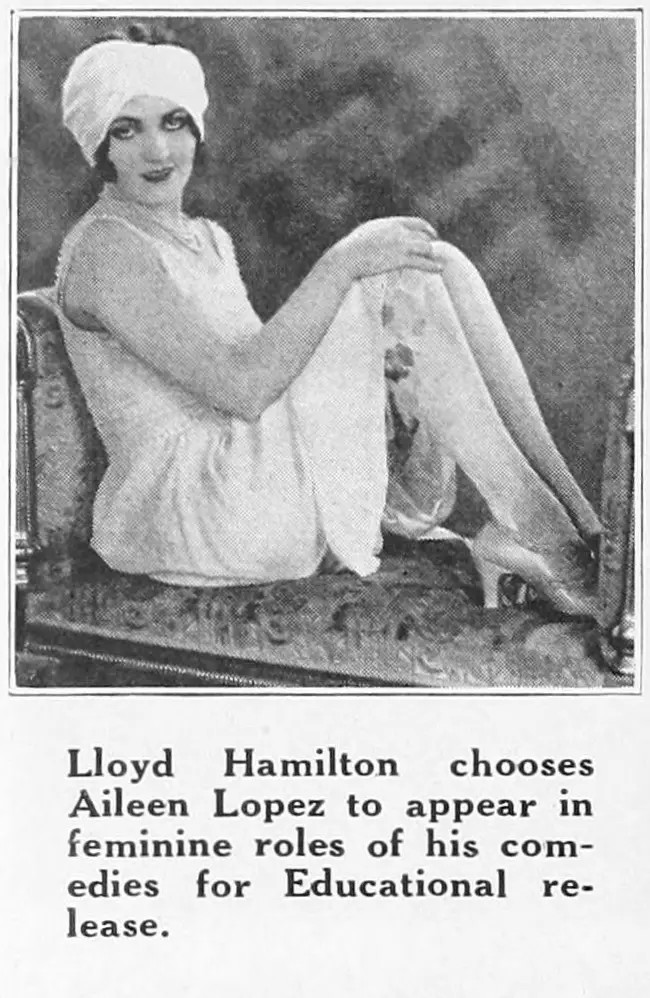
3) You should watch it if you are researching the early career of Norman Taurog, who would eventually become a powerhouse director for the likes of Elvis Presley and Jerry Lewis.
If you are looking for a quick burst of 1910s energy, this film provides a solid return on investment. It is a short, sharp shock of slapstick. It does not demand much from the viewer, but it offers a clear look at the tropes that would later be perfected by the giants of the 1920s. Unlike the more mystery-focused shorts like Sherlock's Home, this is pure, unadulterated physical comedy.
Lloyd Hamilton is the soul of this film. While many of his contemporaries relied on grotesque makeup or extreme costumes, Hamilton’s comedy came from his face. He looks like a man who has been perpetually startled by a loud noise. In the scenes where he is trying to sleep while his parrot mocks him, Hamilton conveys a level of sleep-deprived mania that feels surprisingly modern. His timing during the paper ball sequence is impeccable; he doesn't just dodge the projectiles, he reacts to them with a rhythmic, almost dance-like frustration.
Bobby Burns provides a necessary foil, though he is often overshadowed by Hamilton’s rubber-faced antics. The chemistry here is reminiscent of other shorts from the era, such as The Agent, where the comedy is derived from the friction between two very different physical types. In Teacher, Teacher, the friction is between the teacher’s desire for order and the universe’s desire for his total humiliation.
The inclusion of the parrot is a stroke of low-budget genius. In a silent film, a talking bird is a paradox. We cannot hear the 'wise cracks,' so we rely entirely on intertitles and Hamilton’s reactions. This creates a psychological layer to the comedy—the bird represents the internal monologue of the teacher's own failures. It is a cruel, feathered mirror. When the bird prevents him from sleeping during the day, it sets the stakes for the evening classroom scenes. We aren't just watching a teacher; we are watching a man on the verge of a psychotic break.
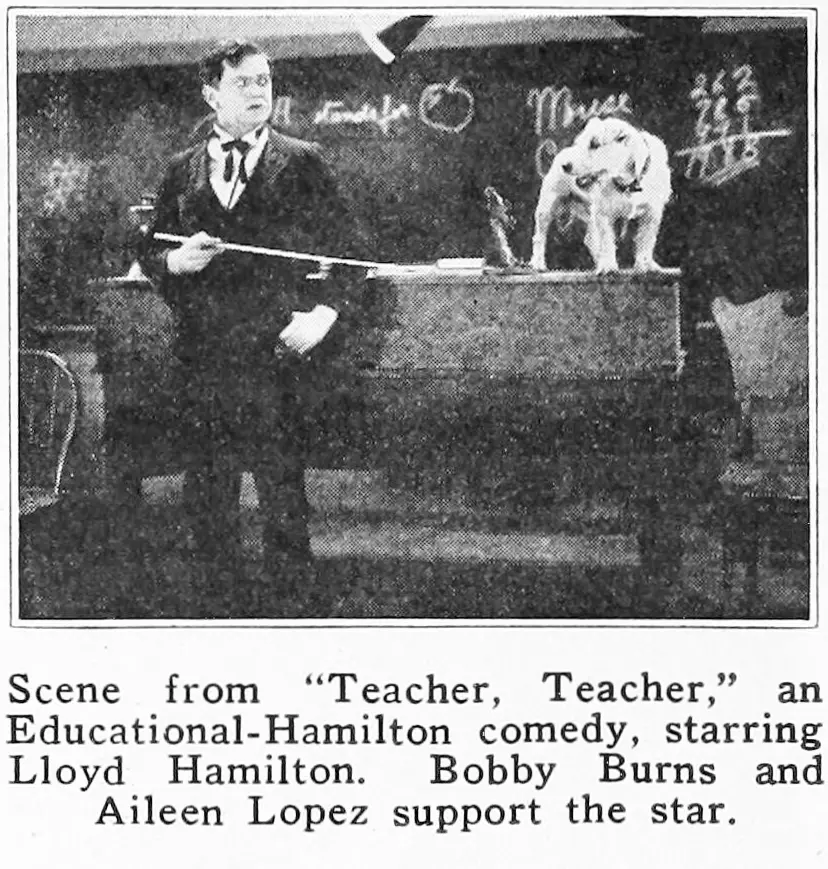
Director Norman Taurog was only about 20 years old when he worked on this, and you can see the youthful exuberance in the framing. He isn't afraid to crowd the frame. The classroom is packed with students of all ages, creating a visual sense of claustrophobia. This is a stark contrast to the more open, staged feel of films like The Master Key. Taurog uses the depth of the room to have multiple gags happening at once—a precursor to the 'busy' frames of later sound comedies.
The cinematography is functional, but the editing is where the film finds its pulse. The transition from the quiet (but noisy) bedroom to the loud classroom is handled with a briskness that emphasizes the teacher's lack of agency. He is a man being moved by the plot, rather than moving it himself.
The 'loaded cigar' is a trope that has been beaten to death in the century since this film’s release, but here it serves a specific social purpose. The teacher isn't just smoking; he is trying to perform 'class.' He gives the cigar to the principal to curry favor. It is a moment of pure sycophancy that backfires spectacularly. The explosion isn't just a gag; it’s a critique of the protagonist's desperation. He tries to buy respect and gets a face full of soot instead.
Then there are the dogs. The final sequence, where a dog and its 'friends and relatives' wreck the schoolroom, is the film's high point. It is chaotic, poorly controlled, and genuinely funny. The sight of multiple dogs running over desks while the school board flees in terror is the kind of 'anything goes' filmmaking that makes the silent era so vibrant. It’s messy. It’s loud. It works. But it’s flawed.
Pros:
- Lloyd Hamilton’s exceptional facial acting.
- High-energy finale that delivers on the promise of chaos.
- Interesting historical look at the 'night school' concept in 1919.
Cons:
- The parrot gags feel a bit dated and rely heavily on intertitles.
- Some of the student actors are clearly just standing around waiting for their cue.
- The 'loaded cigar' plot point is visible from a mile away.
Teacher, Teacher is a rowdy, unpolished gem of early slapstick. It doesn't have the poetic grace of Chaplin or the architectural brilliance of Keaton, but it has a raw, nervous energy that is entirely its own. Lloyd Hamilton proves why he was once considered a rival to the greats, even if history hasn't been as kind to his legacy. The film is a loud, messy, and occasionally brilliant reminder that even a hundred years ago, the struggle to maintain authority in a room full of people (and dogs) was a losing battle. It’s worth a look for the dog chase alone. Just don't expect a lesson in pedagogy.
IMDb 7.7
1929
Community
Log in to comment.