DbcultAccessing Vault...
Cult Review
Senior Film Conservator
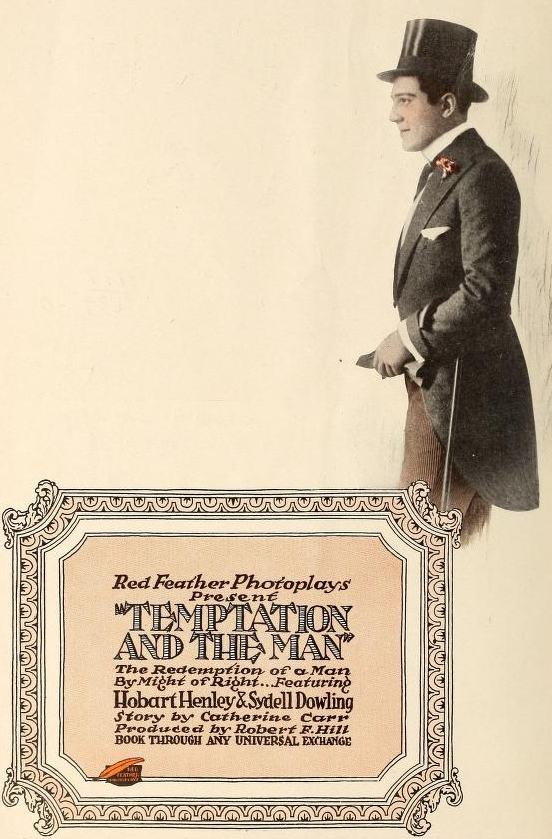
The year 1916 remains a fascinating epoch in the evolution of American cinema, a period where the medium began to shed its nickelodeon skin and embrace the nuanced complexities of feature-length storytelling. In the heart of this transition stands Temptation and the Man, a film that grapples with the jagged intersections of class, criminality, and the elusive nature of reform. Directed by and starring Hobart Henley, this production is not merely a moralistic fable but a visceral exploration of the human capacity for self-reinvention against the backdrop of a rigid social hierarchy. It is a work that echoes the thematic gravity found in contemporary pieces like The Broken Law, yet it carves out its own distinct space through its unflinching depiction of the Bowery’s grit.
Hobart Henley’s portrayal of Jim Crosby is a masterclass in silent-era physicality. Crosby is introduced as a man defined by his fists, a creature of the underworld whose only tether to virtue is a protective instinct for his sister. This initial act of violence—defending his kin—is the pivot upon which his entire life rotates. Unlike the protagonists in Tainted Money, who are often corrupted by the sudden influx of wealth, Crosby’s journey is one of stripping away the layers of his hardened exterior. The prison sentence he serves is not a deterrent but a cocoon, allowing him to emerge into a world where the possibility of change is personified by Ann Payton.
The transformation of the saloon into a mission is a potent visual metaphor. In the early 20th century, the saloon was the epicenter of urban vice, a place where laboring men lost their wages and their dignity. By having Ann Payton, a woman of high social standing, occupy this space, the film establishes a clash of cultures that is as much about aesthetics as it is about ethics. The sea blue (#0E7490) shadows of the Bowery alleys contrast sharply with the yellow (#EAB308) warmth of the mission’s lanterns, creating a chiaroscuro effect that mirrors Crosby’s internal struggle. He is a man caught between the dark orange (#C2410C) heat of his past brawls and the cool, sterile light of the upper class.
In stark contrast to Crosby’s rugged integrity is Temple Vaughn, played with a convincing air of aristocratic rot by Joseph Granby. Vaughn represents the parasitic nature of the leisure class—a man who, despite his advantages, lacks the moral fortitude to resist the allure of the gambling table. His involvement with the gambler Johnson and the enigmatic Costello serves as the narrative’s engine of destruction. While The Remittance Man often treats such failures with a degree of comedic distance or tragic inevitability, Temptation and the Man frames Vaughn’s descent as a direct threat to the social fabric.
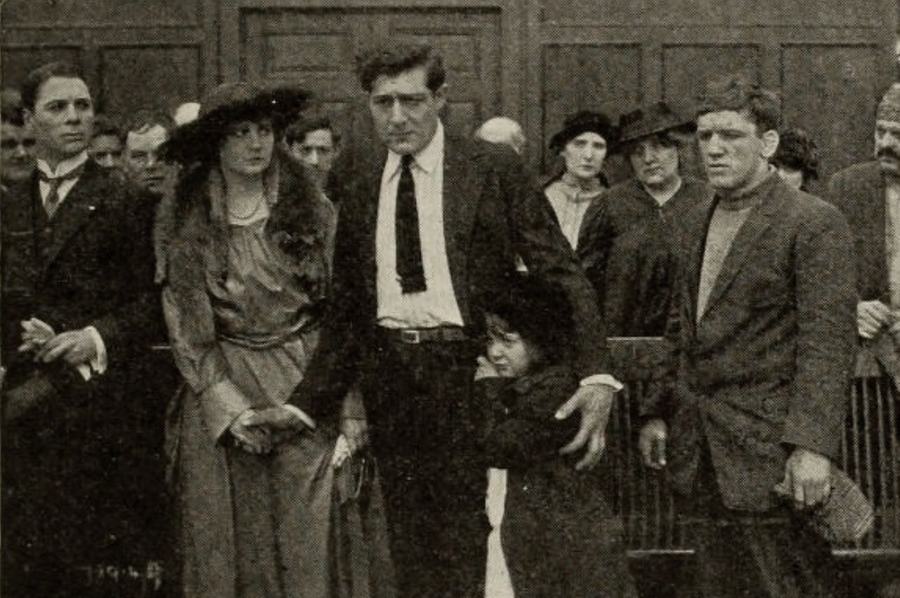
The act of forgery is a recurring motif in silent melodrama, symbolizing the ultimate betrayal of trust in a society built on the sanctity of the written word and the bank note. When Crosby, now working at the bank, discovers Vaughn’s transgression, the film shifts from a social drama to a high-stakes psychological thriller. Crosby’s decision to stage a robbery to retrieve the forged check is an act of profound irony; he must return to his criminal roots to perform his most virtuous deed. This sequence is directed with a kinetic energy that rivals the suspense found in Fantomas: The Mysterious Finger Print, emphasizing the desperation of a man willing to sacrifice his hard-won reputation for the sake of a woman who may never truly see him as an equal.
"The film’s brilliance lies in its refusal to offer easy absolutions. Jim Crosby’s second prison term is a harrowing reminder that in the eyes of the law and society, a reformed man is often just a criminal waiting to be caught again. The weight of his sacrifice is palpable, rendered through Henley’s expressive gaze and the claustrophobic framing of the jail cell scenes."
Catherine Carr’s screenplay is remarkably sophisticated in its handling of the 'social gap' between Crosby and Payton. In many films of this era, such as Snow White or other fairy-tale adaptations, class barriers are dissolved by the magic of love or providence. However, Temptation and the Man remains grounded in a more cynical reality. Even as Crosby and Ann work side-by-side in the Bowery mission at the film’s conclusion, there is an unspoken tension regarding their future. Can the daughter of a wealthy man ever truly merge her life with a former gangster whose hands are stained with the soot of the slums?
This thematic ambiguity aligns the film with the more naturalistic tendencies of European cinema, such as the Russian masterpiece Deti veka (Children of the Age). Both films explore how characters are trapped by their environment and the expectations of their station. Ann Payton’s mission work is portrayed as noble, yet there is a sense of voyeurism in her descent into the Bowery—a philanthropic 'slumming' that Crosby recognizes even as he falls in love with her. The film asks whether her love is for Jim the man, or Jim the project of reclamation.
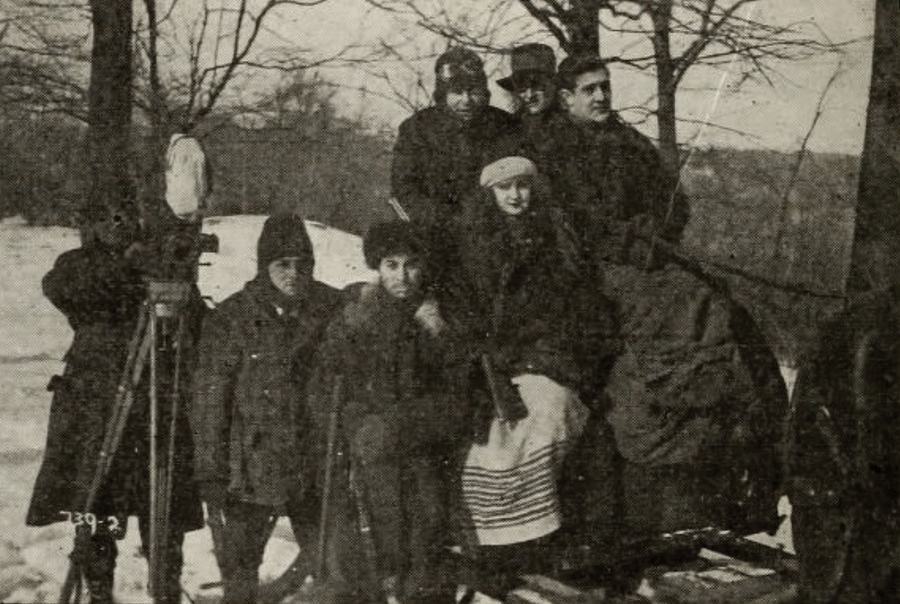
Technically, the film utilizes the limited tools of 1916 to great effect. The use of location shooting in the Bowery provides an authenticity that studio sets of the time often lacked. The textures of the brick walls, the flickering gaslights, and the crowded streets create a sensory experience that grounds the melodrama. The card party scene, where Vaughn is fleeced by Johnson, is a standout moment of ensemble acting and blocking. The tension is thick, reminiscent of the high-stakes betrayals in The Half Million Bribe.
The lighting design, particularly in the mission scenes, uses the sea blue (#0E7490) palette to evoke a sense of spiritual calm, while the gambling dens are bathed in a more aggressive, dark orange (#C2410C) hue. This visual coding helps the audience navigate the moral geography of the film. Furthermore, the editing by the Universal team shows a burgeoning understanding of parallel action, particularly during the climax where Jim rushes to warn Vaughn of the impending threat from the vengeful Johnson.
The resolution of Temptation and the Man is startlingly violent for a production associated with the reformist movement. The death of Temple Vaughn at the hands of Johnson is a moment of narrative justice that feels both earned and tragic. Vaughn’s accusation that Jim was 'paying attention to his wife' is the final insult to Crosby’s honor—a reminder that despite everything Jim has done, he is still viewed as a predator by those he saved. The irony of Jim being the one to witness the murder, after spending years trying to protect the very man who now slanders him, is a stroke of storytelling brilliance.
The final scene at the Bowery mission is one of the most poignant in early cinema. It avoids the triumphant wedding bells of Mignon or the historical grandeur of The Battle of Trafalgar. Instead, it offers a quiet, contemplative image of two people bound by a shared purpose but separated by a history that cannot be erased. It is a 'social gap' that remains unbridged, leaving the spectator to ponder the efficacy of redemption in a world that never forgets a man's origins.
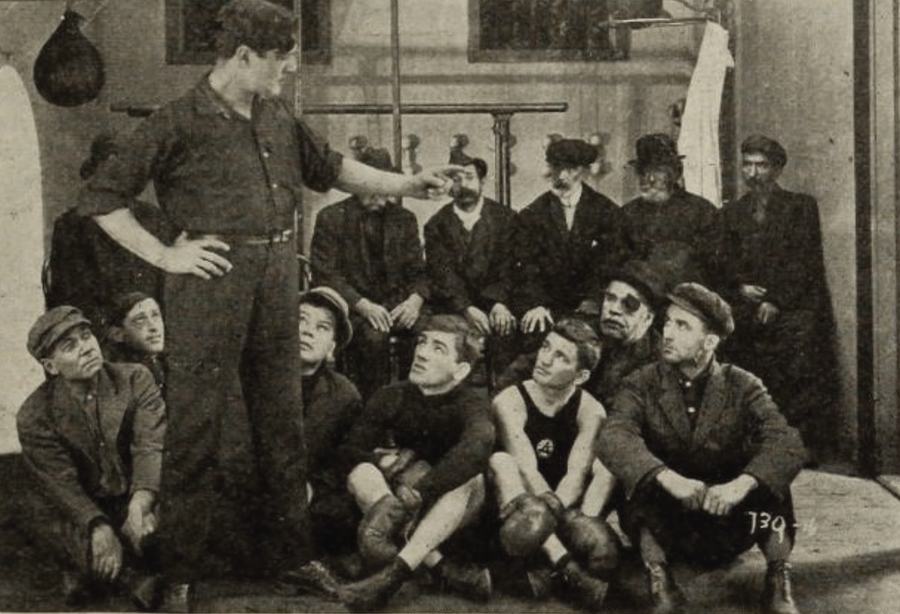
In the pantheon of 1916 films, Temptation and the Man deserves a place of honor alongside better-known works like East Lynne or the early versions of Hamlet, Prince of Denmark. While those films often relied on established literary prestige, Henley’s work is a modern (for its time) urban tragedy that speaks to the anxieties of the industrial age. It deals with the fear of the 'unwashed masses' and the hope that they can be integrated into polite society through labor and faith.
The performance of Clara Beyers as Ann Payton also warrants significant praise. She avoids the histrionics often associated with silent film heroines, offering instead a grounded, earnest portrayal of a woman whose convictions are tested by the reality of the underworld. Her chemistry with Henley provides the film’s emotional core, making the final, unresolved tension all the more impactful. Like the protagonist in Pierrot the Prodigal, Jim Crosby is a figure of immense pathos, a man who gives everything and receives only the cold comfort of a clear conscience.
Ultimately, Temptation and the Man is a testament to the power of early narrative film to tackle complex social issues without resorting to simplistic solutions. It is a gritty, atmospheric, and deeply moving piece of cinema that remains relevant today in its exploration of character and the heavy price of altruism. Whether Jim Crosby ever truly overcomes the social gap is a question left for the ages, but his journey from the depths of the Bowery to the threshold of grace remains one of the most compelling narratives of the silent era.
Film Rating: ★★★★☆ (4/5)
Reviewed by the Editorial Staff - A deep dive into the archives of 1916 cinema.
IMDb 7.2
1935
Community
Log in to comment.