DbcultAccessing Vault...
Cult Review
Senior Film Conservator
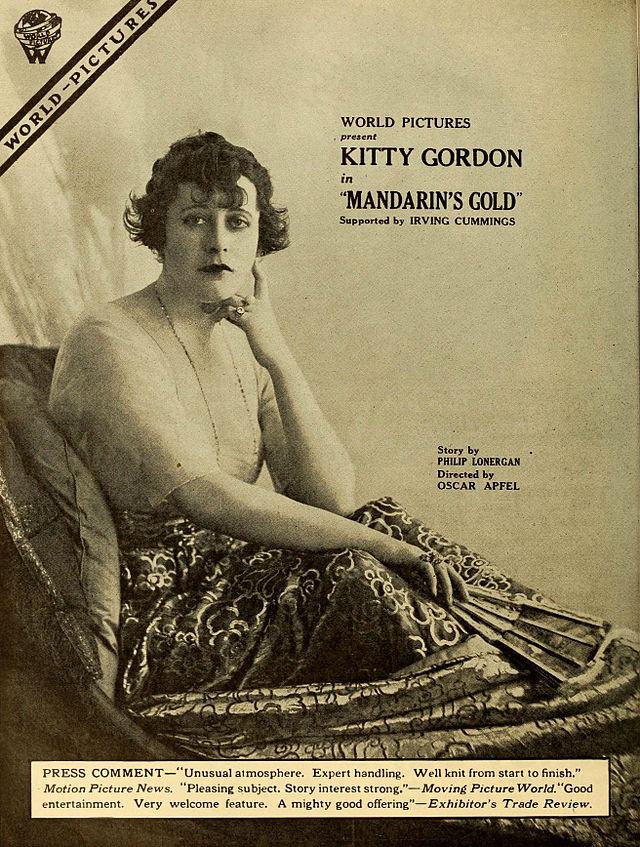
In the shimmering, often tumultuous landscape of early 20th-century cinema, certain films emerge not merely as entertainment but as potent cultural artifacts, reflecting the anxieties and evolving moral compass of their time. Mandarin's Gold stands as a compelling example, a narrative rich in melodramatic flourish yet underpinned by a surprisingly nuanced exploration of cross-cultural conflict, personal vice, and the redemptive power of self-confrontation. Penned by the insightful Lucien Hubbard and Philip Lonergan, this silent era drama, despite its occasional exoticism, delves into universal themes that resonate even today, challenging its audience to ponder the true cost of moral shortcuts and the insidious nature of temptation.
The film masterfully establishes a narrative duality from its inception, opening in an ancient, mystical China where a young boy pores over a legend – a tale of a mysterious woman wielding formidable power over a wealthy Mandarin prince. This evocative prologue immediately sets a tone of intrigue and foreshadows the intricate power dynamics that will unfold. The scene then dramatically shifts to the bustling, modern metropolis of New York, a stark contrast where socialite Betty Cardon, portrayed with captivating vivacity by Kitty Gordon, navigates the treacherous waters of high society gambling. Her husband, Blair, played by Irving Cummings, issues increasingly desperate warnings against her escalating bridge debts, yet Betty, blinded by the allure of the game and perhaps a subtle thrill of rebellion, continues to wager their financial stability. This stark juxtaposition of ancient lore and contemporary vice isn't merely stylistic; it's foundational to the film's thematic architecture, suggesting that the pursuit of power, whether through ancient magic or modern money, often leads to similar moral precipices. Betty's reckless flirtations with Geoffrey North, essayed by Tony Merlo, who sees her burgeoning debt as an opportunity for a far more intimate transaction, underscore the pervasive commodification of human relationships when financial desperation takes hold. The film expertly crafts a sense of escalating tension, pulling Betty deeper into a web of her own making, where her social charm becomes a dangerous currency.
The true dramatic catalyst arrives with Cherry Blossom, a Chinese girl brought to vivid life by Alice Lee, whose plight introduces a profound cross-cultural dimension. Fleeing a horrifying arranged marriage to the brutal Mandarin Li Hsun, depicted with menacing authority by Warner Oland, Cherry Blossom seeks refuge. Her introduction to Betty's world, facilitated by the compassionate mission worker Susan Pettigrew (Marion Barney), highlights the vast chasm between their respective realities. Cherry Blossom represents innocence threatened, a symbol of vulnerability caught between ancient traditions and the harsh realities of a new world. Her presence in Betty's privileged, yet morally compromised, home creates an uncomfortable mirror, forcing Betty to confront the potential consequences of her own self-indulgence. The weight of her gambling debts, combined with the sudden, desperate opportunity presented by Cherry Blossom's predicament, pushes Betty towards an unthinkable moral precipice. The film doesn't shy away from the ugly truth of her decision to accept Li Hsun's gold, an act of transactional betrayal that marks the narrative's darkest turn. This moment is not merely a plot point; it's a brutal examination of how desperation can erode ethical boundaries, transforming a seemingly benign socialite into an unwitting participant in a human trafficking scheme. The parallel between the legendary woman's power over the Mandarin prince and Betty's momentary, destructive power over Cherry Blossom's fate is subtle but impactful, emphasizing the film's cyclical view of human failings.
What follows Betty's fateful decision is a descent into a visceral nightmare, a sequence that elevates Mandarin's Gold beyond a simple melodrama. Overwhelmed by a gnawing guilt, Betty shadows Li Hsun and Cherry Blossom, bearing witness to a horrific scene of torture. Cherry Blossom, with unwavering resolve, endures unimaginable suffering rather than betray her lover, leading to a tragic double execution. This harrowing spectacle, rendered with a chilling intensity, is designed to be deeply unsettling, forcing the audience, and crucially Betty, to grapple with the brutal implications of her actions. The arrival of Blair with the police, culminating in Li Hsun's desperate, fatal attempt to escape, brings a semblance of external justice, but the true reckoning occurs in Blair's subsequent denunciation of Betty. His words, sharp and condemning, pierce through her self-deception, laying bare the moral abyss into which she has plunged. This entire sequence – the betrayal, the torture, the tragic deaths, the confrontation – is then revealed to be a powerful, purgative dream. This narrative device, while common in silent cinema (and seen in films like The Girl in the Dark where inner turmoil often manifested as externalized nightmares), is employed here with exceptional efficacy. It serves not as a cheap cop-out, but as a profound psychological tool, allowing Betty to experience the full, devastating weight of her potential choices without irreversible real-world consequences. The dream is a crucible, forging a new understanding within her.
Awakening from this nightmarish vision, Betty Cardon is a transformed woman. The vividness of her dream, the stark horror of Cherry Blossom's fate, and the profound shame of Blair's imagined condemnation act as a potent catalyst for genuine introspection. Her confession to Blair is not merely an admission of guilt but a pledge of fundamental change. She vows to abandon her gambling addiction, recognizing the perilous path it could lead her down. This resolution, born from such a visceral, imagined experience, lends a powerful emotional weight to her atonement. The film, therefore, transcends a simple cautionary tale about gambling; it becomes a meditation on the human capacity for self-deception and the profound impact of empathy. It argues that true redemption comes not from external punishment, but from an internal confrontation with one's own potential for harm. This psychological depth, particularly for a film of its era, is commendable and speaks to the foresight of its writers, Lucien Hubbard and Philip Lonergan.
The expressive power of silent film relied heavily on the nuanced performances of its cast, and Mandarin's Gold is no exception. Kitty Gordon delivers a compelling portrayal of Betty Cardon, capturing her initial flightiness and social charm with convincing elegance, then deftly transitioning to convey her growing desperation, guilt, and ultimate profound remorse. Her facial expressions and body language communicate a complex emotional arc, making Betty's transformation feel earned rather than abrupt. Irving Cummings as Blair Cardon provides a steady, moral anchor, his concern for Betty palpable, and his imagined denunciation in the dream sequence carries significant emotional punch. Warner Oland, a prolific actor often cast in Asian roles during this period (a practice that would be rightly criticized today but was unfortunately common then), imbues Li Hsun with a chilling, almost primal menace. His portrayal, while culturally problematic by modern standards, effectively conveys the character's brutality and power, essential for the dream's terrifying impact.
Alice Lee's performance as Cherry Blossom is particularly poignant. Despite limited screen time, she embodies the character's innocence, terror, and ultimately, her extraordinary courage. Her silent defiance in the face of torture is heartbreakingly powerful, a testament to her acting prowess. Other supporting players, including Charles Fang, Marguerite Gale, Joseph Lee, George MacQuarrie, and Veronica Lee, contribute to the film's rich tapestry, each adding depth to the bustling New York social scene or the exoticized Chinese setting. The ability of these actors to convey complex emotions and drive the narrative forward without dialogue is a true art form, demanding a physicality and expressiveness that modern cinema often foregoes. Their performances are crucial in bridging the cultural and moral divides presented in the story, making the fantastical elements of the dream feel grounded in Betty's psychological reality.
The directorial choices in Mandarin's Gold are indicative of the sophisticated visual storytelling that characterized the silent era. The film effectively uses intertitles not just to convey dialogue but to offer narrative exposition and emotional cues, guiding the audience through the intricate plot. The cinematography, while constrained by the technology of the time, skillfully captures the opulence of Betty's New York life and the stark, menacing atmosphere of Li Hsun's domain. Lighting is employed to great effect, particularly in the dream sequence, where shadows and dramatic contrasts enhance the sense of terror and moral unease. The pacing is deliberate, allowing moments of tension to build gradually, culminating in the shocking climax of the dream. The film’s visual style, typical of the period, relies on strong compositions and expressive close-ups to convey character motivations and emotional states. The stark contrast between the lavish Western settings and the more austere or exoticized Eastern ones is visually striking, even if the latter often falls into the trap of orientalism common in early Hollywood.
One might compare its visual narrative efficacy to other films of the period that tackled moral dilemmas or societal pressures. For instance, the dramatic tension built around a woman's precarious financial situation and the temptations she faces can be seen echoed in The Price Mark, where monetary value and human worth collide. Similarly, the exploration of a woman's agency, or lack thereof, in a restrictive social context, finds common ground with films like Her Great Chance or The Adventures of Kitty Cobb, though Mandarin's Gold takes a decidedly darker turn in its hypothetical consequences. The film’s ability to weave together disparate narrative threads – a Chinese legend, a New York social drama, and a profound moral crisis – speaks volumes about the ambition of its creators to craft a story with broad appeal and resonant themes. The use of the dream sequence, in particular, showcases a nascent understanding of psychological narrative, allowing the film to explore deeper emotional truths without resorting to overt didacticism.
Lucien Hubbard and Philip Lonergan, the credited writers, crafted a screenplay that, while firmly rooted in the melodramatic conventions of its era, manages to inject a surprising degree of psychological complexity. Their decision to frame Betty's ultimate redemption within a dream sequence is a stroke of narrative genius, allowing for a dramatic exploration of extreme consequences without permanently damning the protagonist. This approach reflects a societal fascination with morality plays, where transgressions are met with vivid, often terrifying, repercussions, yet also offers a path to absolution. The film's engagement with the 'Oriental' theme, while problematic through a contemporary lens due to its reliance on stereotypes and exoticism, was a common trope in early 20th-century Western cinema, often used to symbolize a 'barbaric' or 'mysterious' other against which Western 'civilization' could be contrasted. However, even within these confines, the writers attempt to imbue Cherry Blossom with agency and courage, making her sacrifice a powerful, if tragic, counterpoint to Betty's self-serving initial actions.
The film's exploration of gambling addiction, a prevalent social issue of the time, resonates with authenticity. Betty's inability to stop, despite her husband's pleas and her mounting debts, captures the insidious grip of such a vice. This theme can be observed in other contemporary works that tackled societal ills, such as The Good for Nothing, which might have explored different facets of moral decay. Mandarin's Gold, however, ties this personal failing to a larger geopolitical and cultural conflict, suggesting that individual moral lapses can have far-reaching, devastating consequences, even if only in the realm of the subconscious. The writers' ability to intertwine these disparate elements into a cohesive, albeit fantastical, narrative speaks to their skill in crafting compelling dramatic tension. The resolution, where Betty finally confesses and vows to change, provides a satisfying, if somewhat idealized, closure, emphasizing the era's belief in personal reform and the power of honesty.
While Mandarin's Gold might not be as widely celebrated as some of its silent era counterparts, its thoughtful narrative structure, compelling performances, and bold thematic explorations warrant its reconsideration. It serves as an important historical document, offering insights into the social anxieties, moral debates, and narrative conventions of its time. The film's willingness to delve into the darker aspects of human nature – greed, betrayal, and brutality – while ultimately offering a path to redemption, makes it a fascinating study. The use of the dream sequence, in particular, distinguishes it, demonstrating an early cinematic attempt at psychological depth that foreshadows more complex narrative techniques to come. Its blend of exotic intrigue with a very personal, domestic crisis creates a unique viewing experience, highlighting the universal struggle between temptation and conscience. As a piece of cinematic history, Mandarin's Gold remains a potent reminder of the silent film era's capacity for profound storytelling and its enduring ability to provoke thought and emotion, long after the last intertitle fades.
Review by a Human Blogger.
IMDb 6.1
1916
Community
Log in to comment.