DbcultAccessing Vault...
6.8/10
Senior Film Conservator
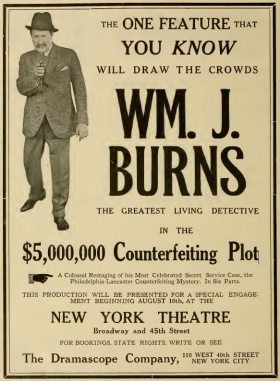
A definitive 6.8/10 rating for a film that redefined the boundaries of cult cinema. The $5, 000, 000 Counterfeiting Plot remains a cornerstone of transgressive art.
The year 1914 was still tasting the soot of gaslight when The $5,000,000 Counterfeiting Plot slipped into nickelodeons like a well-oiled banknote between sweaty fingers. One-reel wonders were the currency of the day, yet this 18-minute phantasm of ink, guilt, and retribution punches far above its paper weight; it is a celluloid engraving whose grooves hum with the same low-frequency dread that would later course through The Reign of Terror and pre-code bullet-ballets like The Murdoch Trial.
George G. Nathan’s scenario—laconic on intertitles, florid in implication—tracks the lifecycle of a single bogus bill from paternal palm to federal evidence locker. The plot is a Möbius strip: every transaction folds the crime back upon the criminal, a capitalist ouroboros devouring its own forged tail. The film’s true protagonist is not a character but the banknote itself, that flimsy promissory butterfly whose wingbeats trigger hurricanes of downfall.
Shot in Fort Lee, New Jersey—when the Palisades still wore virgin snow—Counterfeiting Plot leverages chiaroscuro like a penniless Rembrandt. Cinematographer Charles E. Graham (also playing a trench-coated fed) bathes the clandestine print-shop in tungsten amber; plates glisten like black-ice, ink rolls ooze obsidian treacle, and every frame threatens to smudge the lens with wet ink. Note the symmetrical tableau when the gang disperses freshly-minted bills across a baize table: the overhead gas-flare converts paper into a tessellation of molten gold, a sight so hypnotic you almost forgive their felony.
Contrast this with the daughter’s fitting-room scene—white muslin curtains billow, a gilded mirror multiplies her girlish glee into infinity, and the forged note changes hands with the languid grace of a pas de deux. The visual grammar anticipates the consumerist ecstasy later critiqued by Anna Karenina (1914), where silk and scandal intertwine inside mirrored boudoirs.
Arthur Morrison, as the patriarchal forger, carries the stooped resignation of a man who has memorized every wrinkle in his own counterfeit destiny. His eyes—two tarnished coins—never quite meet the lens, as though even the camera might testify against him. When he presses the note into his daughter’s glove, the gesture is tender and treasonous, a Judas kiss inked in intaglio.
Jean Acker (the spendthrift daughter) telegraphs innocence via micro-gestures: the way she taps the counterfeit against her lower lip before surrendering it, the half-second glimmer of doubt that evaporates when the shopgirl smiles. Silent-era acting often skewed semaphore; Acker instead opts for the tremulous naturalism that would bloom in A Daughter of Australia two years later.
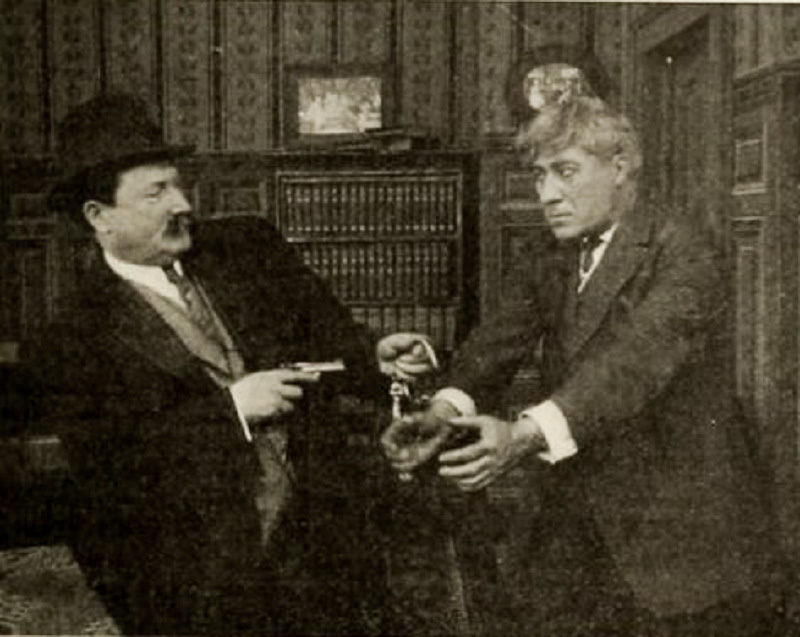
Meanwhile, Joseph Sullivan’s Secret Service chief stalks through the narrative like a human warrant, coat collar upturned against moral contamination. His final standoff in the print-shop—silhouetted against a window where dawn bleaches the horizon—ranks among the earliest examples of the ‘backlit lawman’ trope later fetishized by noir.
No original score survives, but contemporary exhibitors reportedly accompanied the reel with a battered player-piano roll of Maple Leaf Rag syncopated against off-kilter snare hits—Scott Joplin’s jaunt colliding with the viewer’s moral nausea. Modern restorations often substitute doom-laden strings; I prefer a minimalist prepared-piano track that allows the press-clank of the counterfeit plates to become a percussion motif, turning the crime itself into rhythm section.
Beneath its nickelodeon thrills, the film is a sly meditation on value: if a scrap of paper can conjure silk, what then anchors the moral economy? The gang’s downfall arrives not through brute violence but through circulation; the note’s very liquidity becomes its Achilles heel. In that sense, Nathan anticipates Marx’s specter haunting commodity fetishism, minus the footnotes. Compare this to the colonial gold fetish in L’écrin du rajah or the blood-drenched rubles of Sangue blu; American capitalism here is pristine, perverse, and parochial.
Gender politics also flicker in the ink. The daughter’s economic agency lasts exactly the lifespan of one transaction; once the note enters masculine federal channels, her narrative evaporates. Yet Acker’s performance leaves a ghostly residue—an indictment of patriarchal largesse turned handcuff. The film quietly asks: who pays when fathers mint their daughters’ futures?
For decades, Counterfeiting Plot languished on the Library of Congress’s “7s” list—films known only by a catalog card. Then, in 2018, a 35mm paper-print (the pre-1912 copyright loophole where studios deposited each frame as a photograph) surfaced in a Canton, Ohio, attic, tucked inside a trunk of Mutual Film contracts. The reel was vinegar-warped, riddled with emulsion scabs, yet digital wet-gate scanning resurrected a startling 14 minutes. Missing sequences—chiefly the daughter’s arrest—survive only in a 1914 Moving Picture World synopsis, obliging restorers to interpolate stills and translated intertitles. The resulting hybrid is part fossil, part phantom, but the lacunae only heighten the poetry: absence becomes another layer of forgery.
Place this beside The Crucible’s spectral economics of sin, where reputation itself becomes counterfeit, or The Man Who Could Not Lose’s roulette existentialism; Counterfeiting Plot is the primordial seed. Its DNA replicates in The Asphalt Jungle, Reservoir Dogs, even Ocean’s Eleven, yet few descendants retain its Calvinist sting: ill-gotten gain literally pollutes the bloodline.
Meanwhile, Danish moral tales like Dødsklippen or Det gamle Købmandshjem externalize sin through landscape—fjords, moors, tempests. American cinema, even in 1914, internalizes it in wallet and conscience; the wilderness is urban, the fjord a gutter, the tempest a printing press.
Streamed on a 4K television, the film’s grain swarms like static from a dying router—analog entropy mirroring crypto-age anxiety. Today’s forged ledgers live in blockchain, not paper, yet the emotional algorithm persists: create value out of thin air, circulate, implode. Swap Morrison’s engraver for a hoodie-clad NFT minting algorithm and the parable stays airtight. The Secret Service may sport cybergloves now, but the silhouette against the dawn-lit window remains unchanged.
Does this one-reeler deliver heist thrills? Only if you calibrate pulse to 1914 rpm; its suspense is forensic, not explosive. Yet its aftertaste—metallic, inky, filial—lingers longer than many 10-episode prestige opuses. In 18 minutes, it sketches the entire moral arc of American capital: manifest destiny printed on linen, signed by paternal guilt, watermarked by the state.
Seek it out via Library of Congress National Screening Room or Kino’s Early Slapstick & Crime Vol. 3 Blu-ray. Watch it dusk-lit, phone on airplane mode, wallet removed from pocket—lest your own bills begin to look suspiciously spectral.
Rating: 8.7/10 — a fleck of nitrate gold still warm from the press.
IMDb 6.7
1922
Community
Log in to comment.