DbcultAccessing Vault...
3/10
Senior Film Conservator
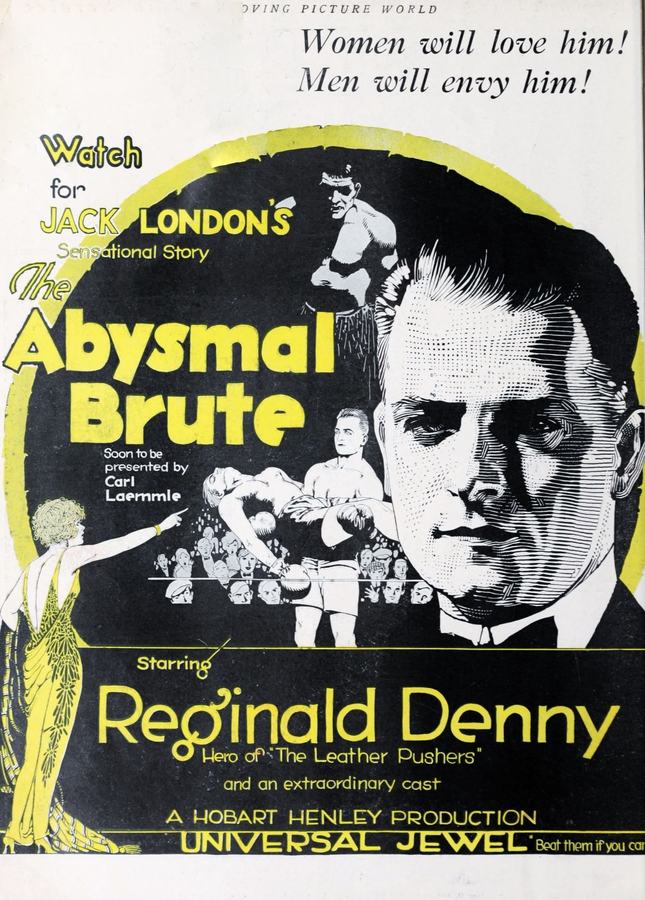
A definitive 3/10 rating for a film that redefined the boundaries of cult cinema. The Abysmal Brute remains a cornerstone of transgressive art.
The cinematic translation of Jack London’s literary output has often struggled to encapsulate the author's specific brand of atavistic philosophy—the idea that beneath the starched collars of modernity beats the heart of a prehistoric survivor. However, in the 1923 adaptation of The Abysmal Brute, we find a rare alignment of physical performance and thematic resonance. This isn't merely a boxing picture; it is a sociological document that interrogates the friction between the buclic sanctuary of the mountains and the meretricious glitter of San Francisco’s high society. The film posits the protagonist, Pat Glendon Jr., as a tabula rasa upon which the corrupting influences of the city attempt to write a narrative of savagery, only to find a stubborn, innate purity that refuses to be tarnished.
Reginald Denny, an actor often associated with lighthearted urbanity, undergoes a transformative shift here. His portrayal of Glendon is a masterclass in silent communication, utilizing a physicality that feels heavy, grounded, and entirely distinct from the frantic energy of his contemporaries. When we first encounter him in the rugged topography of his mountain home, he is a creature of the landscape. Unlike the protagonists in The Man from Oregon, who often carry the weight of external missions, Glendon is a man of internal stillness. His strength is not presented as a tool for conquest, but as a natural extension of his environment—a biological inevitability born of clean air and hard labor.
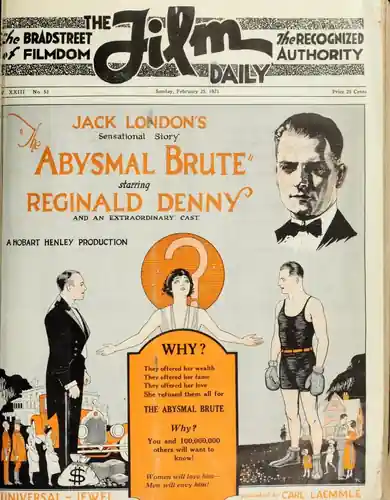
The script, penned by Andrew Percival Younger, wisely lingers on this introductory phase. It establishes a baseline of innocence that makes his subsequent entry into the 'civilized' world feel like a genuine violation. The boxing ring, usually a place of regulated violence, is depicted here as a stage for a grotesque performance. The promoters and the public don’t want a man; they want the 'Abysmal Brute.' They crave a caricature of the wild that they can safely consume from the bleachers. This dynamic creates a poignant irony: the man from the wilderness is the only civilized person in the room, while the city dwellers are the ones exhibiting the traits of a pack of scavengers.
The introduction of Maude Sangster, played with a sophisticated luminosity by Mabel Julienne Scott, shifts the film from a sports drama into a complex study of class and desire. The rescue scene—a staple of the era—is handled with a surprising lack of melodrama, focusing instead on the immediate, visceral connection between two people from diametrically opposed worlds. In many ways, this romantic entanglement mirrors the tensions found in The Monk and the Woman, where the purity of isolation is challenged by the irresistible pull of human intimacy. For Glendon, Maude represents the best of the world he doesn't understand, while his rival suitor represents the worst.
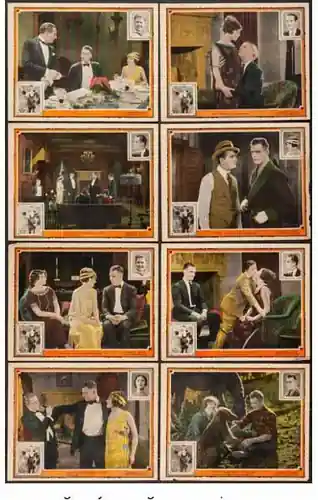
"The tragedy of the Abysmal Brute is not that he is too violent for the parlor, but that the parlor is too deceptive for his honesty."
The rivalry for Maude’s affections is where the film’s critique of social etiquette becomes most biting. The rival suitor does not challenge Glendon on the field of physical prowess—he knows he would be obliterated. Instead, he shifts the battlefield to the realm of sophistry and social codes. He uses Glendon’s lack of familiarity with the 'rules' of the elite to make him appear buffoonish. It is a subtle form of violence that the film captures with remarkable clarity. We see Glendon’s confusion not as a lack of intelligence, but as a refusal to engage in the performative lies that define the upper class. This theme of being 'out of one's league' is a recurring motif in silent cinema, often seen in works like A Small Town Idol, though here it is stripped of its comedic shield and presented as a raw emotional vulnerability.
When the film finally moves into the high-stakes boxing matches of San Francisco, the cinematography takes on a shadowy, almost noir-like quality. The contrast between the sun-drenched mountains of the first act and the smoke-filled, claustrophobic arenas of the second is stark. The boxing sequences themselves are choreographed with a realism that rivals the intensity found in Blood and Sand, though the stakes here feel more personal than the operatic tragedy of the bullring. Denny’s movements are economical and powerful; he doesn't box like a movie star, he boxes like a man who was taught by a veteran of the bare-knuckle era.
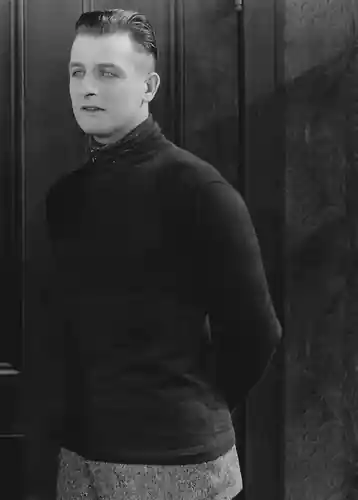
The moniker 'The Abysmal Brute' becomes a central point of contention. It is a label forced upon him by a society that needs to categorize his strength as something monstrous so they can justify their fascination with it. Throughout the film, we see Glendon grappling with this identity. Is he the man his father raised in the silence of the peaks, or is he the monster the city sees? This internal conflict is what elevates the film above the standard 'from rags to riches' sports narrative. It is a search for self in a world that is determined to sell a version of you that you don't recognize.
To understand the impact of The Abysmal Brute, one must look at how masculinity was being constructed in the early 1920s. We see echoes of this struggle in No Man's Land, where the protagonist is forced into a landscape where social rules no longer apply. However, Glendon's journey is the inverse: he starts in a place where rules are unnecessary and enters a world where they are everything. His inability to adapt is his greatest strength, a concept that subverts the traditional American 'success' story. Even in films like The Challenge of Chance, there is a sense that the hero must eventually integrate into the social order to find happiness. Glendon, conversely, suggests that the only way to remain whole is to reject the social order entirely.
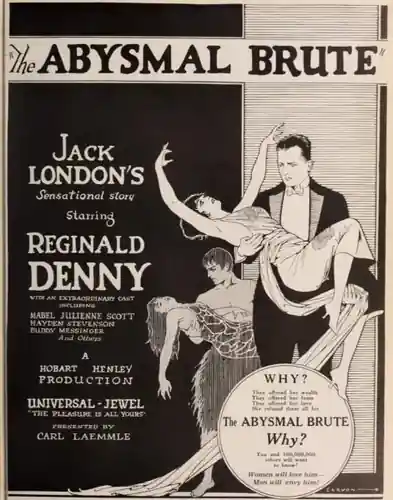
The supporting cast provides a necessary texture to this world. David Torrence and Charles K. French bring a gravitas to the older generation, representing the ghosts of a harder, perhaps more honest, era of physical competition. Their presence serves as a reminder that Glendon is not an anomaly, but a remnant of a dying breed. Meanwhile, the presence of Bess Flowers and Crauford Kent in the socialite circles highlights the vacuity that Maude is trying to escape. The film cleverly uses these secondary characters to create a sense of scale, making Glendon’s isolation feel even more profound.
Visually, the film utilizes light as a metaphor for truth. The mountain sequences are shot with a high-key brilliance that emphasizes the clarity of Glendon’s life. As he moves into the city, the shadows lengthen, and the frames become more crowded. This visual density reflects the psychological clutter of the urban experience. It is a technique we see explored in more experimental European films of the time, such as Torgus, but here it is applied to a quintessentially American story. The editing during the fight scenes is particularly noteworthy for its time, using rhythmic cuts to build tension rather than relying solely on the spectacle of the punches.
Even the quieter moments, such as Glendon’s awkward attempts to navigate a dinner party, are filmed with a focus on his hands and eyes—the tools of his trade that are now useless. This focus on the 'wrong' tools for the job creates a palpable sense of empathy. We aren't laughing at his social blunders; we are mourning the loss of his dignity in a space that doesn't value his true worth. This is a far cry from the slapstick social failures found in Torchy in High or the lighthearted romance of The Gift Girl.
Ultimately, The Abysmal Brute succeeds because it refuses to provide an easy reconciliation between its two worlds. It understands that the 'brute' and the 'socialite' can love each other, but they cannot inhabit each other's spaces without something breaking. It is a film about the cost of authenticity in an age of artifice. While it shares some DNA with the melodramatic flourishes of Green Eyes or the high-seas adventure of Crimson Shoals, it remains uniquely grounded in a philosophical inquiry into the nature of man.
As a piece of silent cinema, it stands as a testament to the power of the face and the body to convey complex social critiques without the need for spoken dialogue. Reginald Denny’s Glendon is a silent titan, a man whose very existence is a challenge to the viewer to consider what we have lost in our pursuit of 'civilization.' In the end, the 'Abysmal Brute' is not the man in the ring, but the society that demands he be there for their entertainment. It is a haunting, powerful work that remains as relevant today as it was in 1923, reminding us that the most profound battles are not won with fists, but with the courage to remain true to one's own nature in a world that demands we change.
IMDb —
1931
Community
Log in to comment.