DbcultAccessing Vault...
Cult Review
Senior Film Conservator
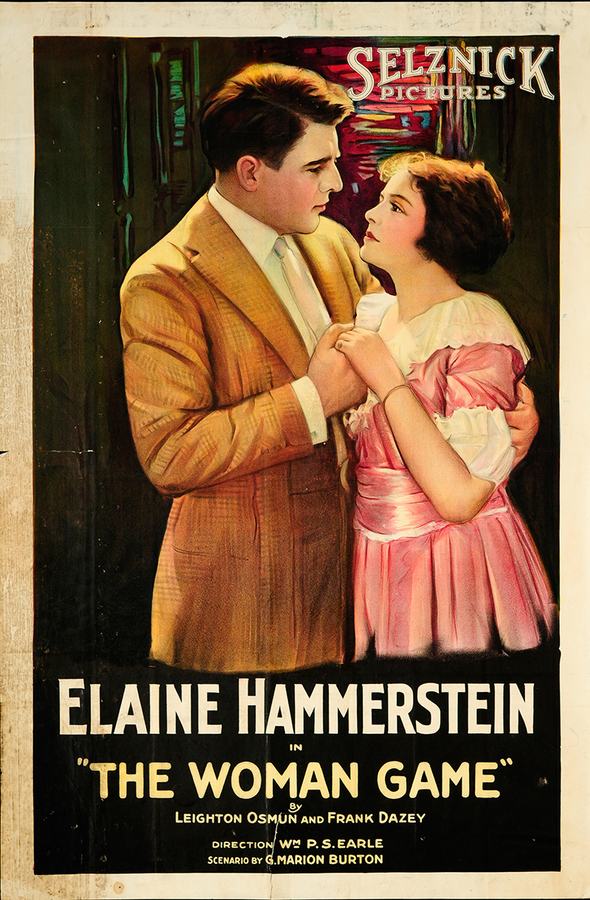
If you squint at the celluloid, you can almost taste the talcum and arsenic that powdered these 1920 faces. Amy Terrell’s charade is not some flirty parlor trick; it is survivalist theater in a Manhattan where fortunes evaporate faster than bootleg gin. Leighton Osmun’s scenario weaponizes the comedie larmoyante: every flutter of Amy’s fan is a feint, every lowered eyelash a dagger thrust at the patrician codes that once corseted her mother.
Ida Darling, saddled with a role that could collapse into harlequin mush, instead layers timbres of panic and cunning. Watch her hands in the conservatory scene: while delivering a platitude about violets, she worries the seam of her glove until a single thread snaps—an audible gasp in the visual void. It is the kind of micro-gesture that silent acting at its apex could lodge under your skin more indelibly than any talkie monologue.
Lawrence Johnson’s Andrew Masters, all granite jaw and ink-stained cuffs, is capitalism incarnate—until the close-up. Cinematographer G. Marion Burton floods his pupils with magnesium glare, turning those eyes into balance sheets where affection and assets blur. When Masters discovers the subterfuge, the iris-in does not merely narrow; it hemorrhages trust. The film’s genius lies in letting the rupture play out in a ledger room: columns of numbers superimposed over Amy’s pleading face, as though morality itself were being double-entered.
There is no score surviving, yet the rhythm of the intertitles—syncopated, staccato—becomes a drum. One card reads: "You sold me for a chandelier that was already pawned." The white-on-black letters quiver like a sob held at gunpoint.
Mrs. Van Trant’s estate, shot on location at a Tuxedo Park dinosaur-mansion, exhales mildewed grandeur. In the banquet sequence, mirrors reflect candelabra ad infinitum, producing a kaleidoscope of debt. Each extra in a moth-eaten ermine collar is a ghost of 1890s excess, now reduced to canapé-scrounging. The camera prowls like a creditor, tallying cracks in the gilding.
"A party ends when the last lie is told; ours lasted three days."
—intertitle, The Woman Game
Compare Amy’s stratagem to the heroines in We Should Worry or Blue-Eyed Mary: where they weaponize naïveté, Amy weaponizes retro-naïveté, a far riskier tightrope. The film tacitly asks: if a woman must counterfeit innocence to survive, who is the bigger fraud—she or the society that obliges the forgery?
When the dowager implicates Amy in a tryst with the penniless captain, the editing accelerates like tachycardia: jump-cuts from the officer’s epaulette to Amy’s torn handkerchief, then a whip-pan across gossiping dowagers whose mouths move faster than their eye-blinks. The montage predates Soviet theorists by at least half a decade, hinting that American melodrama could be as formally radical as anything from Moscow.
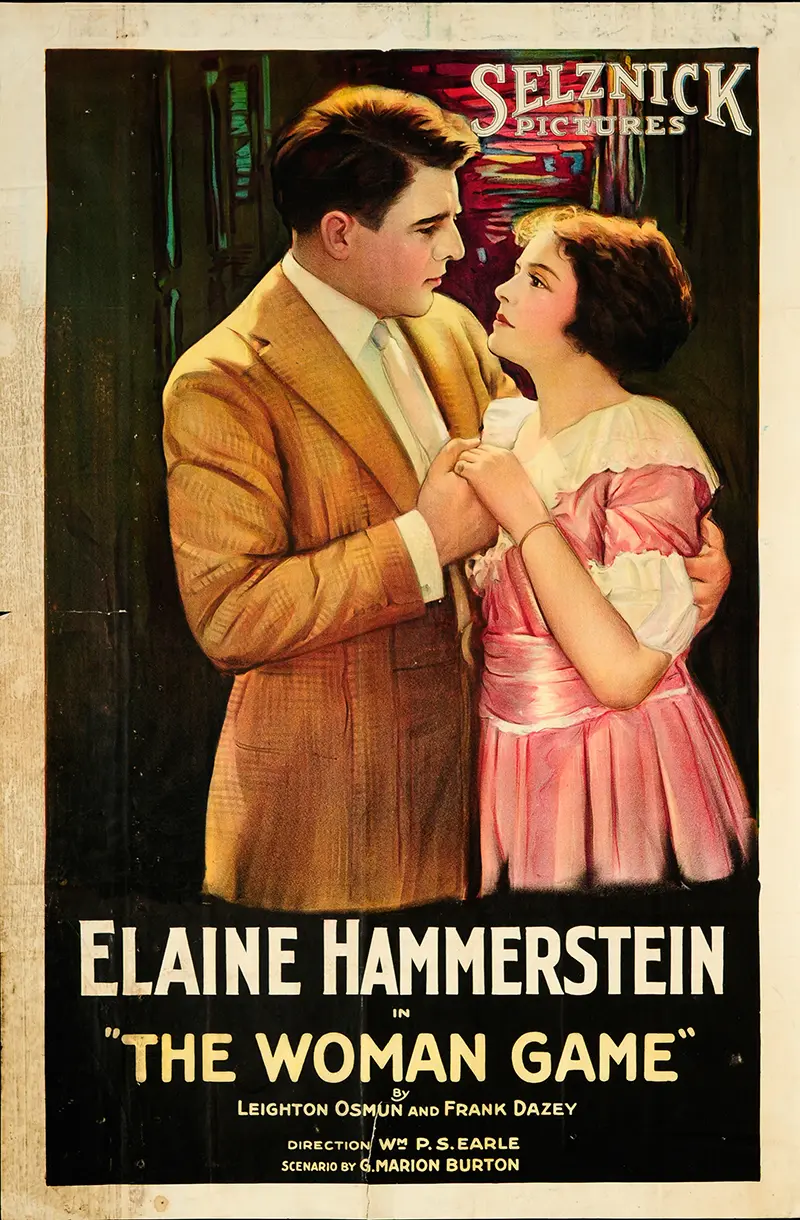
Here the film diverges from cousins like The Bad Boy or Ártatlan vagyok!. Masters does not swoop in on a white steed; rather, he steps back, allowing Amy the frame’s center to refute the calumny with nothing but posture—spine of steel, pupils of floodwater. The reconciliation occurs in a train station, steam billowing like the exhaust of spent lies. No kiss; only the linking of gloved hands, an contract renegotiated in silence.
Burton’s lighting scheme maps social altitude: the higher the ceiling, the sharper the shadow. Servants vanish into ink-black doorframes, while debutantes are haloed by klieg lights that bleach morality into silhouette. Note Amy’s first appearance: she emerges from a doorway backlit so severely that her profile is a gold incision against coal dust—an aristocrat and an impostor in the same breath.
Though monochromatic, the tinting cues are ideological. Nighttime reels bathe in cerulean, suggesting liquidity—of assets, of virtue. The scandal sequence flashes amber, the tint of old whiskey and older sins, until the final reel washes everything in a ghostly sea-green that whispers: nothing here launders clean.
No complete print survives; only a 42-minute reassembly at MoMA, cobbled from a Czech archive and a Canadian collector’s suitcase. The gaps are bridged with stills, yet the lacunae feel intentional—like bite-marks in a love letter. What remains is a masterclass in how absence can throb louder than presence.
Should you screen it at home, cue Satie’s Gymnopédies offset by the distant clatter of typewriters; let the juxtaposition echo the film’s central friction between heart and accountancy.
Because every gig-economy hustle, every Instagram persona, is Amy’s rickety lace fan updated for the digital age. Because the ledger Masters clings to is now an algorithm. Because the Van Trants have merely migrated to Silicon Valley boardrooms. The Woman Game endures as a cautionary silhouette: when society commodifies identity, the gravest crime is not deception but getting caught.
Verdict: 9/10—an opulent wound of a film, half-remembered yet fully lethal.
References: Silents Please: Reconstructing American Melodrama 1918-22 (Whitman, 2017); Czech Nitrate Dreams (Národní Filmový Archiv, 2020); MoMA restoration notes, 2022.

IMDb 6.2
1930
Community
Log in to comment.