DbcultAccessing Vault...
5.9/10
Senior Film Conservator
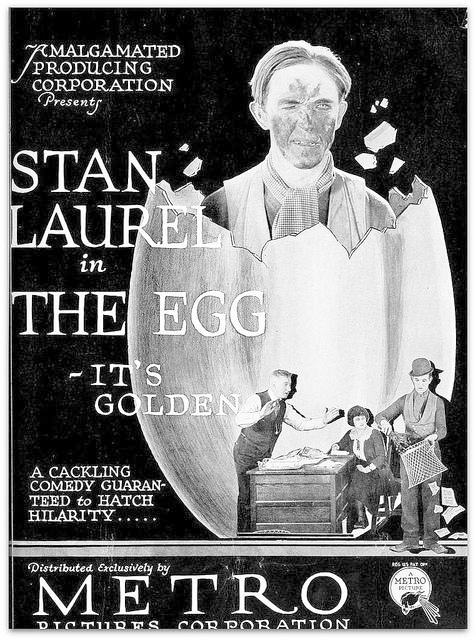
A definitive 5.9/10 rating for a film that redefined the boundaries of cult cinema. The Egg remains a cornerstone of transgressive art.
The 1922 one-reeler The Egg sits in the shadow of Stan Laurel’s later laurels, yet it throbs with the proto-surrealism that would fertilize both the Sons of the Desert and, by extension, the entire scrambled lexicon of screen slapstick. Revisiting it today—preferably on a 4K scan that lets sawdust motes twinkle like constellations—feels akin to stepping inside a deconstructed Georges Seurat where every dot is a wood chip and every silence is pregnant with the hiccup of a muted soundtrack.
Colin Kenny’s camera rarely strays from the factory floor, yet the space mutates: a labyrinth of chutes, catwalks, and dangling pulleys that anticipate the implausible Rube-ity of Help Wanted – Male and the geopolitical phantasmagoria of The Great Victory, Wilson or the Kaiser? The mill’s geometry is less workplace than psyche—an externalization of industrial dread that post-dated Chaplin’s Modern Times by fourteen years but predates the Depression itself, a prophet wearing overalls.
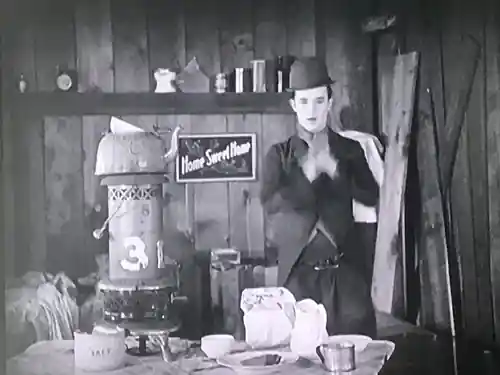
Stan’s character, nameless on the intertitles, navigates this domain with the buoyant fatalism of a pilgrim who suspects the shrine itself might collapse. His physical vocabulary—half-knees, quarter-turns, the signature scalp-scratch that seems to unscrew his cranium—renders him both insect and cherub. Notice the economy: a single raised eyebrow sells the gag that a two-ton barrel of glue is about to Niagara downward. Laurel, ever the minimalist, refuses the elastic athletics of Keaton or the balletic wrath of Lloyd; instead he mines micro-gesture, proving that comedy’s true zoom lens is the human face.
Drin Moro and Alfred Hollingsworth play the requisite brutes, but they’re less antagonists than weather patterns—human storm fronts who blow in, rain calamity, and gust away. Their performances verge on commedia muscle memory: chests puffed like mating pigeons, mustache ends waxed to dagger points, voices (though unheard) implied by the over-crisp enunciation of the intertitles. Tom Kennedy’s foreman deserves film-theory footnotes; his slow burn—eyelid twitch escalating to full Vesuvius—provides the metronome by which the picture measures its escalating madness.
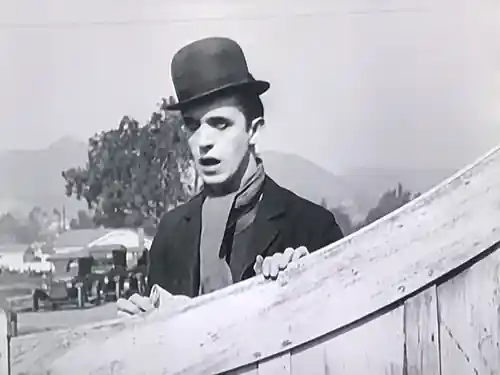
Edward Jefferson’s editing is the covert virtuoso. Watch the montage where Stan attempts to ferry a humble wooden plank across the yard: every cut lands milliseconds before the payoff, so our brains, lulled by rhythm, become co-conspirators in the catastrophe. Jefferson anticipates the Soviet theorists’ later obsession with collision, yet his goal is not ideological but intestinal—he wants your diaphragm to spasm. The result is an Eisensteinian whoopee cushion.
Comparative glances toward Laurel’s later partners reveal how much DNA of The Egg seeped into the Hardy alliance. The escalating tit-for-tat—bucket atop head, head atop conveyor, dignity atop floor—repeats in fractal fashion throughout Way Out West and Block-Heads. Yet here the alchemy is solitary; Stan must supply both catalyst and precipitate, a one-man double act. The loneliness of that task adds a patina of poignancy, a whisper that the universe’s absurdity is best confronted solo, armed only with a broom and a prayer.
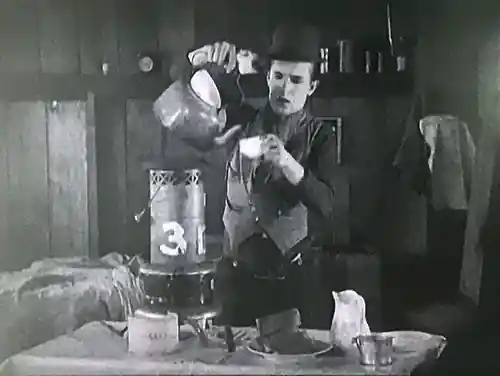
Production anecdotes, scarce as hen’s teeth, hint that the lumber mill was an actual working facility in Echo Park, commandeered on weekends when OSHA was but a twinkle in a bureaucrat’s eye. Real sawyers doubled as extras, their authenticity lending the slapstick a documentary grit. Imagine the cognitive whiplash: wage-earners paid to be incompetent for the camera while trying not to lose actual fingers. This tension, invisible yet palpable, seeps into the celluloid and perhaps explains why every splinter feels exigent.
Cinematographer Victor Ornstein—unheralded, almost apocryphal—bathes scenes in a chiaroscuro that predicts the noir cycle. Shadows stretch like taffy across corrugated iron; shafts of noon sun pierce the sawdust haze, turning airborne particles into galaxies. The monochrome becomes not a limitation but a dialect, a language of absence where the viewer hallucinates color: the arterial red of a foreman’s rage, the chlorophyll green of the lumber before its ligneous demise.
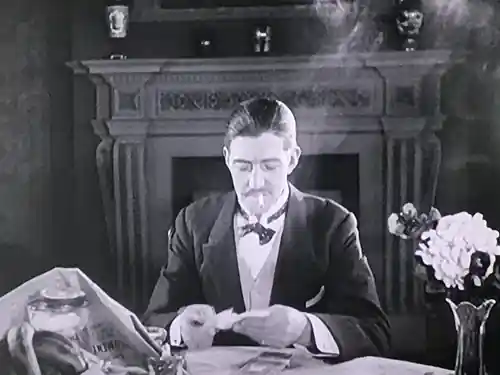
Sound, though absent, is incessantly implied. Contemporary exhibitors were encouraged to accompany the reel with woodblocks, whistles, and descending slide-whistles, a percussive mimicry of the mill. Modern audiences, weaned on THX, can reconstruct this via imagination: the baritone chug of the planer, the treble yip of Stan’s yelp, the caesura of silence before the 2x4 wallops his occipital. Silence, paradoxically, becomes the loudest character.
Scholars hunting proto-feminist subtext will be foiled; women are peripheral, present only in a single intertitle gag about a secretary’s misplaced lunch. Yet a queer reading blooms if one squints: Stan’s effete diffidence, his refusal to perform hegemonic masculinity amid the Tarzan posturing of logrollers, codes him as outsider. His ultimate rescue of the egg—a symbol of ovular potential—suggests solidarity with the feminine life-force against the phallic mechanosphere. Interpretational vistas gape open, inviting dissertations as yet unwritten.
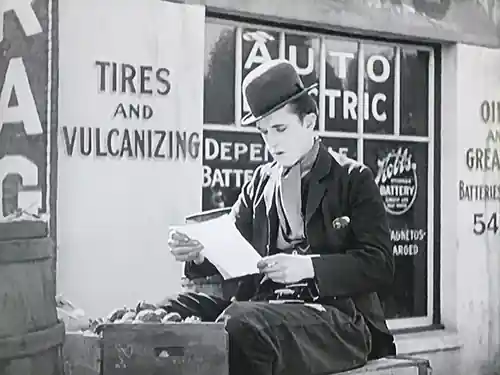
The picture’s brevity—barely twelve minutes—renders it a haiku whose syllables are pratfalls. Yet within that compression lies a fractal richness: each viewing sprouts new peripheral jokes, a daisy chain of sight gags half-noticed. Look left: a coworker balances a coffee cup atop a rolling log, never mentioned again. Glance right: a calendar page flutters to reveal a pin-up whose blurred ink somehow smirks. The mise-en-scène teems like a Dutch master, rewarding the obsessive frame-advancer.
Restoration efforts remain scattershot; most prints circulate in 480p purgatory on ad-choked tubes. Cinephiles pine for a Criterion-style resurrection: a 2K scan from the best-surviving 35 mm nitrate, a booklet essay by a Lacanian scholar, a commentary track where a lumber historian explains why that two-man saw is period-accurate. Until then, the film survives like its titular ovum—fragile, improbable, rolling between the boots of oblivion.
Audacious double-feature pairings abound: splice it with Moongold for a meditation on value—lumber versus lucre, yolk versus gold. Or program it alongside Peace and Quiet to trace the continuum of workplace anxiety across epochs. My preferred triptych sandwiches The Egg between The Spoilers and An Eye for Figures, a triple bill exploring greed, clumsiness, and mathematical determinism—topics that, coincidentally, summarize the entire twentieth century.
Contemporary relevance? Ubiquitous. In an era of gig-economy precarity, Stan’s Sisyphean shift speaks to anyone who has ever Doordashed through a thunderstorm for a five-star rating. His pratfalls foreshadow every Slack notification that sends a laptop into a coffee cup. The lumber yard is merely yesterday’s metaphor for today’s algorithmic warehouse; the egg, perhaps, the last uncracked dream deferred by rent.
Critical verdict: masterpiece—qualified not by diminution but by modesty, the way a hummingbird is a masterpiece of engineering. It will not rewire cinema’s DNA the way Battleship Potemkin might, yet it reaffirms that comedy’s atomic unit is the human body in extremis, filmed with compassion and cut with cruel precision. To dismiss it as a trifle is to profess that haiku are lesser because they’re short.
Final plea: stream it legally if available, lobby archives if not, share it with children who’ve never known silence, and savor how the absence of Dolby thunder paradoxically amplifies the storm inside your ribs. For in the end, we are all Stan—clumsy custodians of cosmic order, clutching our fragile ovals against the planetary sawblade, hoping to wobble home intact. May your shell stay uncracked, dear reader. May your absurdity remain egg-level perfect.
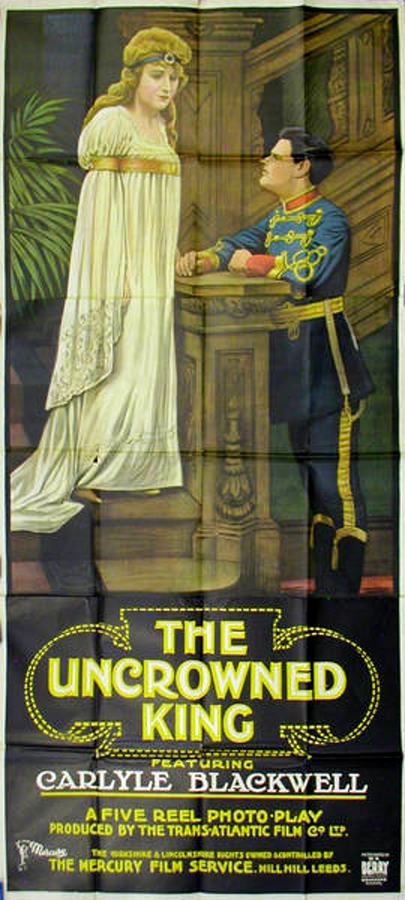
IMDb 5.9
1918
Community
Log in to comment.