DbcultAccessing Vault...
6.8/10
Senior Film Conservator
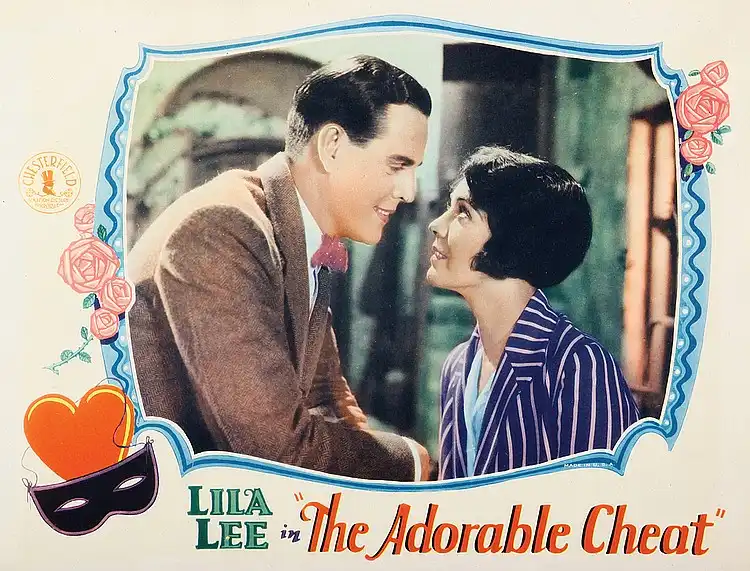
A definitive 6.8/10 rating for a film that redefined the boundaries of cult cinema. The Adorable Cheat remains a cornerstone of transgressive art.
The Adorable Cheat, a silent film from 1928, is a peculiar little time capsule. If you're someone who genuinely enjoys digging into the quirks of early cinema, who can appreciate melodramatic acting and a plot that telegraphs its every move a mile off, then maybe, just maybe, you'll find some quaint amusement here. For anyone else expecting anything resembling modern storytelling, or even the more sophisticated silent dramas, this one's probably going to feel like a very long hour and ten minutes.
The opening scene, where Burr McIntosh as the industrialist father, Mr. Van Dyne, huffs and puffs about his daughter's business ambitions, sets the tone pretty quickly. His hand gestures are so broad, so perfectly silent film dad, you almost expect a cartoon thought bubble to appear over his head saying "Women belong in the home!" It's not subtle, not by a long shot, but there's a certain charm to that bluntness sometimes.
Lila Lee, playing the daughter, Babs, tries to project this fierce independence, but there are moments, especially early on, where her expressions feel a bit... practiced. Like she’s hitting specific marks for the camera rather than genuinely reacting. It’s hard to tell if that's the performance or just how these things were directed back then. The film really wants you to see her as this plucky, modern woman, but the visual language often leans into something more conventional.
Her decision to disguise herself as a "working girl" is, well, adorable in its lack of conviction. She shows up at the factory in what looks like a slightly less fancy version of her regular clothes. No grime, no worn-out shoes. It’s the kind of movie logic you just have to roll with. The factory floor itself is interesting – a lot of busy extras who aren't really doing much, just moving things around or pretending to operate machinery that clearly isn't plugged in. It creates this odd sense of controlled chaos, a stage set rather than a real workplace.
Then there's Cornelius Keefe as the clerk, Jimmy. He's got this easygoing presence that really grounds the film a bit. His smile feels genuine, a welcome contrast to some of the more theatrical emoting going on. Their initial interactions, when Babs is trying to act all tough and experienced, are the strongest parts. You actually get a sense of chemistry there, a playful back-and-forth that transcends the title cards.
The pacing in the middle section, once Babs and Jimmy are working side-by-side, feels a little drawn out. There's a sequence where they're just... sorting papers. And it goes on for a while. You understand they're building rapport, but it could have been trimmed by half and lost nothing. It’s one of those silent film stretches where you almost feel the director saying, "Okay, let's hold this for another 15 seconds, just to make sure they get it."
The wastrel brother, played by Reginald Sheffield, is a caricature. He swans around in a smoking jacket, constantly asking for money. There's one shot where he's casually tossing coins in the air while his father rages about business, and it’s a great little visual shorthand for his utter uselessness. No dialogue needed, just that dismissive flick of the wrist.
When Jimmy is brought home to meet the family, the whole tone shifts again. It moves from light romance to drawing-room drama, and it feels a bit clunky. The robbery itself happens almost too quickly, and the way the evidence piles up against Jimmy is so heavy-handed. You can almost hear the gears of the plot grinding into place. One shot, in particular, where a piece of "evidence" is dramatically revealed, lingers for a beat too long, and it almost becomes funny. The dramatic tension the film is trying to build just doesn't quite land because of it.
The reactions of the family during the accusation scene are a masterclass in silent film overacting. Lila Lee is tearing her hair, Burr McIntosh is apoplectic, and Reginald Sheffield just looks smug. It's a lot. You watch it and think, "Okay, I get it, he's innocent, they're wrong." The film really trusts its audience to get the obvious emotional beats.
One detail that stuck with me was the consistent crispness of everyone's clothing, even in the "factory." It’s a small thing, but it just reinforces how much of a fantasy the whole setup is. No one ever looks truly disheveled, even in moments of high drama.
Is The Goat a better silent film experience? Probably. Does this one offer anything unique? Its earnestness, maybe. There's an innocence to its storytelling, despite the heavy-handedness. It’s a film that wants to entertain you with a simple story, and if you approach it with that understanding, you might find some quiet enjoyment in its anachronisms. It’s not a masterpiece, not by any stretch, but it’s a piece of film history, and sometimes, that’s enough.
The ending wraps things up neatly, as you'd expect. No real surprises, but a satisfying conclusion for its time. It’s less about the cleverness of the plot and more about watching the machinations play out.
IMDb 5.4
1922
Community
Log in to comment.