DbcultAccessing Vault...
5.6/10
Senior Film Conservator
A definitive 5.6/10 rating for a film that redefined the boundaries of cult cinema. Any Old Port remains a cornerstone of transgressive art.
Let the talkies keep their chatter; this briny 1923 curiosity proves that flickering gestures, title cards sharp enough to shave with, and a well-timed pratfall can still out-argue a thousand words of dialogue.
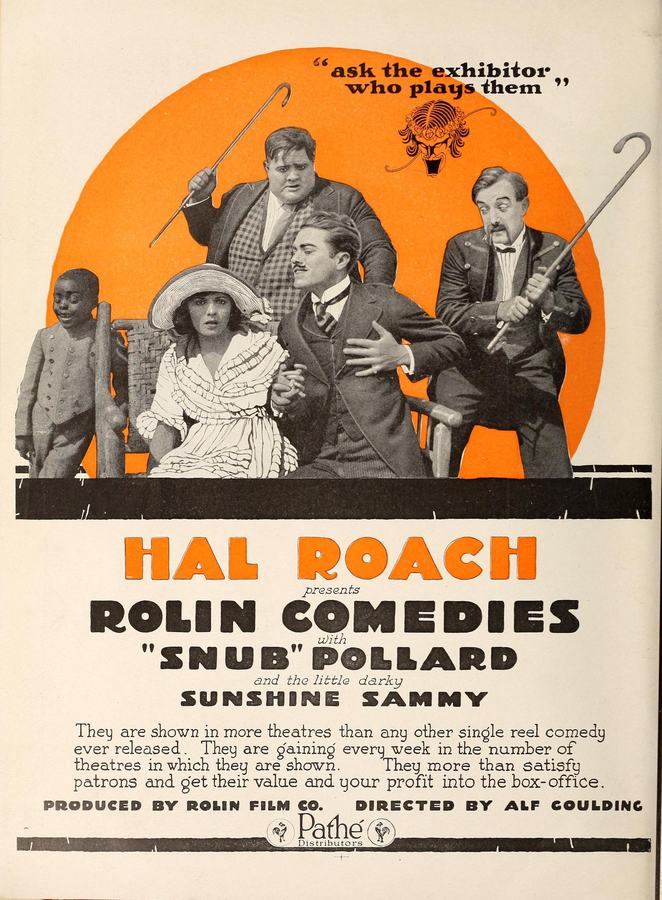
Any Old Port belongs to that fleeting moment when Hollywood, drunk on the possibilities of short-length storytelling, distilled entire operettas of libido into two-reel shots of espresso. Director-humorist Snub Pollard—also moonlighting as the captain’s hapless mate—crowds every frame with so many swinging doors, sliding ladders, and revolving portholes that the schooner feels like a Swiss watch designed by a drunken satyr. The plot, gossamer-thin on paper, becomes a Rube Goldberg contraption once set in motion: each flirtatious wink triggers a lever of misunderstanding, which releases a pendulum of revenge, which ultimately clubs everyone aboard into slapstick nirvana.
What elevates the picture above the flood of similar woman-in-every-port romps is its architectural wit. Cinematographer George Rowe shoots the vessel like a cubist fever dream: cargo holds yawn into cathedral darkness, while the deck—framed in looming orthogonals—shrinks into a stage where every gesture is magnified. When Captain Dandy (William Gillespie) attempts to smuggle his latest conquest into a lifeboat for a moment of privacy, the camera lingers on a rope that lazily unspools in the background, a visual pun foreshadowing the marital noose tightening around his neck. Silent comedy lives or dies on such spatial puns, and here they multiply like barnacles.
Gillespie’s Dandy is a marvel of roguish charisma—part boulevardier, part raccoon in a tuxedo. Watch the way he doffs his yachting cap: the brim travels a semi-circular arc, pauses a millisecond to salute the audience, then lands with an almost audible smirk. Opposite him, Marie Mosquini essays the femme somewhat-fatale, navigating the thin line between innocence and complicity with the balletic precision of a tightrope walker. Her sidelong glances at the camera—half invitation, half warning—break the fourth wall so cleanly you could slice anchovies on it.
Yet the stealth weapon is Noah Young as the apoplectic husband. A slab of granite topped with a varnish of Victorian propriety, Young weaponizes silence: every vein throbbing in his neck is a subtitle screaming bloody murder. In one sublime gag he attempts to storm a locked cabin door, only to be catapulted backward by a recoiling hawser, somersaulting across the deck with the slow-motion inevitability of Greek tragedy. The stunt—clearly performed without trickery—lands somewhere between Buster Keaton’s stoic resilience and the raw physicality of early Japanese action cinema.
Editors in 1923 were poets of kinesis, and the cutting pattern here resembles a quickened pulse: two-shot, insert, reaction, repeat—until the viewer herself feels giddy from the whiplash. Note the sequence where Dandy frantically shreds incriminating billet-doux, stuffing scraps into a bottle just as the jealous spouse rounds the corner. Each splice shaves a few frames, accelerating from real time to cartoon velocity, so that by the final snip the captain’s hands blur into hummingbird wings. It’s a visual ejaculation of panic, a tour-de-force that predates similar kinetic flourishes in later jungle adventures.
For all its fizz, Any Old Port harbors a surprisingly elastic view of gender power. Mosquini’s character may appear the object of pursuit, yet she engineers several strategic retreats that leave Dandy marooned—literally—on a winch platform, trousers flapping like surrender flags. Meanwhile, the cuckolded husband’s rage is undercut by his own voyeuristic fascination; he spies through keyholes with the appetite of a schoolboy peeking at a nickelodeon peep-show. The film thus complicates the era’s usual Madonna/whore binary, suggesting that desire is a shell game where everyone’s hands are dirty.
Cinephiles will detect echoes of Mauritz Stiller’s Livets Omskiftelser in the way fate’s pendulum swings between ecstasy and catastrophe, though Stiller’s Nordic melancholy is here swapped for a carnival barkers’ leer. Equally, the film’s maritime claustrophobia anticipates the single-location tension of Humanity or The Money Corral, yet substitutes existential dread with libidinal slapstick.
Nearly a century on, Any Old Port pulses with a mischievous immediacy that many sound-era sex farces—neutered by censorial Hays Code padding—struggled to reclaim. Its brevity is an asset: by the time a contemporary rom-com would still be clearing its throat, this film has already consummated, exposed, and torpedoed its central liaison, leaving only glittering flotsam for the closing iris-out.
Restoration prints occasionally surface on 16mm at specialty festivals; if one washes up near you, sprint. Bring a date, preferably someone whose relationship could withstand a few navigational shocks. Then, as the lights dim and the projector’s chatter replaces spoken words, watch how swiftly the boundary between past and present dissolves—proof that the most enduring ports aren’t made of wood or iron, but of celluloid fantasies that still know how to rock the boat.
IMDb —
1932
Community
Log in to comment.