DbcultAccessing Vault...
Cult Review
Senior Film Conservator
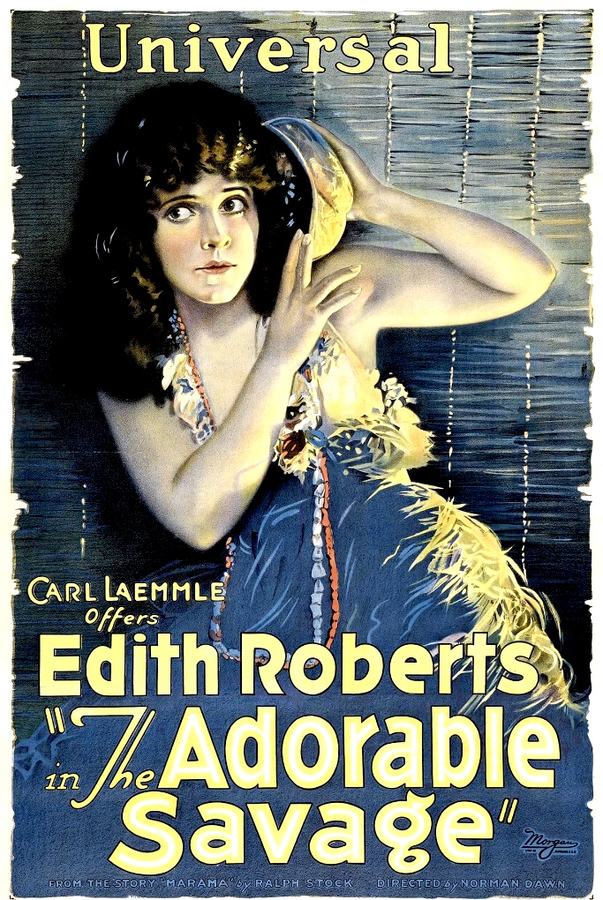
Ah, the silent film era! A time when grand gestures spoke volumes and the allure of the exotic was a powerful draw for audiences eager to escape the mundane. And few films encapsulate this spirit quite like the 1920 drama, The Adorable Savage. Directed with a keen eye for spectacle and melodrama, this picture plunges us headfirst into a world where cultural clashes, hidden identities, and desperate romance converge on the sun-drenched shores of Fiji. It's a testament to the storytelling prowess of its time, even if viewed through a contemporary lens, some of its thematic underpinnings might feel... antiquated.
Our protagonist, Marama Thurston, portrayed with a compelling blend of innocence and burgeoning resilience by Lucille Moulton, begins her journey far removed from the tropical turmoil that awaits her. She’s ensconced in the refined, predictable world of an American finishing school, a picture of genteel upbringing. Her world, however, is about to be irrevocably shattered. A desperate plea from her ailing father, Jim Thurston, a plantation owner grappling with the encroaching avarice of his son-in-law, pulls her away from this sheltered existence and towards the remote, vibrant, and ultimately shocking reality of Fiji. The initial premise, a daughter rushing to protect her father's rubber crop from a thieving relative, sets the stage for a dramatic conflict over inheritance and loyalty. But what Marama discovers upon her arrival is far more profound than mere financial malfeasance; it's a revelation that strikes at the very core of her being.
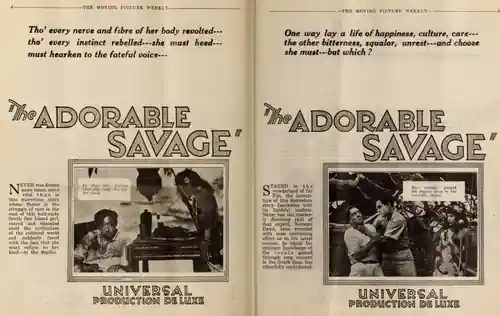
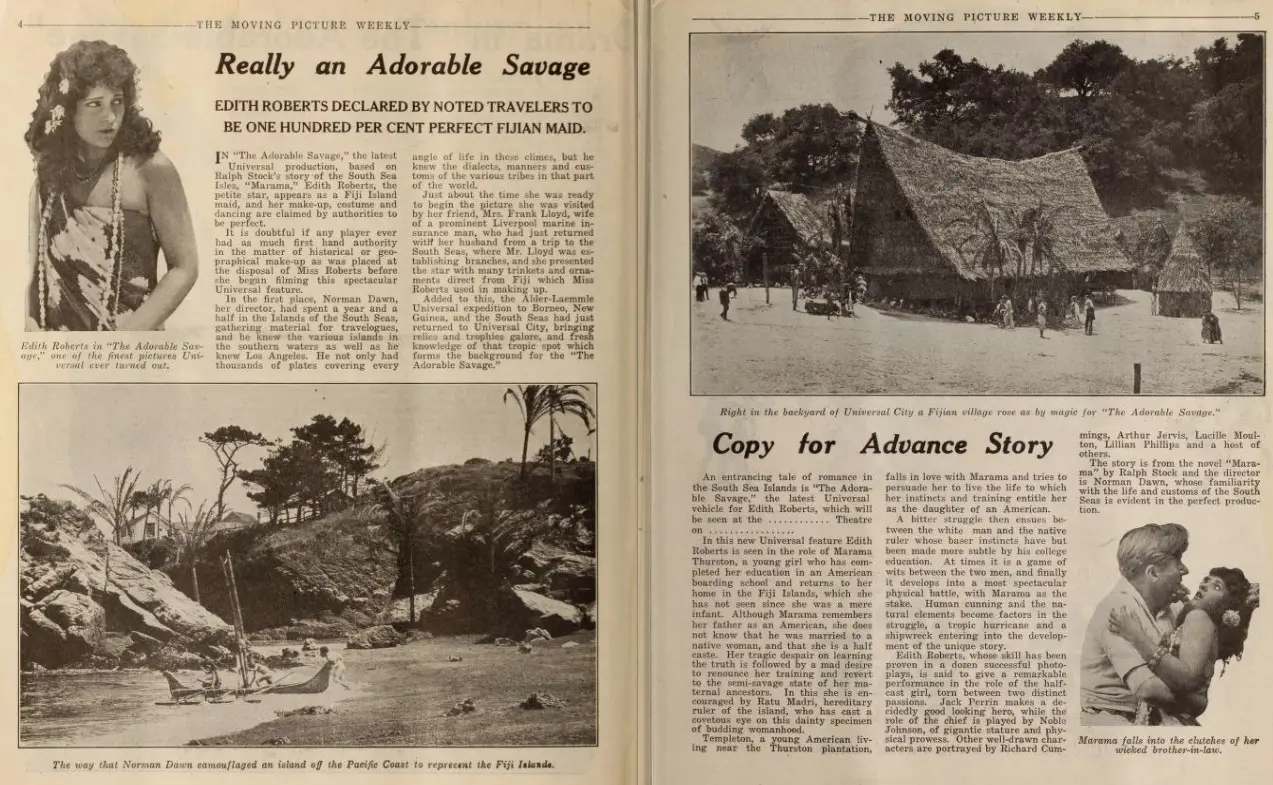
The bombshell drops: Marama is a 'half-caste.' This term, loaded with the prejudices and societal anxieties of the early 20th century, instantly redefines her identity. The trauma of this discovery is depicted as profound, forcing her to confront a lineage deliberately concealed, a heritage that now casts her as an outsider in both the world she knew and the one she has just entered. It's a powerful moment, albeit one handled with the sensibilities of its era, highlighting the rigid social stratifications that defined identity then. Her subsequent immersion into native customs is not merely an adaptation but a desperate attempt to find belonging, to forge a new self amidst the wreckage of her former life. This leads to her solemn agreement to marry Ratu Madri, the island's formidable ruler, played with a captivating gravitas by Noble Johnson. This union, seemingly pragmatic, is also deeply symbolic, representing Marama’s embrace of a destiny she never anticipated, a pledge of allegiance to a culture that has, in a sense, claimed her.
Just as Marama begins to navigate her new reality, a complication arrives in the form of Templeton, an American fugitive seeking sanctuary on the island. Portrayed by Arthur Jervis, Templeton embodies the classic romantic hero – mysterious, conflicted, and utterly smitten. His presence introduces a potent tension, a clash between duty and desire. Marama, having pledged herself to Ratu Madri, finds herself torn. Templeton represents a connection to her past, a familiar voice in an alien land, and the undeniable spark of romantic love. Yet, her commitment to the Fijian chief, born of trauma and a desperate search for identity, holds her captive. This love triangle, a staple of dramatic cinema, is given a unique twist by the exotic setting and the profound cultural implications of Marama’s choices. The narrative, crafted by Doris Schroeder and Ralph Stock, deftly juggles these emotional complexities, setting the stage for an inevitable confrontation.
The film’s exploration of identity here, while problematic in its terminology by today's standards, was groundbreaking for its time. It grapples with what it means to be ‘between worlds,’ a theme that resonates even now. Marama's struggle to reconcile her American upbringing with her Fijian heritage is the emotional core of the film. It's a journey not unlike those seen in other early 20th-century narratives that explored cultural boundaries, albeit often through a colonial lens. While not directly comparable in plot, the thematic undercurrents of challenging societal norms and finding one's place in a complex world might echo in films like As a Man Thinks, which delves into moral and social dilemmas, or even the more adventurous spirit of The Great Romance, where grand passions often defy conventional paths.
The dramatic tension escalates towards the prenuptial rite, a visually stunning sequence that showcases the film's ambition in depicting indigenous culture, even if through a romanticized Western gaze. As Marama performs the ceremonial dance, a poignant ritual symbolizing her complete immersion, Templeton makes his move. His desperate attempt to rescue her is a bold act of defiance, an assertion of love against the weight of cultural expectation and sworn duty. The ensuing chaos is palpable: the natives seize the American, and Marama's reaction is immediate and visceral. Her threat of suicide, delivered with raw emotional intensity by Moulton, underscores the depth of her feelings for Templeton and her rejection of a life she now perceives as a gilded cage. It's a classic cinematic trope, yet here it feels earned, a desperate cry for agency in a situation where she has been buffeted by circumstance.
The escape itself is a breathtaking set piece, timed perfectly with the fury of a hurricane. The storm serves not only as a dramatic backdrop but as a metaphor for the upheaval and turmoil in Marama’s life. Nature’s chaos mirrors the emotional maelstrom, providing a convenient and thrilling cover for their flight. This kind of climactic natural disaster was a popular device in silent films, adding an epic scale to personal dramas, much like the sweeping landscapes in westerns such as The Narrow Trail, where the environment often plays a crucial role in shaping the characters' destinies. The sheer visual spectacle, combined with the desperate urgency of their flight, would have undoubtedly captivated audiences of the era, holding them spellbound by the lovers' perilous journey.
Just when their plight seems most dire, a yacht arrives, bringing with it the deus ex machina that resolves Templeton's legal troubles: his exoneration from the murder charges. This convenient, if somewhat abrupt, resolution allows the narrative to tie up its loose ends neatly. It’s a common feature of early Hollywood storytelling, where justice and happy endings often arrived with impeccable timing. With Templeton's name cleared and Marama free from her pledge, the path is clear for their return to America and their eventual wedding. The film concludes on a note of triumphant romance, affirming the power of love to overcome seemingly insurmountable obstacles.
While the ending provides a satisfying closure for the romantic pair, it also subtly reinforces the prevailing societal norms of the time, suggesting that Marama's true happiness lies in returning to her 'original' culture and marrying a man from her 'own kind,' rather than fully embracing her Fijian heritage. This aspect, while understandable within its historical context, offers a fascinating point of reflection for modern viewers. It showcases how films of this era often navigated complex themes of race and identity, ultimately defaulting to resolutions that reinforced established social hierarchies, even as they ventured into exotic settings. The journey back to America isn't just a physical one; it's a symbolic return to a perceived order, a restoration of the status quo that the initial revelation of Marama's heritage had so dramatically disrupted.
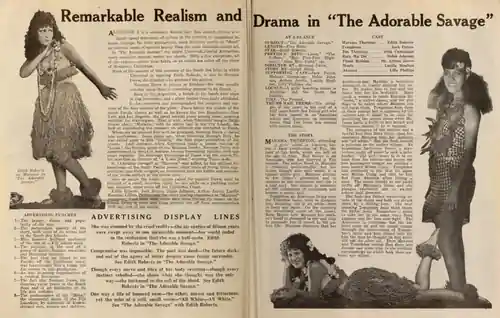
The success of The Adorable Savage owes much to its dedicated cast. Lucille Moulton, as Marama, carries the emotional weight of the film with remarkable grace. Her portrayal of a young woman grappling with such profound identity shifts, from sheltered schoolgirl to traumatized 'half-caste' bride, and finally to a woman in love, is nuanced and powerful. Her expressive eyes and gestures convey the inner turmoil that the silent medium demanded. Noble Johnson, a prolific actor often cast in roles depicting indigenous characters, brings a commanding presence to Ratu Madri. His portrayal, while fitting the archetypes of the era, imbues the chief with a dignity that prevents him from becoming a mere caricature. Arthur Jervis’s Templeton is the quintessential dashing hero, providing the necessary romantic foil and embodying the adventurous spirit that drives much of the plot.

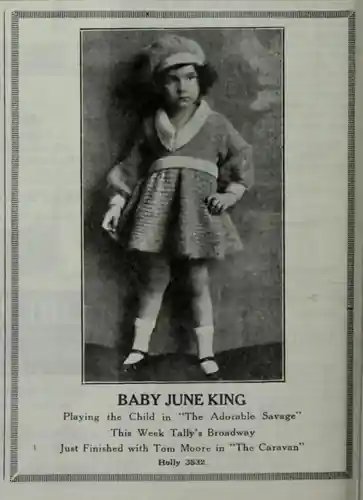
The supporting cast, including Jack Perrin, Arthur Jasmine, Edith Roberts, June King, Richard Cummings, Lily Phillips, and Olga D. Mojean, contribute effectively to the vibrant tapestry of the Fijian setting and the dramatic stakes. Their collective efforts bring to life the bustling plantation, the solemn rituals, and the tense confrontations that define the film's atmosphere. The direction, while uncredited in some records, clearly aimed for a grand, immersive experience, leveraging the exotic locale to its fullest. The cinematography, though limited by the technology of the time, effectively captures the lushness of Fiji and the dramatic intensity of key scenes, especially the prenuptial dance and the hurricane escape.
The screenplay, penned by Doris Schroeder and Ralph Stock, is a fascinating artifact of its time. Schroeder was a prominent female screenwriter in early Hollywood, known for her ability to craft compelling narratives, particularly within the adventure and melodrama genres. Stock, an author and screenwriter, brought a certain authenticity to the exotic settings, drawing perhaps from his own experiences or popular contemporary literature. Together, they constructed a plot rich with dramatic turns, moral dilemmas, and romantic escapism. The narrative's strength lies in its ability to introduce a seemingly straightforward conflict (protecting the rubber crop) only to peel back layers and reveal a much deeper, more personal struggle for the protagonist. The pacing is typical of the era, building tension steadily towards a melodramatic climax, a style that audiences eagerly devoured.
While the film's portrayal of race and indigenous cultures is undeniably a product of its time – often leaning into stereotypes and a romanticized 'noble savage' trope – it also attempts to explore themes of identity and belonging that remain relevant. The choice to make Marama a 'half-caste' was a bold one for the period, challenging, even if implicitly, the rigid racial lines of society. It's a testament to the writers' ambition to inject complexity into what could have been a simple adventure story. One might draw a parallel to the intricate plotting and character-driven drama seen in films like The Secret of the Storm Country, where secrets and hidden pasts drive the emotional core, or even the heightened stakes of moral quandaries in The Spoilers, where a protagonist fights against injustice on multiple fronts.
Today, The Adorable Savage stands as more than just a silent film; it's a historical document, offering a window into the cultural anxieties, romantic ideals, and narrative conventions of the early 20th century. Its exotic setting, dramatic plot twists, and earnest performances make it a compelling watch for enthusiasts of classic cinema. While certain aspects, particularly its handling of racial identity, require a critical eye and contextual understanding, the film's sheer narrative drive and emotional intensity are undeniable.
It reminds us of an era when cinema was still finding its voice, experimenting with visual storytelling and the power of melodrama. Films like The Death Dance or Through the Valley of Shadows, while distinct in their plots, shared a common thread of exploring intense human emotions against grand, often perilous backdrops. The Adorable Savage, with its blend of adventure, romance, and identity crisis, is a significant piece of this cinematic tapestry. It's a film that asks us to consider not only the story it tells but also the historical context in which it was created, prompting reflection on how far we've come in our understanding of identity, culture, and storytelling itself.
In conclusion, for those willing to engage with its historical complexities, The Adorable Savage offers a rich, engaging experience. It's a vibrant melodrama, a cultural curiosity, and a testament to the enduring appeal of a good story well-told, even without spoken words. So, dim the lights, perhaps put on a suitable orchestral score, and allow yourself to be transported to the Fiji of a century ago, where love, identity, and destiny collide in a truly 'adorable' – and savage – cinematic adventure.
IMDb 5.2
1917
Community
Log in to comment.