DbcultAccessing Vault...
7.4/10
Senior Film Conservator
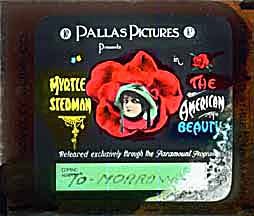
A definitive 7.4/10 rating for a film that redefined the boundaries of cult cinema. The American Beauty remains a cornerstone of transgressive art.
Stepping back into the annals of cinematic history, one encounters a treasure trove of narratives that, even a century later, resonate with an uncanny power. Among these, Julia Crawford Ivers's The American Beauty emerges as a compelling silent era masterpiece, a film that, despite its vintage, speaks volumes about the human condition, social stratification, and the inexorable pull of identity. Released in an era defined by nascent storytelling techniques and burgeoning cinematic language, this picture stands as a testament to the profound artistry achievable even without the benefit of synchronized sound. It's an intricate dance of fate and circumstance, brought to life by a dedicated ensemble cast including Elliott Dexter, Adelaide Woods, Jack Livingston, Edward Ayers, Howard Davies, and Myrtle Stedman.
At its core, The American Beauty masterfully orchestrates a drama of profound displacement. The narrative commences with a heart-wrenching tragedy: the infant daughter of a distinguished, wealthy couple is presumed lost at sea, her future irrevocably altered by the capricious whims of nature. The parents, bereft and haunted by the loss, are left to grapple with an unimaginable void. However, the film's genius lies in its immediate subversion of expectation. This child, far from perishing, survives. Washed ashore, a tiny beacon of life amidst the wreckage of a storm-tossed world, she is discovered and subsequently raised by a family of meager means. This pivotal event establishes the central conflict, setting into motion a powerful exploration of how environment shapes character, and how the echoes of one's true lineage can reverberate across the most disparate of social landscapes. It’s a narrative device that feels both classic and eternally relevant, inviting comparisons to other tales of lost identity and eventual revelation, though The American Beauty imbues its rendition with a particular poignancy.
Julia Crawford Ivers, the prolific writer behind this compelling drama, demonstrates an acute understanding of narrative tension and character development. Her screenplay, conveyed through evocative intertitles and the expressive performances of the cast, carefully builds a world where the chasm between the 'haves' and 'have-nots' is not merely an economic divide, but a fundamental schism in experience and expectation. The infant, growing up unaware of her true heritage, embodies the quintessential 'American Beauty' – a spirit of resilience, charm, and an innate grace that transcends her humble surroundings. This juxtaposition is not merely a plot device; it serves as a potent commentary on the arbitrary nature of social standing. One cannot help but ponder the profound implications: does blood truly tell, or is character forged in the crucible of daily struggle and the love of one's adopted family? The film doesn't offer simplistic answers, but rather invites the audience to ponder these existential questions through the protagonist's journey.
The performances, a cornerstone of any silent film, are particularly noteworthy here. Elliott Dexter, a prominent leading man of the era, brings a nuanced intensity to his role, communicating complex emotions through his facial expressions and body language—a true art form in itself. Adelaide Woods, as the titular 'American Beauty,' captures the innocence, strength, and eventual burgeoning self-awareness of a young woman navigating a world that holds secrets about her past. Her portrayal is delicate yet resolute, a silent symphony of hope and longing. The supporting cast, including Jack Livingston, Edward Ayers, Howard Davies, and Myrtle Stedman, each contribute to the rich emotional landscape, creating a believable and immersive world. Their interactions, often conveyed through subtle gestures and well-composed tableaux, speak volumes, transcending the absence of spoken dialogue. This collective effort ensures that the emotional stakes remain high throughout, drawing the viewer deeper into the protagonist's predicament.
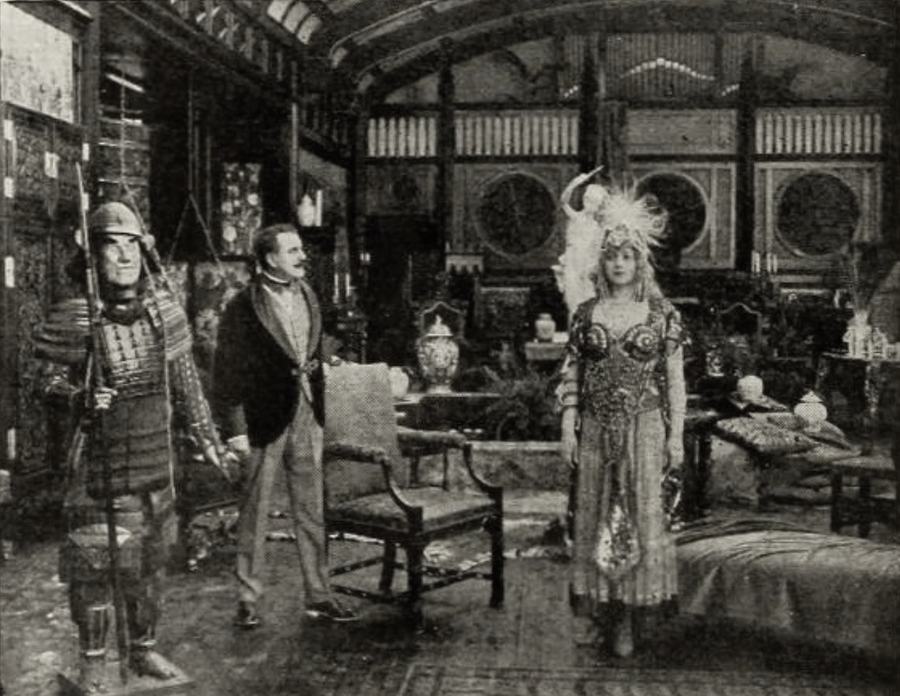
The cinematic language employed in The American Beauty is a fascinating study in early film aesthetics. The direction, while perhaps less overtly experimental than some of its contemporaries, is remarkably effective in its visual storytelling. The framing often emphasizes the emotional isolation or connection between characters, utilizing depth and composition to convey power dynamics or vulnerability. Scenes depicting the opulent world of the wealthy are contrasted sharply with the more rustic, lived-in environments of the poor family, a visual metaphor for the protagonist's dual existence. Lighting plays a crucial role, with chiaroscuro effects often employed to heighten dramatic tension or cast a shadow of mystery over unfolding events. The editing, while adhering to the conventions of the time, maintains a steady rhythm, allowing the narrative to unfold deliberately, building suspense and emotional resonance. One might observe parallels in the way some films of the period, such as The Yankee Girl, also used visual cues to delineate social strata, though The American Beauty often delves deeper into the psychological impact of such divisions.
Beyond the immediate plot, The American Beauty delves into themes that remain profoundly relevant. It's a meditation on destiny versus free will, on the nature of identity, and on the enduring power of familial love, whether by blood or by bond. The film subtly interrogates the societal obsession with lineage and inherited wealth, suggesting that true value lies not in one's birthright but in one's character and actions. The protagonist's journey from a lost child to a young woman discovering her past forces a confrontation with these deeply ingrained societal norms. Her struggle to reconcile her two worlds—the one she knew and the one that was taken from her—forms the emotional backbone of the film. This exploration of personal authenticity in the face of societal expectations finds echoes in later films that tackle similar identity crises, making The American Beauty a precursor to many narratives that probe the complexities of self-discovery.
The pacing of the film is deliberate, allowing ample time for character development and the slow burn of revelation. Unlike some more action-driven silent features, The American Beauty thrives on its emotional depth and the gradual unfolding of its central mystery. Each scene contributes to the overall narrative arc, building towards a climactic confrontation and resolution. The intertitles, far from being mere plot facilitators, are often crafted with poetic flair, offering insights into characters' thoughts and feelings, and guiding the audience through the emotional labyrinth of the story. They serve as a crucial bridge between the visual narrative and the internal world of the characters, a technique perfected in many silent dramas, much like the compelling narrative structure seen in Slander, which also relied heavily on its intertitles to convey complex emotional and legal arguments.
One cannot discuss The American Beauty without acknowledging its implicit social commentary. The stark contrast between the wealthy and the poor, and the protagonist's traversal of these two worlds, offers a powerful lens through which to view early 20th-century American society. It critiques the superficiality of inherited status while simultaneously celebrating the virtues of hard work, humility, and genuine affection found within the less privileged classes. The film suggests that true 'beauty' lies not in outward appearance or material possessions, but in inner strength, compassion, and moral integrity. This message, delivered without didacticism, resonates with a timeless quality, prompting viewers to consider the true measures of a fulfilling life. The plight of the common person struggling against overwhelming odds, a theme explored in films like Livets konflikter, is given a unique twist here through the lens of a lost aristocratic heritage.
The character arcs in The American Beauty are particularly well-defined. The wealthy parents, initially consumed by grief, undergo their own journey of acceptance and eventual rediscovery. The adopted family, despite their poverty, demonstrate a richness of spirit and unwavering love that stands in stark contrast to the often colder, more formal interactions of the upper crust. And, of course, the protagonist's journey is one of profound self-discovery, moving from blissful ignorance to a challenging awakening, and ultimately, to a synthesis of her two identities. This complex emotional development, rendered through the expressive silent film acting, is a testament to the skill of both the writer and the performers. The film avoids easy stereotypes, presenting its characters as multifaceted individuals grappling with extraordinary circumstances.
The film's exploration of moral dilemmas and personal integrity is also a significant aspect. When the truth of her parentage eventually surfaces, the protagonist faces difficult choices. Does she embrace the life of luxury and privilege that is her birthright, or does she remain loyal to the family who raised her with love and sacrifice? These are not mere plot points but profound ethical quandaries that elevate the film beyond a simple melodrama. Her internal struggle, depicted through subtle gestures and powerful close-ups, makes her a deeply sympathetic figure. This internal conflict, a battle between duty, love, and self-interest, is a narrative device that has been effectively utilized across cinematic history, from early works like Godsforvalteren to contemporary dramas.
In conclusion, The American Beauty stands as more than just a relic of a bygone cinematic era; it is a vibrant, emotionally charged drama that continues to captivate. Its narrative, though seemingly straightforward, is imbued with layers of social critique, psychological depth, and universal themes that transcend time. The film's ability to communicate such complex ideas and emotions without spoken dialogue is a powerful reminder of the pure artistry inherent in silent cinema. From the compelling performances of Elliott Dexter and Adelaide Woods to the astute writing of Julia Crawford Ivers, every element converges to create a cohesive and deeply moving experience. For those interested in the evolution of storytelling, the power of visual narrative, or simply a beautifully told human drama, The American Beauty remains an essential viewing. It's a testament to the fact that compelling cinema, regardless of its technological constraints, relies fundamentally on strong storytelling and authentic emotional resonance. Its enduring charm lies not just in its historical significance, but in its ability to touch the heart and provoke thought, proving that some tales truly are timeless. It reminds us that sometimes, the most profound beauty is found not in opulence, but in the strength of spirit forged through adversity and unconditional love.
The film's particular brand of melodramatic realism, a common thread in many films of the era, is handled with a delicate touch here, avoiding excessive sentimentality in favor of genuine emotional impact. This balance is crucial for a story that could easily veer into overt schmaltz. Instead, The American Beauty maintains a dignified pathos, allowing the audience to feel the characters' struggles without being manipulated. This is a hallmark of superior silent filmmaking, where every gesture, every intertitle, and every scene composition had to carry significant weight. Its narrative structure, while following a fairly conventional arc of loss, discovery, and resolution, is executed with such precision that it feels fresh and engaging. The film’s ability to weave together individual destinies with broader societal questions makes it a compelling watch even today, offering insights into both the personal and the collective psyche of its time. It’s a film that, much like the protagonist herself, reveals its true depth upon closer inspection.
Review by a Human Blogger. All rights reserved.
IMDb 6.5
1931
Community
Log in to comment.